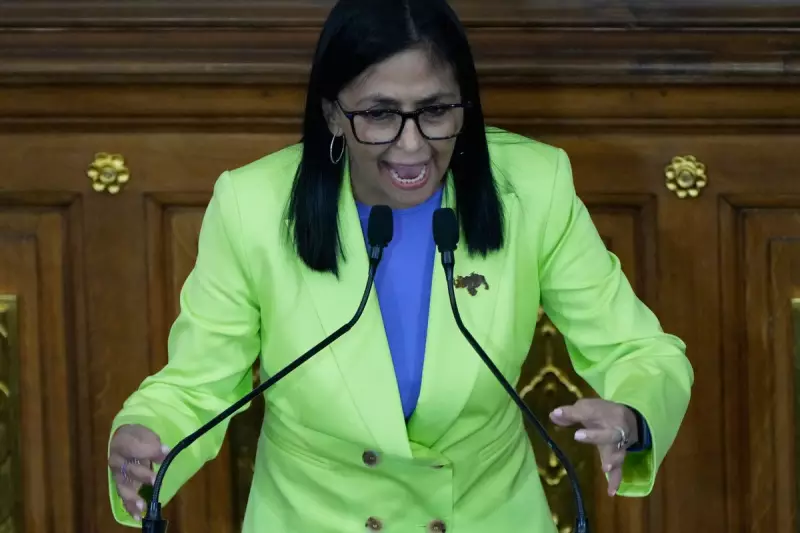
Venezuela's acting leader has delivered a defiant message to the United States, declaring the nation has endured sufficient compliance with Washington's demands in a pointed rebuke to the Trump administration. Delcy Rodriguez, who assumed the presidency earlier this month after US forces captured former leader Nicolas Maduro, stated emphatically that Venezuela must resolve its own political conflicts without foreign interference.
A Firm Stance Against External Pressure
Speaking to oil workers in Puerto La Cruz, Rodriguez broadcast her message through state-run channel Venezolana de Televisión, asserting that Venezuelan politics should address internal differences independently. Her comments arrive just weeks after President Trump claimed the United States would effectively control Venezuela following Maduro's dramatic capture during an overnight raid, an event that plunged the country into turmoil.
"Enough already of Washington's orders over politicians in Venezuela," Rodriguez declared. "Let Venezuelan politics resolve our differences and internal conflicts. Enough of foreign powers."

Navigating Complex Political Dynamics
Rodriguez finds herself balancing delicate relationships between the White House and Maduro loyalists within Venezuela. Despite initially appearing to support Rodriguez's interim leadership, the Trump administration has continued pressing her and other Maduro allies to permit increased investment from American energy companies into Venezuela's struggling oil sector. This pressure represents a central motivation behind Trump's interventions in South America.
According to reports from Chinese state news agency Xinhua, Rodriguez indicated Caracas would confront long-standing disputes directly with Washington. "We are not afraid, because what must unite us as a people is guaranteeing peace and stability for this country," she affirmed, demonstrating her commitment to national sovereignty.
Internal Political Reconciliation Efforts
Prior to her public address, Rodriguez appealed for dialogue with Venezuelan opposition groups on Saturday, seeking agreements regarding the nation's political future. She emphasized that political or partisan differences should not obstruct peace in Venezuela, highlighting her attempts to foster internal unity during this transitional period.
Oil Industry Reforms Spark Concern
Meanwhile, Venezuela's legislature has begun debating significant changes to state control over the country's extensive oil sector, marking the first major overhaul since the late socialist leader Hugo Chávez nationalised portions of the industry in 2007. This proposed legislation appears designed to partially satisfy US government demands by creating new opportunities for private company investment and establishing international arbitration for investment disputes.
The draft legislation represents a substantial departure from Chávez's economic nationalism, which previously accused multinational corporations of colonial exploitation and treated Venezuela's oil wealth as exclusive state property. Under the new framework, private companies would operate oil fields independently and collect cash revenues while remaining minority partners to the state oil company on paper.
These developments have raised concerns among Maduro loyalists, who view such reforms as concessions to foreign pressure. The ongoing military buildup near Venezuela and attacks on Venezuelan ships in the Caribbean Sea have maintained constant pressure from Washington, creating a challenging environment for Rodriguez's interim administration as it attempts to navigate both domestic expectations and international demands.