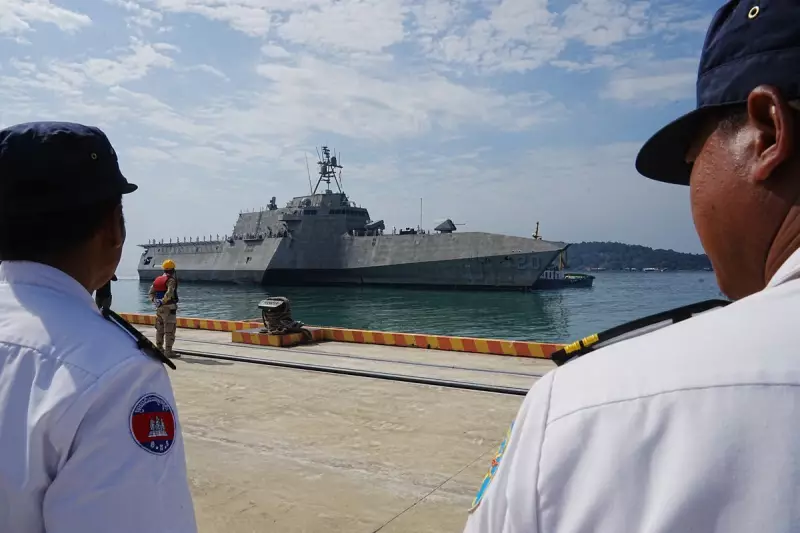
In a significant diplomatic development, a United States Navy warship has docked at a Cambodian naval facility that recently underwent extensive renovation with Chinese assistance. The arrival of the USS Cincinnati at Ream Naval Base on Saturday 24th January 2026 represents the first visit by a US military vessel to the base since the completion of its Chinese-funded upgrade early last year.
Geopolitical Significance of the Port Call
The docking of the Independence-class littoral combat ship comes amid persistent concerns in Washington about China's growing influence in Southeast Asia. The completion of a new pier and dry dock at Ream has raised questions about whether Cambodia's close ally and primary aid provider might have secured exclusive access to the strategically important facility on the Gulf of Thailand.
Controversy has surrounded the base since 2019, when reports emerged of a potential 30-year agreement for Chinese military use of the site. Despite Beijing financing the expansion project, the Cambodian government has consistently denied any arrangement granting exclusive privileges to China.

Cambodian Officials Emphasise Inclusivity
Prime Minister Hun Manet, who presided over the base's reopening ceremony in April 2025, has maintained that Ream welcomes vessels from all friendly nations for joint exercises, provided they meet the facility's size limitations. This position was echoed by base officials during the USS Cincinnati's arrival.
"At this location our government has worked very hard to build this port so that all foreign vessels that wish to dock in Cambodia can do so," In Sokhemra, the deputy commander of Ream Naval Base, told assembled reporters. "We have succeeded in this effort, and we are open from this moment forward for all to enter. Whether it is American ships, Australian, Japanese or any other ships that wish to dock in Cambodia, this port is ready for you."
Technical Specifications and Visit Details
The USS Cincinnati represents a specific class of warship designed for operations in coastal waters. As an Independence-class littoral combat vessel, it can navigate shallower waters than many other warships, making it particularly suitable for visiting facilities like Ream Naval Base.
During its scheduled visit from January 24th to 28th, the ship's crew of approximately 100 personnel will participate in sporting events and community activities in the nearby coastal city of Sihanoukville. This engagement forms part of the broader diplomatic objectives of the port call.
Historical Context of US-Cambodia Naval Relations
A statement issued by the Cambodian Navy on Saturday revealed that between 2003 and 2026, some 37 US warships have visited Cambodian facilities. However, the relationship experienced a notable cooling period, with the USS Savannah's visit to Sihanoukville's civilian port in December 2024 marking the first US military vessel arrival in eight years.
The Savannah's five-day port call followed a visit by then-US Secretary of Defense Lloyd Austin in 2024, during which he met with Prime Minister Hun Manet to discuss bilateral cooperation in regional security matters. Both leaders share the distinction of being graduates of the US Military Academy at West Point.
Broader Diplomatic Implications
The Cincinnati's visit coincides with scheduled meetings between senior military officials from both nations. The head of the US Indo-Pacific Command, Admiral Samuel Paparo, is set to meet with Cambodian Defense Minister Tea Seiha, indicating a concerted effort to strengthen military ties.
According to the Cambodian Navy statement, the port call presents "an opportunity for the navy of the two countries to cooperate in a future especially related to the human resource training, and others." This suggests potential areas for expanded collaboration beyond symbolic visits.
The evolving dynamics at Ream Naval Base continue to reflect the complex geopolitical landscape of Southeast Asia, where traditional alliances intersect with emerging partnerships. The facility's development with Chinese funding, followed by visits from US vessels, illustrates Cambodia's delicate balancing act between major powers in the region.