

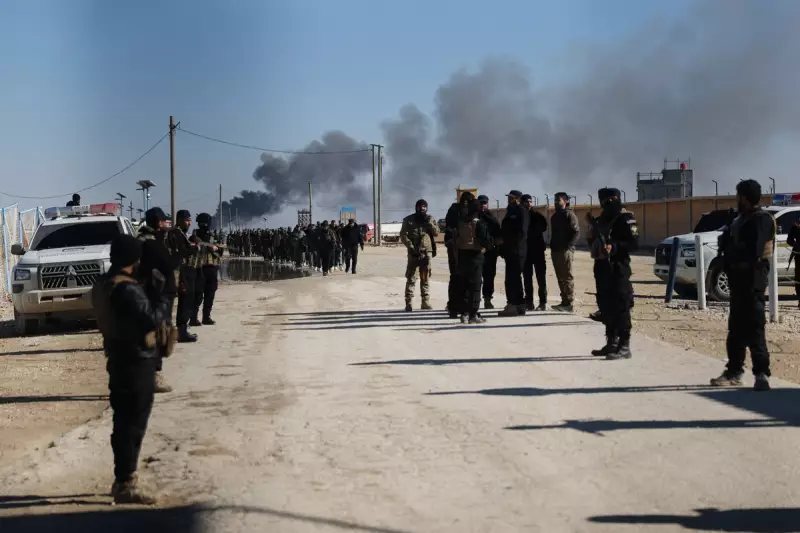
US Military Initiates Transfer of Islamic State Detainees from Syria to Iraqi Facilities
The United States military has commenced a significant operation to transfer Islamic State group detainees from northeastern Syria to secure facilities in Iraq. This strategic move comes in response to evolving control dynamics in the region and heightened concerns about potential prison breakouts that could threaten regional stability.
Initial Transfer and Operational Details
The operation began with the transfer of 150 suspected ISIS members from Syria's Hassakeh province to what US Central Command (CENTCOM) describes as "secure locations" in Iraq. This initial movement represents just the beginning of what could become a much larger relocation effort. CENTCOM officials have indicated that as many as 7,000 detainees might eventually be transferred to Iraqi-controlled facilities as part of this ongoing security transition.
Admiral Brad Cooper, CENTCOM commander, emphasised the critical importance of this operation during a recent statement. "Facilitating the orderly and secure transfer of ISIS detainees is critical to preventing a breakout that would pose a direct threat to the United States and regional security," he declared. The admiral confirmed that the transfer has been carefully coordinated with regional partners, including the Iraqi government.

Background and Regional Security Shifts
This detainee transfer initiative follows significant changes in regional control arrangements. Syrian government forces recently assumed command of a sprawling camp that houses thousands of individuals, predominantly women and children, from the US-backed Syrian Democratic Forces (SDF). The SDF withdrawal occurred as part of a broader ceasefire agreement that has reshaped security responsibilities in the area.
An Iraqi intelligence general, speaking on condition of anonymity, confirmed that Iraq has reached an agreement with the United States for the transfer of up to 7,000 detainees. The first batch of 144 individuals arrived in Iraq on Wednesday night, with subsequent transfers planned via aircraft to Iraqi prison facilities. According to the general, the transferred ISIS members represent diverse nationalities, including approximately 240 Tunisians, alongside individuals from Tajikistan, Kazakhstan, and some Syrian nationals.
"They will be interrogated and then put on trial. All of them are commanders in ISIS and are considered highly dangerous," the general added, noting that previous transfers have included 3,194 Iraqi and 47 French detainees.
Ongoing Security Challenges and Regional Dynamics
Despite the territorial defeat of the Islamic State group in Iraq in 2017 and Syria two years later, sleeper cells continue to launch deadly attacks in both nations. The US military reported detaining over 300 ISIS operatives and killing more than 20 in Syria during the previous year alone, highlighting the persistent threat.
Tom Barrack, the US envoy to Syria, provided insight into the changing security landscape. He stated that the SDF's role as the primary anti-ISIS force "has largely expired, as Damascus is now both willing and positioned to take over security responsibilities." Barrack added that "recent developments show the U.S. actively facilitating this transition, rather than prolonging a separate SDF role."
The Syrian Foreign Ministry has welcomed the detainee transfers, describing them as "an important step to strengthen security and stability." This development follows government forces moving into the al-Hol camp in armoured vehicles after two weeks of clashes with the SDF. The camp, which once housed 73,000 people, now contains approximately 24,000 individuals, mostly women and children, including 14,500 Syrians and nearly 3,000 Iraqis. A highly secured section holds about 6,500 individuals, many of whom remain loyal ISIS supporters.
Humanitarian Concerns and Recent Incidents
An Iraqi woman residing in the camp, who spoke anonymously, described dire living conditions: "Go inside and see the chaos that is happening. There are no clinics, no running water, no bread and no vegetables." Her account underscores the humanitarian challenges accompanying these security transitions.

The volatile security situation has been further highlighted by recent incidents, including a drone attack on Wednesday that killed seven soldiers and wounded twenty in Yaaroubiyeh. The Syrian Defence Ministry blamed Kurdish forces for the attack, while the SDF countered that the explosion resulted from soldiers moving ammunition. Both sides have also traded blame regarding the escape of ISIS members from a prison in Shaddadeh on Monday, where government forces were scheduled to assume control.
Brigadier General Hassan Abdul-Ghani, Syrian Defence Ministry spokesman, affirmed that the government "was and still is in direct confrontation" with ISIS and expressed readiness to manage prisons holding its members. This statement reflects the complex security handover occurring across the region as multiple actors navigate the aftermath of the Islamic State's territorial defeat while addressing ongoing security threats.





