Strategic Realignment: How Washington's Pivot Sealed Kurdish-Led Forces' Fate in Syria
A dramatic geopolitical shift by the United States has precipitated the rapid fall from power of the Kurdish-led Syrian Democratic Forces, marking a significant realignment in Syria's complex political landscape. Over two tumultuous weeks, the SDF's influence crumbled as Washington redirected its support towards the nascent government in Damascus, fundamentally altering the balance of power in the war-torn nation.
A Miscalculated Gamble and Swift Territorial Losses
Analysts suggest the SDF fundamentally miscalculated their position during critical negotiations with Damascus, adopting an uncompromising stance under the mistaken assumption that Washington would maintain its longstanding military support. This support had been steadfast during years of joint operations against the Islamic State group, leading Kurdish leaders to believe it would continue if conflict erupted with government forces.
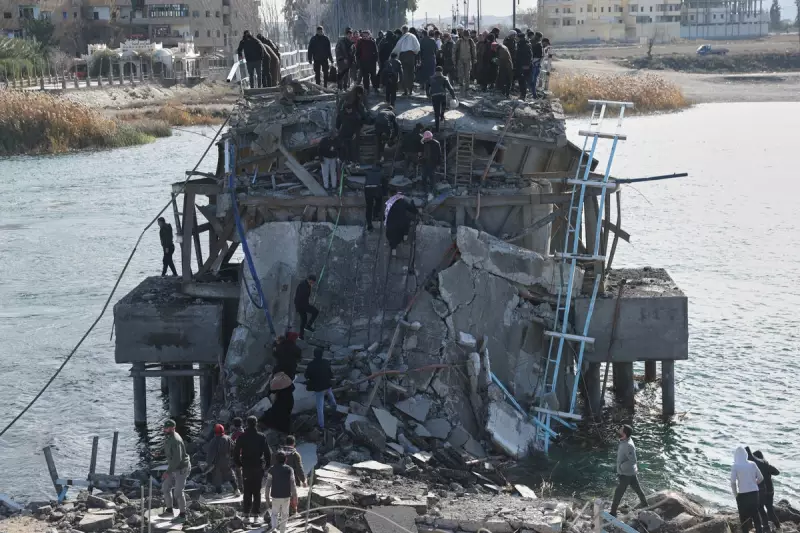
Instead, when intense clashes broke out in Aleppo on January 6th, Washington refrained from military intervention, focusing instead on ceasefire mediation. The result was devastating for the SDF, who lost substantial territory in northeast Syria to a coordinated government offensive. By mid-January, the Kurdish-led force had signed an agreement effectively dissolving their autonomous military structure, a stark reversal from their previous dominant position.

Washington's Strategic Recalculation
Experts had anticipated this shift for months, noting Washington's growing view of Damascus as a potential strategic partner in regional stability. U.S. President Donald Trump has strongly backed the government of interim President Ahmad al-Sharaa since his forces ousted former President Bashar Assad in December 2024, following years of devastating civil war.
U.S. envoy to Syria Tom Barrack delivered a blunt assessment, stating the SDF's role as Syria's primary anti-IS force "has largely expired" given the new government's willingness and capability to assume security responsibilities. "The U.S. is not interested in prolonging a separate SDF role," Barrack emphasized, signaling a definitive policy redirection.
Negotiation Breakdown and Fundamental Disagreements
The collapse followed months of stalled U.S.-mediated negotiations aimed at implementing a March 2025 agreement that would have integrated tens of thousands of SDF fighters into Syria's new army. Syrian officials attributed the impasse to fractured SDF leadership and maximalist demands, while Kurdish representatives accused Damascus of avoiding substantive meetings.
At the heart of the disagreement were fundamentally different visions for Syria's future governance. Damascus sought a centralized state structure, while Kurdish-led authorities advocated for maximum local autonomy through decentralization and institutionalized minority rights. This "astronomical" political gulf, as described by analysts, proved ultimately unbridgeable despite American mediation efforts.
Integration Challenges and Aleppo Turning Point
Particularly contentious were negotiations around military integration. SDF leaders initially proposed integrating government forces into their structure rather than vice versa, a suggestion Damascus rejected. The government eventually agreed to maintain SDF units as distinct brigades but demanded they report to the Ministry of Defense and allow freedom of movement for non-SDF forces in the northeast.
The final breakdown occurred in early January when SDF commander Sipan Hamo demanded that northeast brigades report to an SDF-chosen commander and that government forces only enter the region with SDF permission. Damascus rejected these conditions, and days later, clashes erupted in Aleppo.
Syria's military handling of the Aleppo confrontation proved crucial. By establishing humanitarian corridors and limiting civilian casualties, the government demonstrated a more restrained approach than in previous conflicts, creating diplomatic space for a settlement. Following Syrian forces' capture of oil-rich provinces from the SDF, a deal was announced that confined the SDF to Hassakeh province and mandated individual integration of fighters into the army.

A Diminished Future
Analysts note the SDF had been warned their effort to maintain dominance conflicted with broader geopolitical shifts. They ultimately accepted terms "much worse" than those available just weeks earlier, according to regional experts. The rapid collapse underscores how quickly Washington's strategic priorities can reshape alliances in conflict zones, leaving former partners vulnerable when geopolitical calculations change.
Elham Ahmad, a senior official with the Kurdish-led administration, expressed surprise that calls for U.S.-led coalition intervention "have gone unanswered," highlighting the suddenness of the policy shift for those who had relied on American support. The events demonstrate the precarious position of proxy forces in complex conflicts when great power interests realign.