US Military Buildup Intensifies as Crucial Iran Peace Talks Loom
US Military Buildup Intensifies Ahead of Iran Peace Talks

US Military Buildup Intensifies as Crucial Iran Peace Talks Loom

Fears of a potential conflict between the United States and Iran are mounting as American military commanders significantly enhance their attack capabilities in the Middle East. This strategic reinforcement coincides with desperate, last-ditch peace negotiations scheduled for Friday in Oman, aimed at averting a full-scale war. The situation remains highly volatile, with both sides displaying a stark military and diplomatic posture.

Expanding US Military Assets in the Region

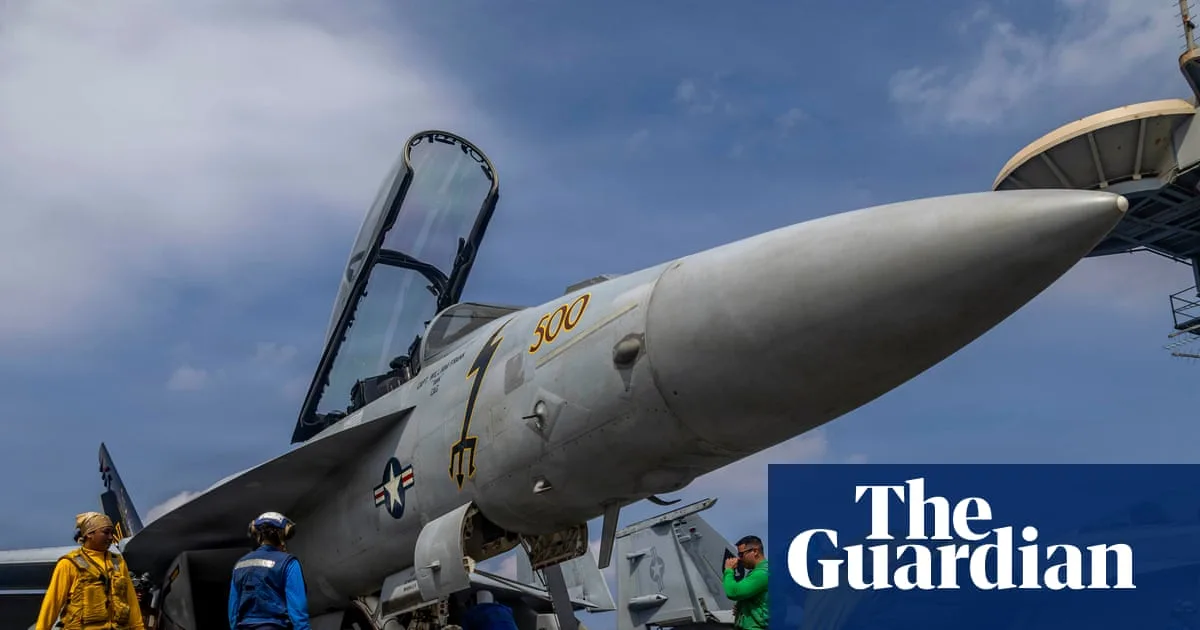
According to informed sources, the United States has continued to amplify its military strength in the Arabian Sea and surrounding areas. The existing force, which already includes a formidable carrier strike group and six destroyers, is being supplemented with additional squadrons of F-15 fighter jets and advanced electronic jamming aircraft. There are strong indications that a second aircraft carrier may soon be deployed to the region, further escalating the visible military pressure.

In a clear sign of preparation for potential hostilities, the latest of several specialized communications planes has arrived in the Middle East. Specifically, a third US Air Force E-11A aircraft departed from Chania International Airport on the Greek island of Crete, landing approximately four hours later at Prince Sultan Air Base in Saudi Arabia. This aircraft is designed to facilitate command and control operations, positioning it as a critical asset for planning any offensive action against Iran should the diplomatic talks collapse.

Wide Pickt banner — collaborative shopping lists app for Telegram, phone mockup with grocery list

Diplomatic Moves and Stalled Negotiations

On the diplomatic front, key US envoys have arrived in Doha, Qatar, to prepare for the pivotal Friday meeting. Jared Kushner, former President Donald Trump's son-in-law and a central figure in Middle East policy, alongside special envoy Steve Witkoff, are set to engage with an Iranian delegation led by Foreign Minister Abbas Araghchi. However, the negotiations face significant hurdles, with both sides reportedly declaring core demands as non-negotiable.

The United States is understood to have presented a series of stringent conditions, including the complete removal of all nuclear material from Iran, guarantees for the security of protesters within the country, and strict limitations on Iran's ballistic missile program. In a firm rebuttal, Tehran has allegedly informed US officials that discussions concerning its ballistic weapons program are entirely off the table. This deadlock has led some officials within the Iranian government to privately conclude that an armed conflict is now inevitable.

Regional Allies and Escalating Threats

The military buildup is not confined to US forces alone. Earlier this week, American stealth bombers and F-15s were deployed to a base in Jordan. Furthermore, in a show of allied solidarity, four United Kingdom Typhoon attack jets have been positioned in Qatar to assist the US and Israel in defending against any potential Iranian aggression. The vanguard of any prospective US-led attack would likely be spearheaded by F-35C and Super Hornet fighter jets launched from the USS Abraham Lincoln, an aircraft carrier already stationed in the region. This carrier's air wing recently demonstrated its capability by intercepting an Iranian Shahed-139 attack drone sent towards the fleet.

The Israeli government is closely monitoring the situation, with intelligence suggesting it may have already resolved to conduct preemptive strikes on Iran's missile sites if the United States decides against issuing a direct attack order. This regional tension has been simmering for weeks, initially triggered by reports of the Tehran regime's violent suppression of widespread opposition protests.

Political Rhetoric and Human Cost

The political rhetoric from both capitals remains incendiary. Former President Donald Trump issued a stark warning, suggesting Iran's Supreme Leader, Ayatollah Khamenei, should be very worried about the consequences of failing to secure a deal on its nuclear program and ceasing the crackdown on protesters. In response, Ayatollah Khamenei, who recently emerged from a period of seclusion during the protests, cautioned that any US military action against Iran would inevitably ignite a broader regional war.

Pickt after-article banner — collaborative shopping lists app with family illustration

The human cost of the internal unrest in Iran is staggering and continues to cast a long shadow over the international standoff. Investigators believe that more than 7,000 deaths have already been accounted for during the recent uprising, with fears that the actual toll may be significantly higher, potentially including an additional 17,000 fatalities. There are grave concerns that the state-sponsored violence against protesters has not yet ceased, adding a dire humanitarian dimension to the geopolitical crisis.




