
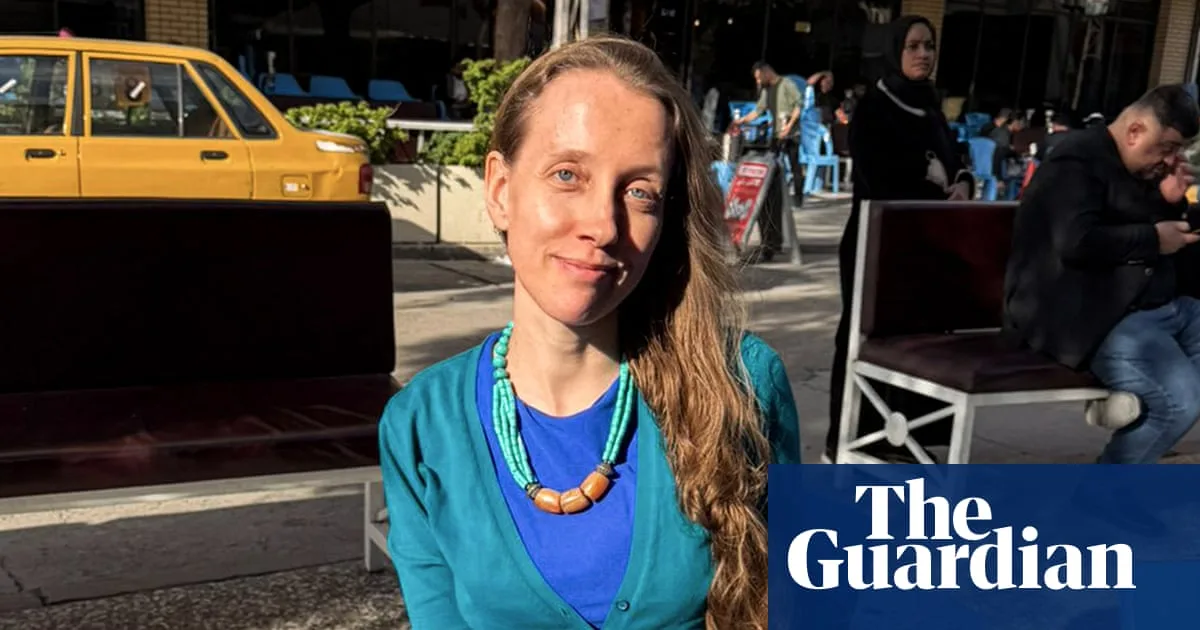
American journalist Shelly Kittleson has been released a week after being kidnapped in Baghdad, US Secretary of State Marco Rubio announced on Tuesday. The freelance journalist was abducted on 31 March from a street corner in the Iraqi capital.
Rubio said on social media: 'We are relieved that this American is now free and are working to support her safe departure from Iraq.' The Iran-backed militia Kataib Hezbollah earlier issued a statement saying it had decided to free Kittleson, adding that she must leave the country immediately.
Kataib Hezbollah said its decision came 'in appreciation of the patriotic stances of the outgoing prime minister', Mohammed Shia al-Sudani, but warned that 'this initiative will not be repeated in the future'. The group had not previously acknowledged responsibility for the abduction, though US and Iraqi officials had pointed to it.
Two militia officials told the Associated Press that in exchange for Kittleson's release, several detained members of the group would be freed. Kittleson, 49, had lived abroad for years and built a respected journalism career across the Middle East, particularly in Iraq and Syria.
Iraqi officials said two cars were involved in the kidnapping; one crashed while being pursued near al-Haswa, and Kittleson was transferred to a second car that fled. Three Iraqi officials said earlier on Tuesday that attempts to negotiate her release had faced obstacles, with a Popular Mobilization Forces official struggling to communicate with Kataib Hezbollah's leadership.
Kataib Hezbollah has previously been accused of kidnapping foreigners, including Princeton graduate student Elizabeth Tsurkov, who disappeared in Baghdad in 2023 and was freed in September 2025. Iran-backed militias have also launched regular attacks on US facilities in Iraq since the beginning of the US-Israeli war on Iran.




