US and Israel Launch Coordinated Strikes on Iran, Igniting Regional Conflict
In a dramatic escalation of tensions, the United States and Israel conducted expansive military strikes against Iran on Saturday, March 1, 2026. US President Donald Trump confirmed the operation, stating it aimed to dismantle Iran's military capabilities and prevent the development of nuclear weapons. The attacks have plunged the Middle East into a widening war, with Iran retaliating against US bases and Israel.
Timeline of the Initial Assault and Immediate Aftermath
Explosions rocked Tehran early Saturday, with Israel announcing strikes shortly after. Among the first targets was an area near the offices of Supreme Leader Ayatollah Ali Khamenei. Iranian state media later confirmed Khamenei's death in the attacks, contradicting earlier statements from Foreign Minister Abbas Araghchi, who had claimed both Khamenei and President Masoud Pezeshkian were alive.
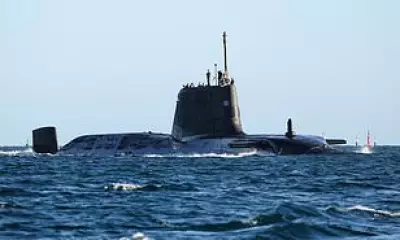
The US had built up naval forces in the region for weeks, including the aircraft carriers USS Abraham Lincoln and USS Gerald R Ford, along with multiple destroyers. Trump had pressured Tehran to constrain its nuclear program, but negotiations collapsed, leading to the offensive.

Iran's Retaliatory Strikes and Regional Fallout
Iran's Islamic Revolutionary Guard Corps launched counterattacks, firing drones and missiles at Israel and US military installations in Bahrain, Kuwait, the UAE, and Qatar. Bahrain reported a missile strike on the US Navy's 5th Fleet headquarters, while explosions were heard in Kuwait and Qatar. Airspace closures in Iraq, the UAE, and Jordan further heightened tensions.
Casualties mounted quickly. Iran's state-run IRNA news agency reported at least 165 killed at a girls' school in southern Iran from US-Israeli strikes. Shrapnel from an Iranian missile in the UAE killed one person. The Iranian Red Crescent Society later stated the airstrike campaign had killed 555 people in Iran.
Trump's Call for Regime Change and Military Developments
In an eight-minute social media video, Trump declared "major combat operations" and urged Iranians to topple their government. "When we are finished, take over your government," he said, framing the conflict as an opportunity for regime change. He listed grievances dating back to Iran's 1979 revolution.
US casualties were confirmed, with three American troops killed and five seriously injured. Smoke was seen near the US embassy in Kuwait, prompting warnings for Americans to avoid the area. Trump suggested the conflict could last four weeks, claiming operations were "ahead of schedule."
Disruption to Air Travel and International Reactions
The fighting severely disrupted commercial air travel. Israel, the UAE, and Qatar closed their airspace, leading to flight cancellations by carriers like Emirates, Etihad, Qatar Airways, Virgin Atlantic, Turkish Airlines, and KLM. Planes were rerouted, with longer flight times expected due to avoidance of conflict zones.
In a significant move, UK Prime Minister Sir Keir Starmer granted the US permission to use RAF bases in Cyprus for defensive purposes, after Iranian missiles were aimed toward the island. Trump expressed disappointment over delays in the decision.
Expansion of the Conflict to Proxy Groups
The war widened as Iranian-backed militias joined the fray. Houthi officials in Yemen vowed to resume attacks on Red Sea shipping and Israel. In Lebanon, Israel launched missile and drone attacks on Hezbollah-controlled areas of Beirut, with Defense Minister Israel Katz warning that Hezbollah chief Naim Qassem was a "target for elimination." Hezbollah had fired at Israel in retaliation for Khamenei's killing.
Blasts were reported in Jerusalem, Dubai, Abu Dhabi, Doha, and Manama as the conflict entered its third day. Top Iranian security official Ali Larijani vowed on social media that Iran would not negotiate with the United States, signaling a hardening stance.
The situation remains fluid, with ongoing strikes and retaliations threatening to engulf the region in prolonged warfare. International efforts to de-escalate have yet to gain traction, as both sides prepare for further military engagements.