US-Israel Initiative Wanes as Iran's Hormuz Blockade Shocks Global Economy
Analysis by Jason Burke in Jerusalem
In the initial phase of the renewed Middle East conflict, the United States and its ally Israel appeared to hold the strategic initiative. However, recent developments suggest this advantage may be slipping away as the crisis deepens and Iran's blockade of the Strait of Hormuz sends shockwaves through the global economy.
Iran's Confident Stance and Economic Warfare
Senior Iranian Revolutionary Guards officer Mohsen Rezaee declared on Sunday that "the end of the war is in our hands," demanding the withdrawal of US forces from the Gulf and compensation for damages. This confident rhetoric marks a significant shift from three weeks ago, when Tehran's leadership seemed unlikely to project such assurance.

The conflict erupted with Israel's surprise strike that killed Supreme Leader Ayatollah Ali Khamenei. US and Israeli warplanes demonstrated their ability to operate with impunity over Iran, leveraging extensive intelligence to strike thousands of targets while suffering minimal losses primarily from friendly fire.
Iran retaliated with missile and drone barrages targeting Israel, most of which were intercepted by Israeli air defense systems. The attacks have resulted in 12 fatalities in Israel so far, a substantially lower toll than during last year's shorter conflict between the two powers.
The Critical Hormuz Factor
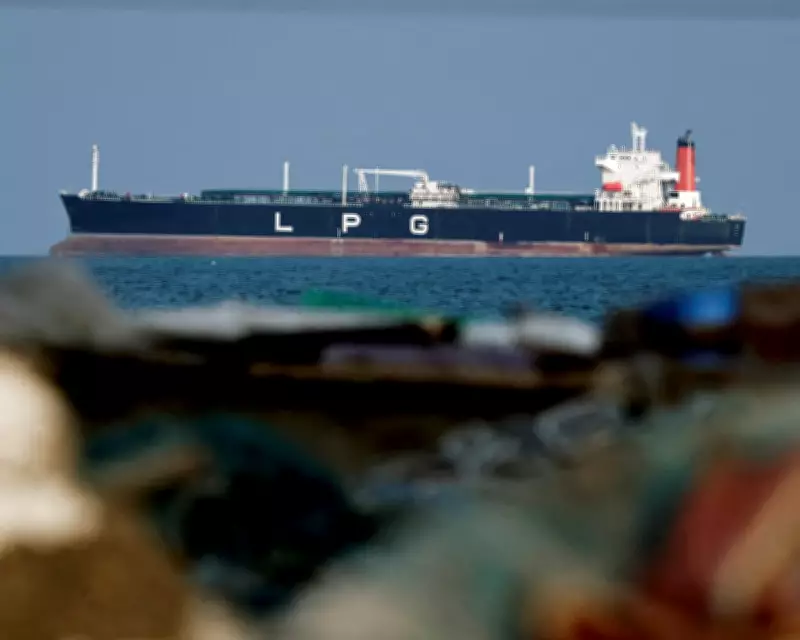
The pivotal development has been Iran's closure of the Strait of Hormuz, which carries approximately one-fifth of the world's oil and gas supplies. This strategic move has sent shockwaves through global markets, causing oil prices to soar and triggering spikes at fuel pumps worldwide. The economic repercussions have placed US President Donald Trump under mounting domestic and international pressure to bring hostilities to a rapid conclusion.
While Gulf countries have managed to protect their residents and infrastructure from crippling damage despite Iranian targeting, their reputation as stable, luxurious oases of wealth lies in ruins. Concerns persist about whether their crucial interceptor missile stocks will be depleted over time.
Diverging Analytical Perspectives
Professor Danny Orbach of Hebrew University in Jerusalem maintains that Israel and the US continue to direct the war's dynamic. "Having the initiative means you are setting the agenda," Orbach stated. "Iran is running out of missile launchers, so Tehran's only option was to escalate the conflict and hope for cessation. That explains their attacks on Gulf states and the Hormuz closure."
Orbach emphasized the asymmetric nature of the stalemate: "Iran is dependent on a US decision regarding whether to devastate their economy. If there is any stalemate, it is not an equal one."
In contrast, Professor Peter Neumann of King's College London argues that Iran has successfully played a weak hand. "For several days now, the US has been struggling to formulate an effective response to the Hormuz closure, which they clearly didn't anticipate. I believe the Iranians now hold the initiative," Neumann asserted.
Military Options and Limitations
Some analysts have suggested that President Trump could order US Marines, currently en route to the Middle East, to seize Kharg Island—Iran's principal oil export hub—to pressure Tehran. However, these forces won't arrive for at least two weeks.
Alternatively, Trump might order the destruction of Kharg Island's oil facilities, potentially crippling Iran's economy for years. Thus far, only military targets have been struck there, a choice Trump described on Saturday as being made "out of decency."
Trump has called upon other nations to contribute warships to a US-led effort to reopen the strait, but no country has accepted this invitation. Most analysts consider such an operation fraught with risk, as protecting hundreds of tankers would require massive military resources without guaranteeing complete shipping security. A single Iranian missile, mine, or explosive-laden small boat could have devastating consequences.

Political Realities and Regional Dynamics
This suggests that the decision to reopen the vital waterway must ultimately be made in Tehran. There is scant evidence that Iran's current leadership is inclined to mitigate threats to the global economy, nor that the regime change hoped for by Israel and the US is imminent.
Neumann observed: "Despite significant success in destroying military and economic infrastructure in Iran, this hasn't produced the desired political effect. The regime appears weak yet stable."
Israeli commentators on Sunday noted government efforts to temper expectations raised at the war's outset. Yoav Limor wrote in Israel Hayom that officials now consider regime change less likely, attributing this to "the powerful grip the regime has maintained on security forces and the ruthless suppression that has deeply terrified the Iranian public."
Regional Actors and Their Calculations
Within this spiraling regional crisis, smaller conflicts follow their own dynamics. Pro-Iranian militias in Iraq remain hesitant to fully commit to Iran's defense, while Yemen's Houthis have yet to enter hostilities.
In Lebanon, Hezbollah surprised Israel by launching extensive missile and drone barrages to avenge Khamenei's death. The Iran-backed Islamist movement continues firing salvos into northern Israel, revealing unexpected strength that has caught many analysts off guard.
Israel has responded with a massive air offensive that has killed over 800 people and displaced approximately 800,000.
Lebanon analyst David Wood of the International Crisis Group noted that Hezbollah doesn't possess the same strategic cards as Iran. "Israel has clear, ambitious aims to eliminate Hezbollah as a national security threat, though their methods remain unclear. Hezbollah has one clear objective: survival," Wood explained. "While Hezbollah may have surprised Israel initially, we shouldn't assume they can maintain this advantage long-term given Israel's massive military superiority."
As the conflict enters its fourth week, the strategic landscape continues evolving, with economic pressures from the Hormuz blockade potentially outweighing conventional military advantages in determining the war's ultimate trajectory and conclusion.