Timeline of Escalation: US-Israeli Military Strikes Trigger Full-Scale Middle East War
In a dramatic escalation of hostilities, the United States and Israel launched coordinated military strikes against Iran on Saturday, March 2, 2026, in what President Donald Trump described as "major combat operations" aimed at dismantling Iran's military capabilities and preventing nuclear weapon development. The attacks have rapidly spiraled into a broader regional conflict, with Iran retaliating against US installations and Israeli territory.
Initial Strikes and Immediate Aftermath
The operation began with explosions reported in Tehran early Saturday morning. Israeli forces confirmed their involvement shortly after, with one of the first targets being near the offices of Supreme Leader Ayatollah Ali Khamenei. The whereabouts of Khamenei remained unclear for days, though Iranian Foreign Minister Abbas Araghchi later stated both Khamenei and President Masoud Pezeshkian were alive. Contradicting this, President Trump subsequently claimed the Ayatollah had perished in the attacks.
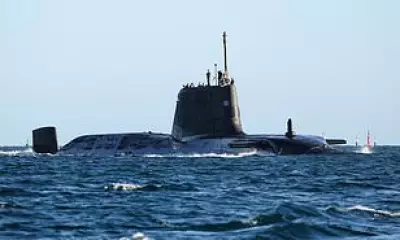
Israeli Defence Minister Israel Katz justified the strikes as necessary "to remove threats". The assault followed weeks of intensified pressure from the Trump administration on Tehran to agree to nuclear constraints, accompanied by a significant US naval buildup in the region. This fleet included the aircraft carrier USS Abraham Lincoln, the world's largest carrier USS Gerald R. Ford, and multiple guided-missile destroyers deployed from the Caribbean.

Civilian Toll and Iranian Retaliation
The human cost quickly mounted. Iran's state-run IRNA news agency reported at least 165 fatalities at a girls' school in southern Iran from the joint strikes. The Iranian Red Crescent Society later updated the death toll in Iran to 555. In retaliation, Iran's Revolutionary Guard launched counterattacks, firing drones and missiles at Israel and targeting US military installations in Bahrain, Kuwait, and Qatar.
Bahrain confirmed a missile attack on the US Navy's 5th Fleet headquarters, while explosions were heard in Kuwait near US Army Central and in Qatar at Al Udeid Air Base. Shrapnel from an Iranian missile strike in the United Arab Emirates capital killed one person. Although an apartment building in northern Israel was damaged, Israeli authorities reported no significant hits or injuries from the missile barrages.
Trump's Call for Regime Change and Regional Fallout
President Trump delayed his official announcement for over an hour before releasing an eight-minute video on social media. He framed the strikes as addressing longstanding grievances dating back to Iran's 1979 revolution. In a provocative move, Trump urged Iranian citizens to "take over your government", suggesting this might be their only opportunity for generations to topple the Islamic leadership.
The conflict severely disrupted regional air travel. Israel, the UAE, Qatar, Iraq, and Jordan closed their airspace, leading to widespread flight cancellations and rerouting. Major airlines, including Virgin Atlantic, Turkish Airlines, and KLM, suspended services to affected areas, with flights to India, the Maldives, Dubai, and Riyadh facing extended travel times due to avoidance of Iraqi airspace.
Conflict Expansion and International Involvement
By Monday, the war had widened significantly. Iranian-backed Houthi forces in Yemen vowed to resume attacks on Red Sea shipping and Israel. In Lebanon, Israel launched missile and drone attacks on Hezbollah-controlled suburbs of Beirut, with Defence Minister Katz declaring Hezbollah chief Naim Kassem a "target for elimination". Hezbollah's actions were reportedly in retaliation for the killing of Ayatollah Khamenei.
The US embassy compound in Kuwait was reportedly hit, with smoke seen rising nearby, prompting the US consulate to warn Americans away. The US military confirmed its first casualties: three troops killed and five seriously injured. President Trump indicated the conflict could persist for up to four weeks, claiming operations were "ahead of schedule".

Diplomatic and Military Support Shifts
In a notable policy reversal, UK Prime Minister Sir Keir Starmer granted the United States permission to use RAF bases in Cyprus for "limited specific defensive purposes" to protect UK and US allies. This decision came after Defence Secretary John Healey revealed two Iranian missiles were aimed toward Cyprus, where British bases are located.
Top Iranian security official Ali Larijani vowed on social media that Iran "will not negotiate with the United States", underscoring the deepening diplomatic rift. As blasts were reported in Jerusalem, Dubai, Abu Dhabi, Doha, and Manama, the conflict entered its third day with no immediate signs of de-escalation, marking one of the most severe military confrontations in the Middle East in recent decades.