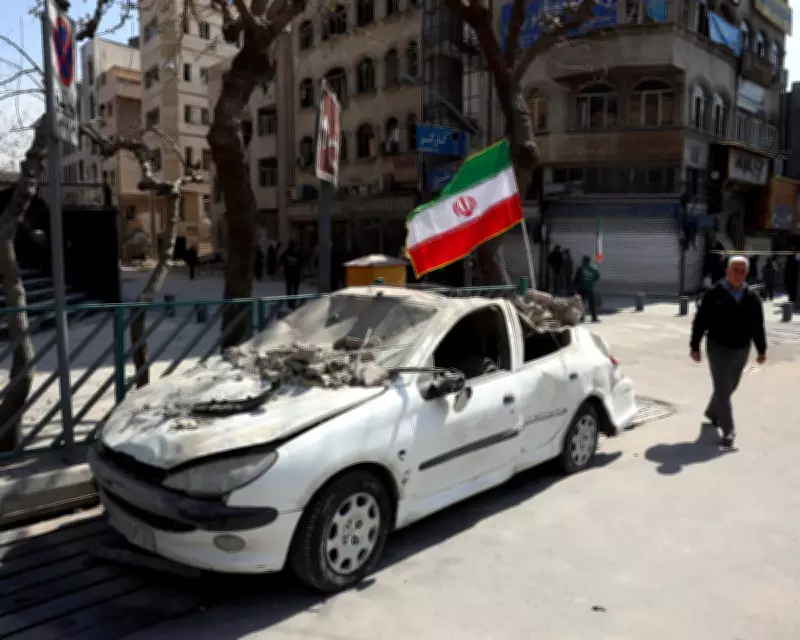
The United States and Israel initiated coordinated military strikes against Iran on 28 February, structuring the campaign as a classic air war. The objective was to destroy Iranian air defences, degrade retaliatory capabilities, and decapitate senior leadership through precision strikes.
Operational Advantages and Strategic Risks
From an operational standpoint, the advantages have been clear. Once airspace is secured, the conflict becomes more cost-effective, allowing the use of plentiful and relatively inexpensive munitions instead of long-range systems. The decapitation strategy aims to disrupt Tehran's decision-making by removing experienced commanders, potentially leading to internal chaos and slower responses.
Misreading Iranian Resilience
However, tactical command does not ensure strategic clarity. A deeper risk lies in the assumptions driving this campaign. For decades, US policy has vacillated between viewing Iran as a messianic theocracy or a brittle dictatorship. In reality, Iranian governance blends ideology with a strong instinct for survival.

Under Ayatollah Ali Khamenei, Tehran has shown that revolutionary rhetoric can coexist with pragmatic actions. The 2015 nuclear agreement exemplifies this, where negotiations occurred despite public anti-US sentiment to alleviate economic pressures. Even after the US withdrawal and Israeli covert operations, Iran maintained partial diplomatic channels, using confrontation and negotiation as parallel tools for regime preservation.
Iran's Strategy of Endurance
This history challenges the notion that military pressure will inevitably cause Iran to capitulate or collapse. Survival is the regime's narrowest definition of victory. In last year's 12-day war, Iran framed enduring the conflict as a success despite significant damage.
Iran has adopted an asymmetric strategy to stretch the conflict in time and space. Using drones and missiles, it has struck targets in Israel, US bases, and Gulf commercial infrastructure. These limited but cumulative attacks aim to create friction, testing regional resilience and raising the economic and psychological costs for adversaries.
The Calculus of Restraint
Iranian planners likely recognise that their production facilities are vulnerable to prolonged bombardment. Thus, they prioritise preserving residual capabilities, pacing the fight, and keeping escalation options in reserve. In a long war, restraint can be a form of preparation for future phases.
The conflict represents a contest between opposing timelines. Iran bets on endurance, while the US and Israel rely on overwhelming force to collapse Iranian capabilities before attrition and regional blowback take hold.
Internal and Regional Implications
If the campaign succeeds in degrading the regime, it may not yield the expected political outcomes. The Islamic Revolutionary Guard Corps is deeply embedded as a military, economic, and political institution, making it resistant to change via airpower alone.
Iran's internal landscape is complex. While ethnic minorities have grievances, many fear national fragmentation. Reports of US and Israeli-backed Kurdish militants preparing for ground assaults exacerbate these concerns. Should the state fail, instability could spill into Iraq and heighten tensions with Turkey over Kurdish autonomy.
Potential for Miscalculation
Despite its resilience, Iran's leadership is prone to miscalculation. The country lacks external supporters like Ukraine, risking ammunition shortages. Its regional policies could alienate neighbours, shifting them from defence to offence. The regime, broadly detested, has pushed Iran's economy and environment to the brink of collapse.
It remains unclear whether this war will break Iran, but the potential exists. Regardless, Tehran, its neighbours, and its assailants all stand to lose in a conflict marked by strategic endurance versus military might.