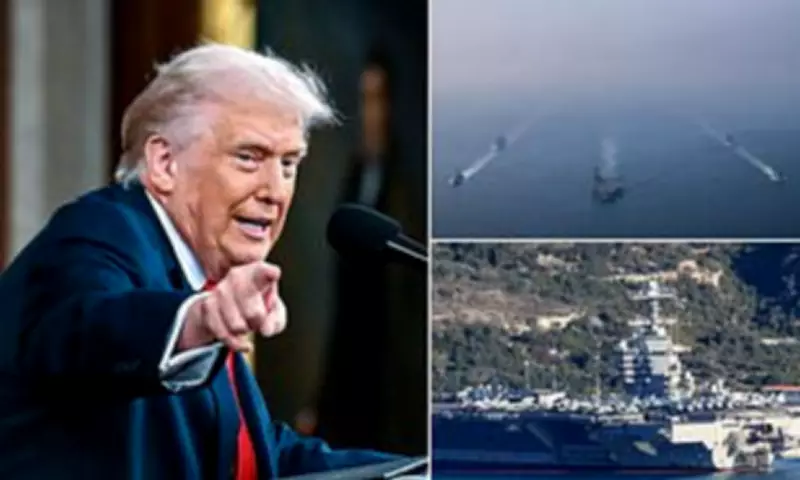
Iran and the United States are poised to convene crucial nuclear negotiations in Geneva on Thursday, with diplomatic efforts widely regarded as a last opportunity to avert escalating military tensions. The United States has significantly bolstered its military presence in the Middle East, deploying a formidable fleet of aircraft and warships to exert pressure on Tehran ahead of the talks.
High-Stakes Diplomacy Amid Regional Threats
US President Donald Trump is actively pursuing a comprehensive agreement to curtail Iran's nuclear programme, capitalising on the nation's internal struggles following widespread protests last month. Iran, however, remains steadfast in its intention to continue uranium enrichment, despite significant damage inflicted on its nuclear infrastructure by US-ordered attacks in June.
Retaliatory Threats and Regional Implications
Iran has issued stark warnings that any American military action would render all US bases throughout the Middle East as legitimate targets, potentially endangering tens of thousands of American service personnel. Furthermore, Tehran has threatened retaliatory strikes against Israel, raising alarming prospects of renewed regional warfare across the volatile Middle Eastern landscape.

'There would be no victory for anybody - it would be a devastating war,' Iranian Foreign Minister Abbas Araghchi declared in an interview with India Today, filmed just prior to his departure for Geneva. 'Since the Americans' bases are scattered through different places in the region, then unfortunately perhaps the whole region would be engaged and be involved, so it is a very terrible scenario.'
Negotiating Parties and Previous Collapse
Foreign Minister Araghchi will once again face Steve Witkoff across the negotiating table, the billionaire real estate developer and Trump confidant serving as special Middle East envoy. Their previous negotiation rounds collapsed dramatically last year following Israel's military engagement with Iran in June.
These renewed discussions are being facilitated by Oman, the Arabian Peninsula sultanate with a longstanding history of mediating between Iran and Western nations. Araghchi conducted preliminary meetings with Omani Foreign Minister Badr al-Busaidi upon arriving in Geneva Wednesday evening, with Oman's state news agency reporting they 'reviewed the views and proposals that the Iranian side will present to reach an agreement on the Iranian nuclear programme.'
Diverging Negotiation Priorities
The Trump administration is pushing for comprehensive concessions including complete cessation of uranium enrichment, restrictions on Iran's ballistic missile development, and curtailment of Tehran's support for regional militant groups. Iran maintains that discussions must remain exclusively focused on nuclear matters, rejecting broader security concerns as negotiation topics.
US Secretary of State Marco Rubio expressed skepticism about Iranian intentions, stating Wednesday that Tehran is 'always trying to rebuild elements' of its nuclear infrastructure. While acknowledging Iran currently isn't enriching uranium, Rubio emphasised they 'are trying to get to the point where they ultimately can.'
Nuclear Programme Status and Inspections
Iran claims to have suspended enrichment activities since June, but has simultaneously blocked International Atomic Energy Agency inspectors from accessing bomb-damaged nuclear sites. Satellite imagery reveals concerning activity at two affected locations, suggesting assessment and potential recovery operations are underway.
Iranian President Masoud Pezeshkian reiterated Tehran's official position on Thursday, asserting that 'Our Supreme Leader has already stated that we will not have nuclear weapons at all.' He added that doctrinal restrictions would prevent any movement toward nuclear weaponisation even if desired.
Weapons Capability Concerns
Western intelligence agencies and the IAEA maintain that Iran operated a nuclear weapons programme until 2003. Prior to June's attacks, Iran had achieved uranium enrichment to 60% purity - merely a technical step away from weapons-grade 90% levels. US intelligence assessments indicate Iran hasn't reactivated a weapons programme but has undertaken preparatory activities that would facilitate nuclear device production if pursued.

'The principle's very simple: Iran cannot have a nuclear weapon,' US Vice President JD Vance emphasised during White House remarks on Wednesday. While acknowledging Trump's preference for diplomatic resolution, Vance noted the president maintains 'other options as well' should negotiations fail.
Military Considerations and Regional Stability
Should diplomatic efforts collapse, significant uncertainty surrounds the timing and nature of potential military responses. Limited strikes aimed at coercing nuclear concessions may prove ineffective, while regime-change objectives would likely commit the United States to prolonged, extensive military engagement with unpredictable regional consequences.
Tehran's potential retaliation could target American allies throughout the Persian Gulf or Israel, with oil markets already reflecting these concerns through rising prices. Benchmark Brent crude has climbed to approximately $70 per barrel, partly driven by regional security anxieties.
Naval Movements and Strategic Posturing
Recent satellite imagery from Planet Labs PBC reveals unusual naval deployments, with American vessels typically stationed in Bahrain - headquarters of the US Navy's 5th Fleet - now operating at sea. This strategic dispersal mirrors precautionary measures taken before Iran's June attack on Qatar, suggesting heightened defensive preparations.
The 5th Fleet redirected inquiries to US Central Command, which declined to comment on operational matters. These developments underscore the precarious balance between diplomatic engagement and military readiness as Geneva negotiations unfold.