American intelligence agencies have directly contradicted claims by the Kremlin that Ukraine attempted to assassinate Vladimir Putin in a drone strike on one of his private residences. The rejection threatens to further destabilise fragile peace negotiations aimed at ending the ongoing war.
Claims and Counter-Claims in the Information War
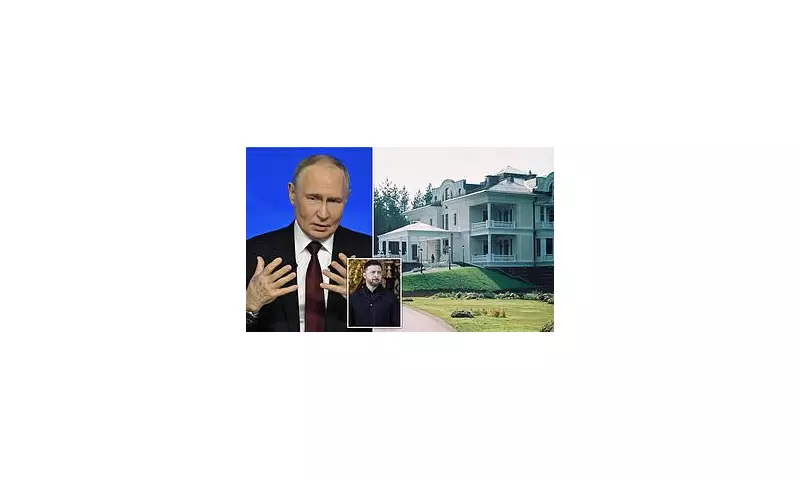
Earlier this week, Moscow accused Kyiv of targeting the Russian president's Valdai mansion in the Novgorod province, a favoured countryside retreat located between Moscow and St Petersburg. The Kremlin's spokesman, Dmitry Peskov, stated that all drones were shot down and provocatively claimed no evidence was necessary for such a 'massive' thwarted attack. In response, Russia threatened to toughen its stance in peace talks and withdraw from negotiations.
However, a US official told the Wall Street Journal that the CIA found no such attack occurred. According to American intelligence, Ukraine had been targeting a legitimate military objective in a similar region, but it was not proximate to Putin's residence. The Kremlin has persistently refused to provide any proof for its allegations.

Diplomatic Fallout and Political Reactions
The incident has triggered a sharp diplomatic row. Ukrainian President Volodymyr Zelensky dismissed the accusation as 'another lie from the Russian Federation' designed to derail peace efforts. He warned it could be used as a pretext for new Russian strikes on the Ukrainian capital, Kyiv. Ukraine's foreign minister, Andrii Sybiha, urged global leaders to condemn what he called Russian 'manipulations' and 'false justification' for further aggression.
In a surprising interjection, former US President Donald Trump told reporters he was 'very angry' to hear about the alleged strike, stating it was 'not the right time' for such actions. He later conceded it was 'possible' the attack did not happen, after being briefed on the intelligence findings.
Strategic Implications for the Peace Process
The dispute occurs against a backdrop of critical, US-led peace talks. Zelensky admitted in a recent interview that Ukraine cannot win the war without American support. While he described a Sunday meeting with Donald Trump as productive, significant hurdles remain, including the future status of the Donbas region.
Russian Foreign Minister Sergei Lavrov had claimed Ukraine used 91 drones in the alleged Sunday night attack, branding it 'state terrorism' and vowing retaliation. With US intelligence now publicly debunking the Kremlin's narrative, the credibility of Russia's negotiating position faces serious international scrutiny. The episode underscores the profound challenges in achieving a diplomatic resolution to the conflict.