US Military Forces Board Sanctioned Venezuelan Oil Tanker in Dramatic Indian Ocean Operation
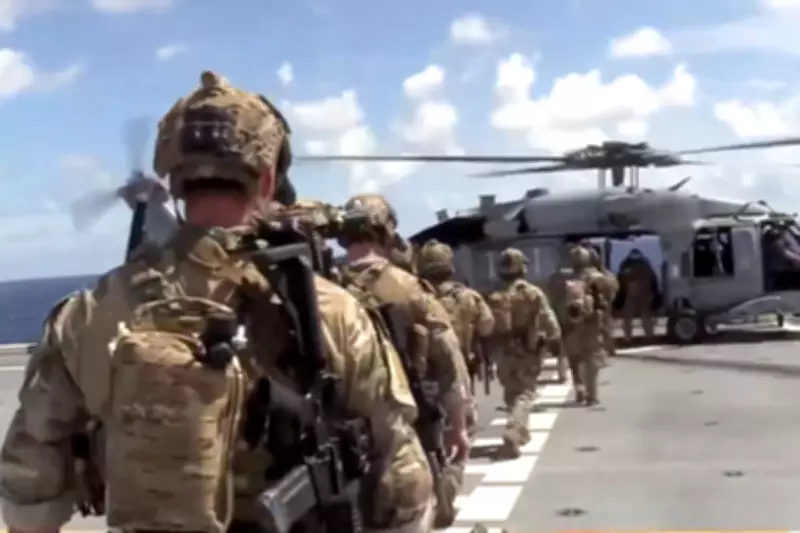
The Pentagon has confirmed that US military forces successfully boarded a sanctioned oil tanker in the Indian Ocean overnight, executing a complex maritime interdiction operation targeting illicit Venezuelan oil shipments. The dramatic boarding of the Veronica III represents the latest escalation in Washington's campaign against Caracas's oil exports.
Defying Trump's Quarantine Order
According to official statements released on Sunday, the Panamanian-flagged vessel attempted to evade President Donald Trump's quarantine order for sanctioned tankers issued in December. The Pentagon stated clearly: "The vessel tried to defy President Trump's quarantine – hoping to slip away. We tracked it from the Caribbean to the Indian Ocean, closed the distance, and shut it down."
This operation follows years of US oil sanctions against Venezuela that have forced the South American nation to rely on what experts describe as a 'shadow fleet' of falsely flagged tankers to smuggle crude into global supply chains. The Trump administration has intensified pressure on Caracas through these maritime operations.

Veronica III Boarding Details
The Defense Department confirmed via social media that US forces executed "a right-of-visit, maritime interdiction and boarding" of the Veronica III. Video footage released by the Pentagon shows US troops boarding the tanker in what appears to be a carefully coordinated operation.
While the Pentagon's announcement didn't specify whether the vessel had been formally seized, the Veronica III is listed under US sanctions related to Iran according to the Treasury Department's Office of Foreign Assets Control website. This connection suggests broader geopolitical implications beyond just Venezuelan oil smuggling.
Pattern of Tanker Interceptions
This incident follows another significant boarding operation just last week, when the US military intercepted the Aquila II, a different tanker also operating in the Indian Ocean. That vessel remains in US custody while authorities determine its ultimate fate, according to defense officials speaking anonymously.
Samir Madani, co-founder of TankerTrackers.com, revealed that the Aquila II was one of at least 16 tankers that departed Venezuela's coast last month following the capture of former President Nicolás Maduro during an American military operation in January. Madani's organization used satellite imagery and surface-level photos to document these vessels' movements.
Shadow Fleet Tactics Exposed
The Aquila II case reveals the sophisticated methods employed by these shadow fleet operators. The Panamanian-flagged tanker, owned by a company with a listed address in Hong Kong, has spent much of the last year with its radio transponder deliberately turned off, a practice known as "running dark" commonly used by smugglers to conceal their locations and activities.
This tanker falls under US sanctions related to the shipment of illicit Russian oil, indicating how multiple sanctioned regimes are interconnected through these maritime smuggling networks. The Trump administration's broader strategy appears focused on taking control of Venezuela's oil resources through these systematic tanker seizures and interceptions.
The Indian Ocean has become a critical theater for these operations, with US forces demonstrating their ability to track vessels across vast distances from the Caribbean Sea. These developments highlight the ongoing geopolitical tensions surrounding global energy markets and the enforcement of international sanctions regimes.