The United States government has expressed profound apprehension regarding the British government's recent decision to grant planning permission for a substantial new Chinese diplomatic complex in central London. This development follows explicit security warnings from multiple quarters, including the UK's own intelligence services and several allied nations.
International Alarm Over Security Implications
A senior US official conveyed to The Telegraph that American authorities are "deeply concerned about adversaries exploiting the critical infrastructure of our closest allies". This statement underscores the growing diplomatic tensions surrounding the project, particularly in the context of recent strains between Prime Minister Sir Keir Starmer and US President Donald Trump.
Intelligence Warnings and Proposed Mitigations
MI5 Director General Sir Ken McCallum and GCHQ Director Anne Keast-Butler have formally advised ministers that while a "package of national security mitigations" has been established, it is impossible to "eliminate every potential risk" associated with the new site. These security measures, which include specific protocols for nearby data cabling, will undergo regular review through a cross-government process led by senior Home Office officials.

The concerns are not limited to American officials. Labour MP Sarah Champion revealed during an urgent Commons debate that the Dutch government, Swiss parliament, Swedish parliament, and the White House have all raised alarms about the potential risks to UK infrastructure. The primary fear centres on the embassy's proposed proximity to vital data cables facilitating communications between the City of London and Canary Wharf, the heart of Britain's financial industry.
Controversial Design and Alleged Functions
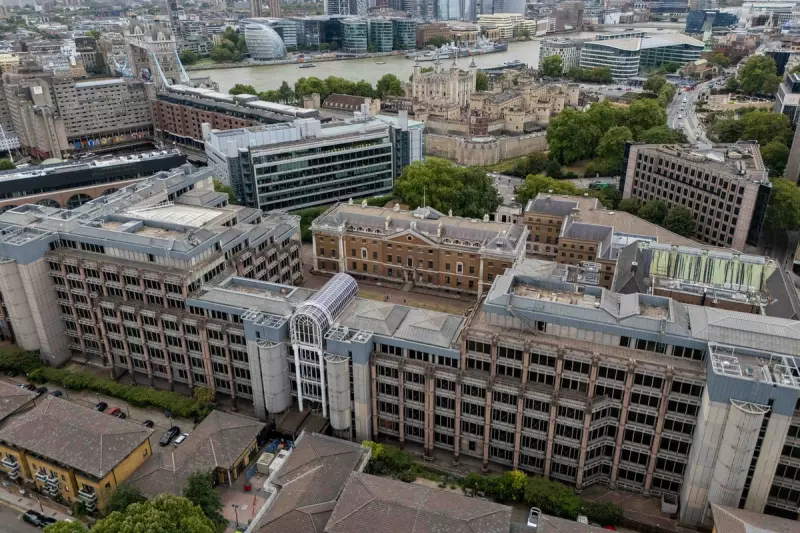
Beijing's architectural plans for the embassy, to be located at Royal Mint Court near the Tower of London, are reported to include 208 secret rooms and a concealed basement chamber. Opponents of the project argue these facilities could serve dual purposes far beyond standard diplomatic functions.
Campaigners have voiced fears that the hidden spaces could be utilised for the detention of Chinese dissidents who have sought refuge in Britain, effectively creating an extraterritorial zone for security crackdowns. Furthermore, the consolidation of seven existing Chinese diplomatic buildings into one large 'super-embassy' has intensified suspicions that the site could become a significant base for espionage activities.
Government Defence and Political Backlash
Despite the chorus of concern, the government has proceeded with approval. Local Government Secretary Steve Reed formally signed off on the plans, concluding a lengthy and contentious campaign against the development. Security Minister Dan Jarvis told Parliament that there were perceived "national security advantages" to consolidating Chinese diplomatic premises and asserted he was "assured that UK national security is protected".
The Prime Minister's official spokesman defended the decision, stating that classified facilities are "a standard part of any significant diplomatic presence" and criticising opponents of the plans as "either naive or recklessly isolationist".
Ongoing Legal and Political Opposition
Opposition to the embassy remains steadfast. Luke de Pulford, head of the Inter-Parliamentary Alliance on China, lamented that "years of campaigning about the obvious and manifold risks" had been outweighed by the government's apparent desire for Chinese investment. Campaigners have pledged to continue their fight through the courts, arguing the development provides an unacceptable platform for foreign interference and surveillance.
The approval marks a critical juncture in UK-China relations, balancing complex diplomatic and economic considerations against stark warnings from security experts and international partners about the long-term implications of hosting such a large-scale diplomatic facility from a geopolitical rival.