
Donald Trump has blamed Iran for an airstrike on a girls' school in southern Iran that killed at least 175 people, despite evidence pointing to the United States military. Speaking on Air Force One on Saturday, the president claimed the attack was carried out by Tehran, citing their alleged inaccuracy with munitions.
Defense Secretary Pete Hegseth, standing behind Trump, said the origin of the strike was still under investigation but insisted that “the only side that targets civilians is Iran.” Neither the US nor Iran has claimed responsibility for the February 28 attack in Minab.
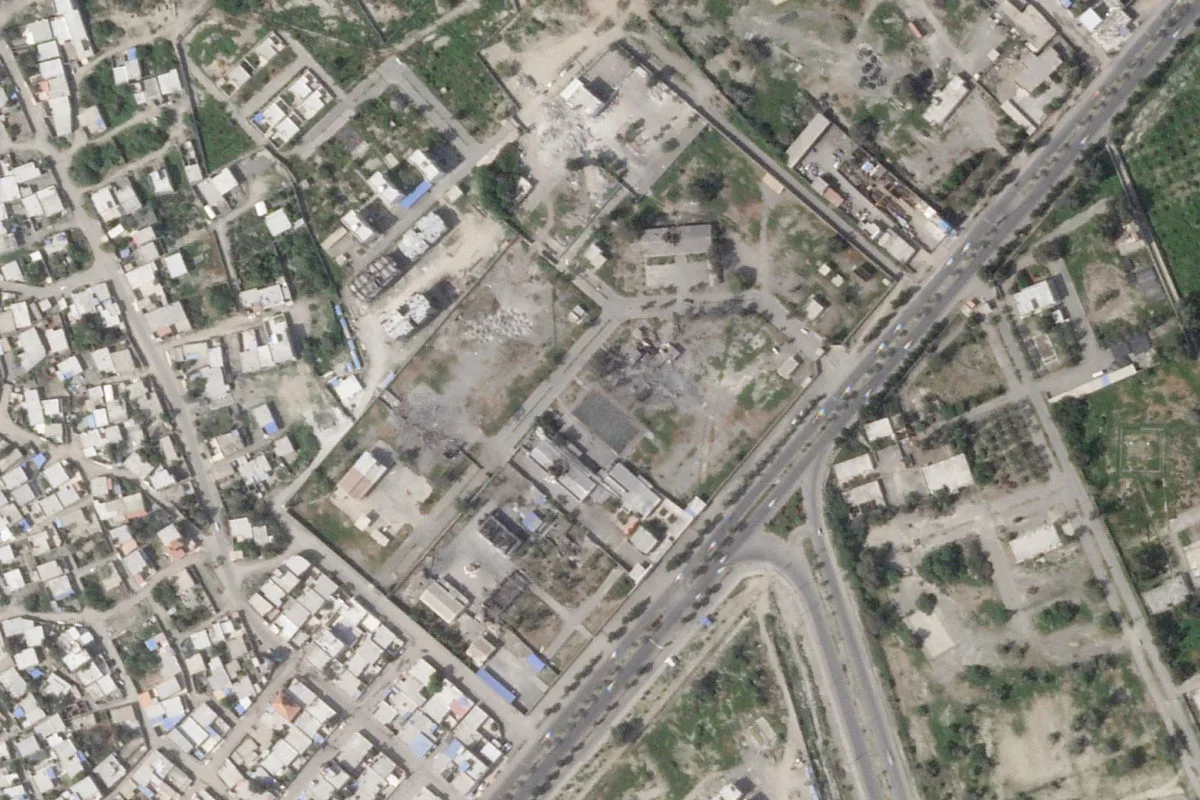
However, an investigation by The New York Times, using satellite imagery and verified social media posts, suggests the school was hit during US strikes on a nearby naval base operated by the Islamic Revolutionary Guards Corps. The Pentagon confirmed it was conducting strikes on that base at the time.
Geolocation experts verified that smoke plumes seen in videos originated from both the base and the school. Satellite images corroborate the timeline, showing multiple precision airstrikes hitting both locations. Wes J. Bryant, a former US Air Force senior adviser on civilian harm, told The Times the most likely explanation was “target misidentification,” with those conducting the strikes unaware of civilians inside the school.
Theories that a faulty Iranian missile caused the destruction have been dismissed, as a single munition could not produce such extensive damage. Independent journalists have been unable to reach the scene, hindering exact determinations.




