Trump Administration Targets Cuban Regime Change by Year-End, Inspired by Venezuela Success
The Trump administration is reportedly aiming to achieve regime change in Cuba by the end of the year, according to US officials who spoke to The Wall Street Journal. This ambitious goal follows the successful capture and ouster of Venezuelan President Nicolas Maduro in a surgical military operation on January 3.
Confidence Boosted by Venezuela Operation
Officials familiar with the plans have gained confidence that this outcome is possible for two primary reasons. First, the recent operation in Venezuela demonstrated a viable model for regime change, with an asset within Maduro's inner circle flipping on him to assist US forces. The storming of Caracas resulted in the deaths of 32 Cuban soldiers and approximately two dozen members of Maduro's security force.
Second, the administration now believes Cuba's economy is very close to collapsing without Maduro in place to guarantee vital oil imports. Cuba's economy has been deeply entangled with Venezuela's for decades, and economists predict the island could run out of oil within weeks.

Economic Pressure and Internal Dissent Strategy
US intelligence assessments reveal Cuba is experiencing frequent blackouts and chronic shortages of basic goods and medicines, with nearly 90 percent of the population living below the poverty line. The administration is reportedly running an economic pressure campaign targeting Cuba's oil supply, with the US military's continued seizure of Venezuelan-tied oil tankers now appearing to have the dual objective of punishing Venezuela and strangling Cuba's energy imports.
For now, the focus is on identifying members of the current Cuban regime who might be sympathetic to American interests and willing to cut a deal, mirroring the strategy that proved successful in Venezuela. Officials emphasize there is no concrete plan to violently overthrow the communist government that has ruled since Fidel Castro took power in 1959.
Internal Debate Over Approach
There is evidence of dissent within US circles about how to approach regime change in Cuba. Some officials and Trump allies, including Florida-based Cuban exiles, advocate for an aggressive approach to end nearly 70 years of communist rule.
Others within the administration have pointed to prior disastrous attempts to overthrow or weaken the Castro government, including the failed Bay of Pigs invasion in 1961 and the ongoing trade embargo instituted in 1962. These officials argue that Venezuela differs significantly from Cuba despite both having far-left governments.
Cuba remains a single-party state that does not allow political opposition and has violently suppressed major protests, including one in 1994 in Havana and another across the entire island in 2021. Venezuela, by contrast, has maintained an active anti-Maduro faction for years along with protests and elections, albeit rigged in Maduro's favor according to international monitors.
Legacy Considerations and Public Statements
According to a US official who worked for Trump on Cuba policy during his first term, the president believes that ending the long reign of the Castros would cement his foreign policy legacy. Such an achievement would give Trump a leg up on President John F. Kennedy, who failed to root out Fidel Castro during his administration.
The administration has become more open about its desire to see a conclusion to the Cuban regime. Jeremy Lewin, the State Department's acting undersecretary for foreign assistance, stated last week that Cuba "has to make a choice to step down or to better provide for its people."
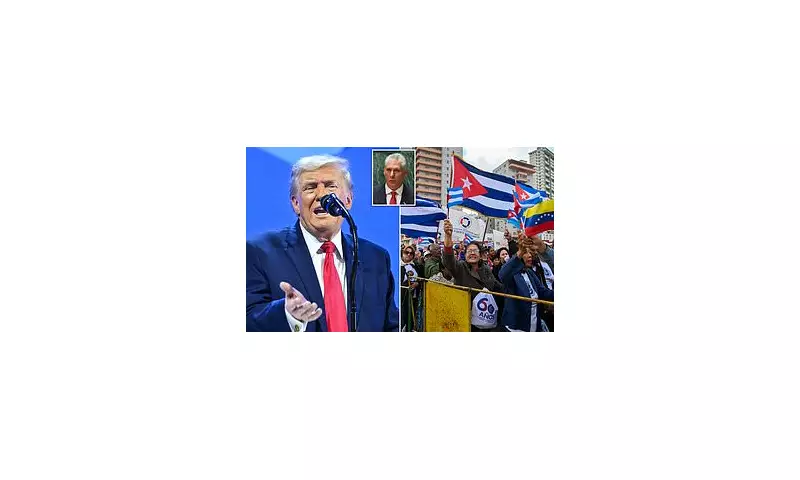
On January 11, President Donald Trump publicly warned the Cuban regime in a Truth Social post: "I strongly suggest they make a deal, BEFORE IT IS TOO LATE." He emphasized that after Maduro's capture, no more Venezuelan oil or money would be arriving to support Cuba.
Cuban Resistance and Leadership
There is no indication that Cuba is cowing to US pressure. The government remains highly influenced by 94-year-old Raúl Castro, who retired as president in 2021 but continues to wield significant power. Day-to-day responsibilities have been handed to 65-year-old Miguel Díaz-Canel, who has not indicated any openness to a deal with the US.

At a recent memorial for the Cuban security guards killed while trying to protect Maduro, Díaz-Canel declared: "There is no surrender or capitulation possible nor any kind of understanding based on coercion or intimidation."
Given Cuba's history of suppressing dissent and the potential humanitarian crisis that could result from regime change operations, some Trump officials acknowledge that replicating the Venezuela success could prove extraordinarily difficult in a country where citizens face severe repression.