Ukraine's Counteroffensive Reclaims Key Territory, Disrupting Russian Buffer Zone Plans
In a significant development in the ongoing Ukraine-Russia conflict, Ukrainian troops have successfully liberated approximately 400 square kilometres of territory in the Dnipropetrovsk region through recent counterattacks. Senior General Oleksandr Komarenko announced that Ukrainian forces now control almost the entirety of this strategically important area, dealing a substantial blow to Vladimir Putin's military objectives.
Putin's Buffer Zone Strategy in Tatters
General Komarenko emphasised that this territorial gain directly undermines Russia's attempted strategy of seizing a strip of land beyond its stated claims in the Donbas region. Moscow had intended this territory to serve as a "buffer zone" to support further offensive operations and consolidate its position in eastern Ukraine. The Ukrainian advance has effectively shattered this plan, forcing Russian forces to reconsider their tactical approach along the front lines.
Meanwhile, contradictory claims continue to emerge from both sides regarding battlefield progress. Ukrainian officials maintain they have pushed Russian forces back in several locations, while the Kremlin insists its invasion is making steady advances. This information war persists as the conflict enters its fourth year, with no immediate resolution in sight.
Civilian Areas Under Constant Attack
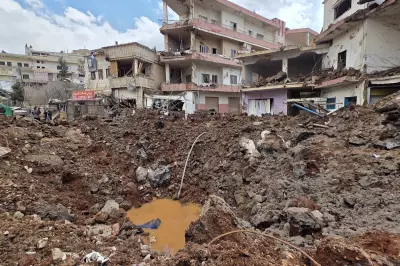
Despite these military developments, Russia's almost daily aerial assaults on Ukrainian civilian areas continue unabated. Overnight drone strikes targeted two cities, injuring at least fourteen people including two children, according to emergency services reports. Ukraine's air force reported intercepting 122 out of 137 drones launched by Russia during the night, demonstrating both the intensity of the attacks and Ukraine's improving defensive capabilities.
International Dimensions and Diplomatic Maneuvers
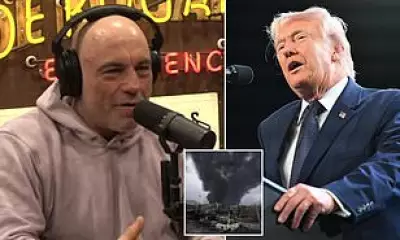
The conflict's international dimensions expanded with former US President Donald Trump revealing that he discussed the Ukraine war during an hour-long phone call with Vladimir Putin. Trump indicated the United States would consider loosening oil-related sanctions on "some countries" following their conversation, which he described as "very good" and "positive" despite acknowledging "tremendous hatred" between Putin and Ukrainian President Volodymyr Zelensky.
Trump recounted telling Putin that Russia could be "more helpful by getting the Ukraine-Russia war over with" rather than offering assistance with the Middle East conflict. This exchange highlights the complex diplomatic landscape surrounding the war, with US-brokered talks currently on hold as both sides claim military progress.
UN Condemns Russia's Deportation of Ukrainian Children
In a separate but related development, the United Nations has determined that Russia's deportation and forcible transfer of Ukrainian children constitute crimes against humanity and war crimes. According to a report by the Independent International Commission of Inquiry on Ukraine, Russian authorities including Vladimir Putin were involved at the highest levels in deporting thousands of children from occupied territories, primarily from the Donetsk and Luhansk regions.
Ukraine reports that nearly 20,000 children have been illegally sent to Russia and Belarus, while the UN Commission has documented 1,205 specific cases of children taken from Ukrainian territories in 2022 alone. Alarmingly, approximately eighty percent of these children have not been returned to their families, with many parents and guardians remaining unaware of their whereabouts.
Regional Tensions and Ukrainian Expertise Sharing
Further complicating the regional security landscape, Hungary has seized a shipment of Ukrainian cash and gold worth approximately $82 million while it was transiting through Hungarian territory. Prime Minister Victor Orban ordered the shipment held for up to sixty days for investigation over suspected money laundering allegations. President Zelensky responded by accusing Hungary of "banditry" and calling on European leaders to condemn the seizure.
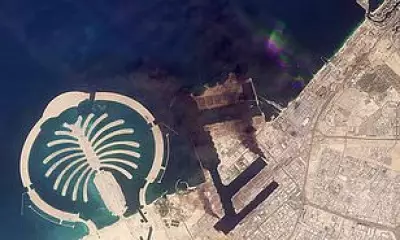
Simultaneously, Ukraine has deployed air defence teams to Qatar, the United Arab Emirates, and Saudi Arabia to assist these nations in countering Iranian aerial attacks. President Zelensky confirmed that three "professional, equipped teams" have been sent to the Middle East, with Ukrainian specialists also reportedly deployed to a US military base in Jordan. This expertise sharing comes as Gulf states have expended significant air-defence resources against Iranian drones and seek Ukraine's proven capabilities in downing such threats.
Zelensky emphasised that Ukrainian operators and software are essential for the effective operation of interceptor drones, stating that "without our military, our operators, our software... the interceptors simply don't work." This international cooperation demonstrates Ukraine's growing role as a provider of specialised military expertise despite its own ongoing defensive needs.
The conflict continues to evolve on multiple fronts, with territorial gains, diplomatic exchanges, humanitarian crises, and international partnerships all shaping the trajectory of Europe's most significant military confrontation in decades.