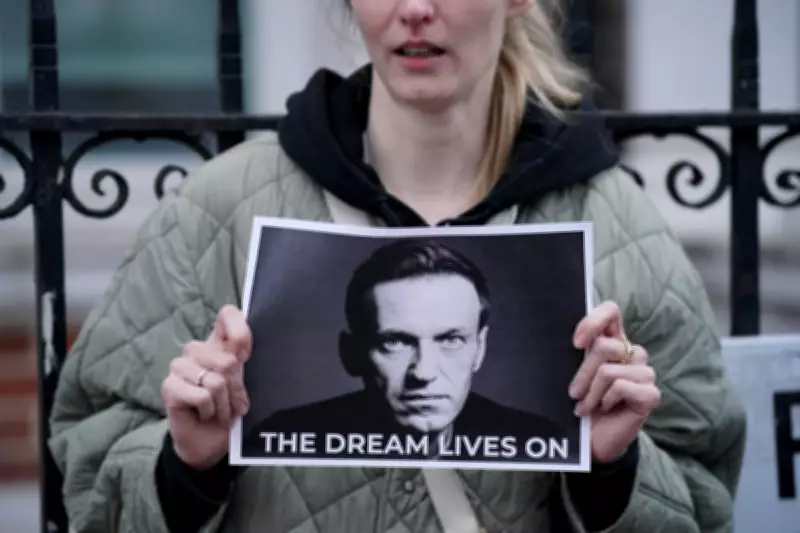
UK Declares Truth as 'Most Dangerous Weapon' Against Russia Over Navalny Death
Foreign Secretary Yvette Cooper has declared that truth is the most "dangerous weapon" against Russia, as the United Kingdom and its European allies forcefully reject Moscow's denials of involvement in the death of opposition leader Alexei Navalny. The statement comes after a joint announcement on Saturday confirming Navalny was poisoned with a lethal toxin, with Cooper squarely blaming the Kremlin and suggesting new sanctions could follow.
Chemical Evidence Points to Russian Involvement
Analysis of samples from Navalny's body revealed the presence of Epibatidine, a toxin naturally produced by poison dart frogs in South America. British and European officials state there is no innocent explanation for its presence, noting it is not found in Russia and is typically only produced by these frogs in the wild. "The statement that we made yesterday shows that we have the evidence," Cooper emphasized during an appearance on the BBC's Sunday With Laura Kuenssberg programme, describing the accusation as "deeply serious."
She added that only Russia had the "means, motive and opportunity" to carry out such an attack, referencing Navalny's status as Vladimir Putin's arch-rival. Navalny died two years ago in a Siberian penal colony, and his widow, Yulia Navalnaya, has called for Putin to be held accountable.

Sanctions and International Response
Cooper warned that the Cold War peace dividend "has gone" and indicated that coordinated action, including increased sanctions on the Russian regime, is being considered. "We continue to look at co-ordinated action, including increasing sanctions on the Russian regime," she stated, linking the response to the ongoing conflict in Ukraine, which approaches its fourth anniversary.
Five European nations have already reported Russia to the Organisation for the Prohibition of Chemical Weapons. Cooper stressed the importance of international partnerships, saying, "We believe that it is the partnerships that we build abroad that make us stronger at home. It is by acting alongside our European allies, alongside allies across the world, that we do maintain that pressure on the Russian regime."
Russia's Denial and Accusations of 'Necro-Propaganda'
The Russian embassy in London issued a strong denial, dismissing the findings as the "feeble-mindedness of Western fabulists." In a statement, the embassy questioned the credibility of the evidence, asking, "So what was it in the end - poison derived from the skin of a South American frog or Novichok?" referring to the nerve agent used in the 2018 Skripal poisoning in the UK.
The embassy accused Western politicians of engaging in "necro-propaganda," claiming, "This is not a quest for justice but a mockery of the dead." It added, "Even after the death of the Russian citizen, London and the European capitals cannot allow him to rest in peace - a fact that speaks volumes about those who instigated this campaign."
Navalny's Legacy and Domestic Political Reactions
Cooper highlighted Navalny's own words, quoting him as saying, "'tell the truth, spread the truth', because that is the most dangerous weapon of all." She affirmed the UK's commitment to continuing this effort on his behalf and for his widow, stating, "He is no longer able to do that, but that is why we are continuing to do that for him, and for his widow as well."
In related domestic politics, Reform UK's head of policy, Zia Yusuf, responded to Prime Minister Keir Starmer's description of the party as "pro-Putin," calling it "obviously not true." Yusuf defended Nigel Farage, saying, "Nigel is the only political leader in this country who has confirmed on air that he would indeed shoot down Russian aircraft if they encroach into Nato airspace. Not a single other political leader said that, nor has Keir Starmer."
The UK's stance underscores a hardening position against Russia, with truth-telling framed as a critical tool in confronting Moscow's actions and supporting justice for Navalny.