UK Accuses Russia of Using Exotic Dart Frog Toxin in Navalny Assassination
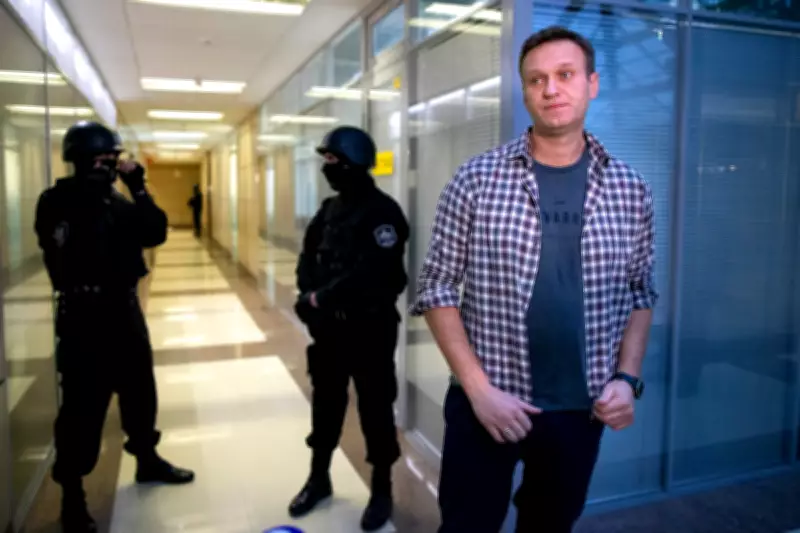
The United Kingdom has formally accused the Russian state of employing a highly exotic and potent biological toxin, derived from South American poison dart frogs, in the assassination of opposition leader Alexei Navalny. The substance, identified as Epibatidine, is reported to be approximately one hundred times more powerful than morphine and originates from amphibians not native to Russia, strongly suggesting a deliberate and sophisticated poisoning operation.
The Potent Origins of Epibatidine
Epibatidine is a nicotine-like compound of extreme toxicity, sourced exclusively from the Epipedobates genus of poison dart frogs. These vividly coloured amphibians, including species like Anthony's poison arrow frog and the Phantasmal poison frog, inhabit only specific regions of northern South America. Scientific research indicates the frogs secrete the toxin through their skin as a defence mechanism, with wild populations acquiring it through their diet, as captive-bred specimens do not produce it naturally.
Medical Potential and Lethal Reality
While Epibatidine has been studied for its potential as a powerful analgesic and for treating painful inflammatory lung conditions such as asthma, its severe toxicity has prevented any clinical application. Professor Alastair Hay, Emeritus Professor of Environmental Toxicology at the University of Leeds, explained the lethal mechanism. "Epibatidine acts by blocking nicotinic receptors in the central and peripheral nervous systems," he stated. "The result is complete muscle paralysis, including paralysis of the respiratory system. The victim effectively dies from suffocation as breathing is completely blocked."

A Clear Violation of International Law
The use of such a toxin constitutes a grave breach of international treaties, according to expert analysis. Professor Hay emphasised, "If epibatidine, a toxin, was indeed used to poison Alexei Navalny, this is in direct violation of the 1972 Biological and Toxin Weapons Convention (BTWC) and the 1993 Chemical Weapons Convention (CWC)." He noted that Russia is a signatory to both conventions, having inherited the Soviet Union's co-sponsorship of the BTWC. The presence of this non-native, sophisticated toxin points unequivocally towards state-sponsored action. "The presence of the toxin in a person’s blood suggests deliberate administration," Professor Hay asserted, adding that research exists on how its toxicity can be enhanced by combination with other drugs.
Forensic Detection and Political Fallout
The toxin can be identified through advanced forensic techniques, specifically a combination of gas chromatography and mass spectrometry. This process separates chemical compounds and breaks them into unique fragments, creating a definitive fingerprint for identification. The allegation comes amidst ongoing global scrutiny following a press statement by Yulia Navalnaya, the human rights activist and widow of Alexei Navalny, concerning the circumstances of her husband's death. The UK's accusation places significant diplomatic pressure on Russia, framing the act not only as a political assassination but as a breach of global arms control agreements, challenging the Kremlin's adherence to international law and norms.