

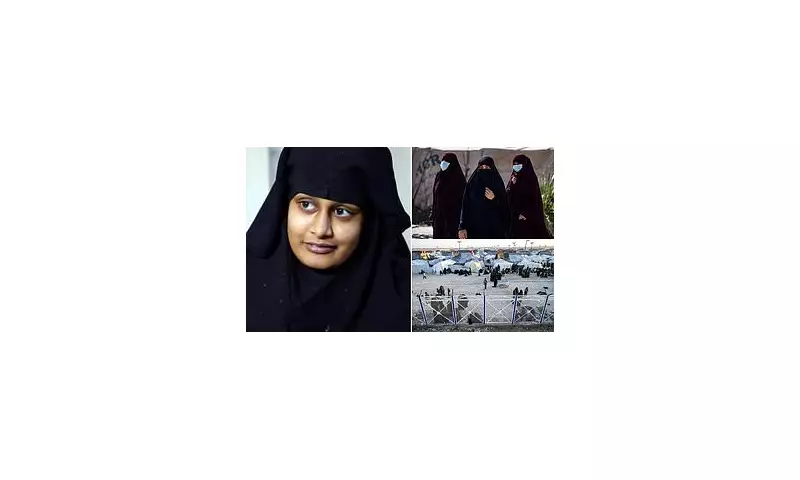
Britain has conducted a quiet repatriation programme for women and children associated with ISIS who were detained in Syrian camps alongside the controversial figure Shamima Begum, according to a camp director's claims. This development comes as the security situation in eastern Syria grows increasingly unstable, prompting fears about potential mass escapes of Islamic State prisoners.
Secretive Returns Amid Syrian Turmoil
The Times newspaper has reported that at least six women and nine children have been returned to the United Kingdom from detention facilities operated by the Syrian Democratic Forces. These transfers occurred against a backdrop of mounting chaos in the region, as the new Syrian government begins reclaiming territory from the Kurdish-led SDF forces.
The primary concern driving these repatriations appears to be the genuine risk that ISIS detainees might escape during the turbulent handover of control. The SDF, which has maintained control over camps like al-Roj near the Iraqi border where Begum and other British women were held following ISIS's collapse, now faces significant pressure from advancing Syrian government troops.

Official Policy Versus Practical Reality
While the UK government's official stance on repatriation has remained publicly unchanged, sources indicate that the Foreign Office has permitted a small number of women to return on an individual, case-by-case basis. Most of those who have been brought back to Britain were reportedly women who were originally taken to Syria when they were still children themselves.
A camp official speaking to The Times revealed that approximately 29 British women and children remain detained at the al-Roj camp, which is scheduled to be transferred to Syrian government control. Meanwhile, authority over the larger al-Hawl camp has already been handed to Syrian authorities, though the transition has been described as disorderly and poorly managed.
Chaotic Handovers and Escapes
Jihan Hanan, who served as director of al-Hawl until recently, provided a disturbing account of the transfer process. "There were no preparations for the handover," Hanan stated. "I'm looking at the videos and pictures coming out and it burns my heart. The people inside, the international community's indifference. At the end of the day these are women and children."
The SDF's withdrawal of troops as Syrian government forces advanced triggered major riots and allowed dozens of ISIS-linked women to escape, with their current whereabouts remaining unknown. This security breakdown has intensified calls for Western nations to assume responsibility for their citizens detained in the camps.
International Response and Criticism
Despite repeated appeals from the SDF for countries to repatriate their nationals, most nations have refused to do so. The United States, currently debating whether to withdraw its forces from Syria, recently negotiated an agreement to transfer male ISIS prisoners to neighbouring Iraq instead of bringing them home.
Human rights organisations have strongly criticised Britain's approach. Reprieve, a charity representing foreign families detained in the camps, has accused the UK government of abandoning British citizens in desperate circumstances. Maya Foa, the organisation's chief executive, stated: "While all of our security allies have a policy of repatriating families, Britain has taken a 'do nothing' approach."
Foa continued: "Over two governments they have brought home just a handful of women and children — and there have been even fewer under this government than the previous one. This approach is totally inadequate in the current moment, when British families are at acute risk, in a dangerous detention camp that could collapse at any time."
Historical Context and Current Realities
During the peak of ISIS's power in the 2010s, numerous women travelled or were taken to Syria to join the terrorist organisation. Shamima Begum, who left London's Bethnal Green in 2015 with two companions, became one of the most prominent British cases. Her two travelling companions are believed to have died during fighting between ISIS jihadists and Western coalition forces.

Following ISIS's military defeat, its captured members were detained in camps under Kurdish supervision. Within these facilities, women raised children in tented environments while maintaining extremist beliefs. Disturbingly, reports indicate that boys reaching puberty were forced to sleep with older women to produce more "lion cubs" to bolster the caliphate's numbers.
Human rights advocates argue that Britain should follow the example set by security allies like the United States, which repatriated its citizens much earlier. "The US brought its people back long ago and has urged Britain to do the same," noted Maya Foa. "Where there are cases to answer, the adults can be prosecuted in British courts."
As control of the camps transitions to the Syrian government and security deteriorates, pressure mounts on the UK to develop a more coherent and humane policy regarding its citizens detained in Syria. The quiet repatriations reported by The Times suggest that behind-the-scenes actions may already be acknowledging the urgency of the situation, even as official policy remains unchanged.





