Lebanese Expats in Britain Voice Terror as Israel Intensifies Strikes on Homeland
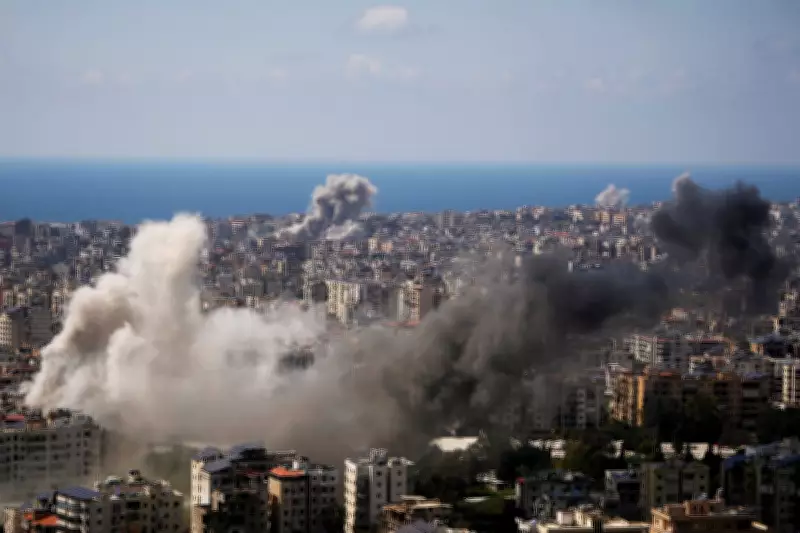
While global attention focused on a US-Iran ceasefire announcement this week, Lebanese expatriates across the United Kingdom found themselves consumed by dread as Israel explicitly excluded Lebanon from the temporary peace agreement. Instead of respite, Israel launched its most substantial bombardment yet against Lebanese territory, leaving British-Lebanese citizens terrified for their families caught in the conflict zones.
"I Cry Every Day": The Personal Toll of Distant Conflict
Sara Roddis, originally from Coventry but with most of her immediate family residing in southern Lebanon, described being "ill with stress" for the past month as Israel regularly targeted the region where her loved ones live. "I've been absolutely terrified that one of my loved ones will die," she revealed. "I cry every day."
The announcement by Donald Trump on Tuesday that the United States and Iran had agreed to a two-week ceasefire brought brief hope that was quickly dashed when Israel suspended attacks on Iran but simultaneously launched its largest strikes yet in Lebanon on Wednesday. Lebanese health officials report these attacks have caused hundreds of casualties.

Israeli Prime Minister Benjamin Netanyahu confirmed the ceasefire would not include the Iran-backed militant group Hezbollah in Lebanon, effectively greenlighting continued military operations against Lebanese targets.
Historical Context and Current Escalation
Hezbollah, formed in response to Israel's 1982 invasion of Lebanon, operates both as an Iranian-backed militant organization and a political party with representation in the Lebanese government. The United Kingdom proscribed Hezbollah as a terrorist organization in 2019 due to its destabilizing activities in the Middle East.
The current hostilities represent a significant escalation of long-standing tensions. Following Hezbollah's rocket strikes against Israel on March 2nd - launched in retaliation for the US and Israel's invasion of Iran and killing of supreme leader Ali Khamenei on February 28th - Israel has carried out heavy airstrikes on Lebanon that have killed more than 1,500 people, including 130 children, while displacing over one million residents.
"There's just no mercy, there's no looking at civilians as civilians, there's no regard for international law, there's no morals," Roddis lamented. "That's just how it feels."
The Human Reality Behind Sanitized Reports
For expatriates with deep personal connections to affected areas, news reports provide only a clinical abstraction of the human tragedy unfolding. "When you read a news report, it's very sanitized... an attack happened here, in this area, this many people were killed, this many people were injured," Roddis explained.
"But knowing what those streets look like, what those shops look like, who works there, what the children look like when they go to that school, knowing what that neighbourhood looks like, and then knowing what it looks like in the aftermath, and knowing who has been affected, it's heart-wrenching."
Roddis's own family lost their home and shop in the southern city of Tyre after an attack in 2024. With nowhere else to go, approximately twenty family members now share just two rooms in student accommodation. Despite regularly sending money to support them, she feels completely helpless to alter their dangerous circumstances.
Constant Vigilance and Political Monitoring
Roddis described the "sheer horror" and "terror" of constantly scanning news reports for attacks that might have targeted her family. "I follow a lot of Israeli politics. I want to know from the horse's mouth what they are saying," she noted, adding that she must warn her family about Israeli statements regarding potential permanent occupation.
"They've threatened to turn Beirut into Khan Younis," she said, referencing the devastated Gazan city. "We've seen it play out in Gaza."
Another Expat's Perspective: Disappointment and Familiar Fear
Hayfaa Jawhar, a Lebanese expatriate who has lived in the UK for twenty years, expressed disappointment that Lebanon was excluded from ceasefire negotiations. With her mother and sister living near Beirut suburbs, she has been living in "total fear" since Israel began striking areas close to their homes.

"I've experienced firsthand what it is to live in the middle of rockets," said Jawhar, who lived in Lebanon during the 2006 conflict. "The sounds alone are horrifying."
Her 63-year-old mother was forced to leave her house "because of the power of the rockets, the sounds, the voices, the fear of a missile hitting the wrong target." Jawhar constantly checks reports and calls her family to confirm they remain alive.
Military Justifications and Civilian Realities
The Israel Defence Forces stated they were "operating in Lebanon as part of the operation against the Hezbollah terrorist organization which chose to launch attacks against the State of Israel on behalf of the Iranian regime."
The military added: "Unlike Hezbollah, which operates from within civilian populations and exploits civilian infrastructure to conceal weapons and conduct terrorist activities, the IDF acts to protect the residents of Israel and minimise harm to civilians. Hezbollah continues to use civilians as human shields, deliberately endangering the lives of Lebanese residents and undermining regional stability."
A Population Exhausted by Conflict
Jawhar observed that Lebanese people were "distraught, but not surprised" to learn there would be no diplomatic solution emerging from Tuesday's negotiations. "Lebanon was not really discussed that much, it was not on the negotiation table," she noted.
"We expect that things are going to remain as they are - assassinations, sudden threats, sudden bombing. It doesn't seem like anything is going to change. It's so disappointing."
She described a population worn down by perpetual insecurity: "Lebanese people, even people from the South, people who have to flee their villages every two months or three months, they're tired. They are sick of the situation; they want a solution. They want to live peacefully. They want to go to their homes. They want to feel safe."
For Lebanese expatriates in Britain, the conflict represents not just geopolitical news but an ongoing personal nightmare as they watch from afar while their families endure what appears to be an intensifying military campaign with no diplomatic resolution in sight.