The British Government has announced it is expelling a Russian diplomat from the UK in a direct tit-for-tat response to Moscow's earlier action against a British Embassy staff member. This move underscores the escalating diplomatic tensions between London and the Kremlin.
Ambassador Summoned for Formal Rebuke
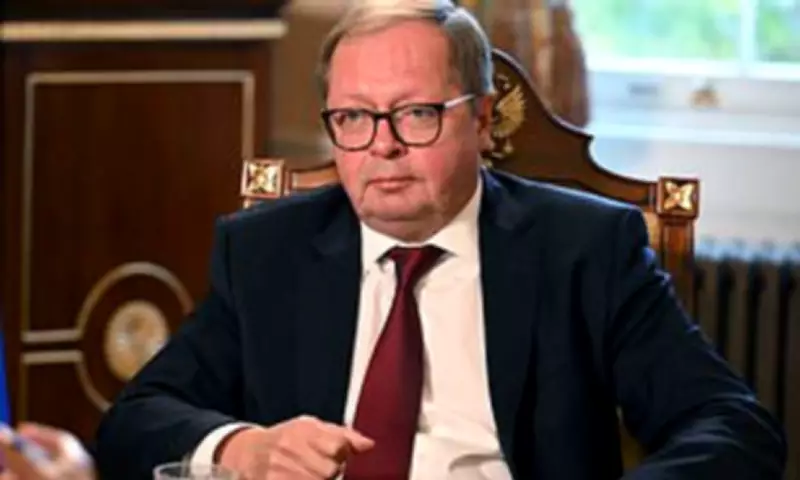
Andrey Kelin, Russia's ambassador to the United Kingdom, was summoned to the Foreign, Commonwealth and Development Office (FCDO) today to receive a formal dressing down. During the meeting, he was informed that one of his country's diplomats stationed in Britain will have their accreditation revoked, effectively requiring them to leave the country.
Mr Kelin, who has served as Vladimir Putin's ambassador to Britain since 2019, was told in clear terms that the UK will 'not stand for intimidation' of British Embassy personnel. The decision follows Russia's expulsion of a British diplomat earlier this month, which London has condemned as unprovoked.

Foreign Office Condemns Russian Actions
A spokesperson for the Foreign Office stated: 'We condemn in the strongest possible terms Russia's unprovoked and unjustified decision to expel a British diplomat last month and its baseless accusations against our staff.'
The spokesperson elaborated that a senior FCDO official made it unequivocally clear to the Russian Ambassador that the UK will not tolerate the intimidation of its diplomatic missions. 'We are taking reciprocal action today, revoking the accreditation of a Russian diplomat,' they confirmed.
The statement further expressed deep disappointment, noting that 'Russia continually seeks to disrupt the work of the UK's diplomatic missions and deter our support for Ukraine.' It warned that any additional measures by Moscow would be viewed as an escalation and met with a proportionate response.
Background to the Diplomatic Row
This development comes after Russia expelled a British diplomat in mid-January, accusing the individual of acting as a spy. Moscow's foreign ministry claimed it acted upon receiving information 'regarding the affiliation of a diplomatic employee at the embassy with the British secret service.'
According to a translation of a post on its Telegram channel, the ministry summoned British charge d'affaires Danae Dholakia to lodge a 'strong protest' and inform her that the diplomat was being expelled. While the diplomat was not publicly identified, the ministry stated they must leave Russia within two weeks.
Moscow declared it would not 'tolerate the activities of undeclared British intelligence officers' and cautioned that Russia would 'respond decisively in kind' if London were to escalate the situation further.
UK Political Response
Responding to Russia's initial move at the time, Health Secretary Wes Streeting offered a scathing critique of the Kremlin. 'I don't think we should put too much stock in what the Kremlin has to say,' he remarked. 'You normally know when they're lying, because their lips are moving.'
Mr Streeting highlighted the broader context of Russian aggression, stating: 'We've seen the appalling barbarity of this Russian regime. We've seen that on the continent of Europe, in particular in Ukraine, and we've seen it with the unnecessarily aggressive posture they've adopted towards other European countries.'
The reciprocal expulsion today signals the UK's firm stance against what it perceives as provocative and unjustified actions by Moscow, reinforcing its support for diplomatic norms and its commitment to Ukraine amidst ongoing conflict.