

UK Assumes UN Security Council Presidency Amid Escalating Middle East Conflict
Britain is chairing an emergency meeting of the United Nations Security Council on Saturday, following a series of devastating missile strikes across the Middle East that have plunged the region into turmoil. The meeting was convened at the urgent request of France, Colombia, Russia, and Bahrain, in response to coordinated attacks by the United States and Israel on Iranian targets earlier in the day.
Retaliation and Regional Fallout
The initial strikes, which targeted locations in Tehran and other parts of Iran, prompted immediate retaliation from Iranian forces. Reports indicate that retaliatory strikes have been launched against several Gulf nations, including the United Arab Emirates, Qatar, Bahrain, and Saudi Arabia. This exchange of fire has raised fears of a broader regional conflict, with significant implications for international stability.
Saturday marks the final day of the United Kingdom's rotating presidency of the UN Security Council, before the role is handed over to the United States. The emergency session commenced at approximately 9:00 PM UK time, with UN Secretary General Antonio Guterres addressing the council in stark terms.

"We are witnessing a grave threat to international peace and security," Guterres warned. "Military action carries the risk of igniting a chain of events that no-one can control in the most volatile region of the world. Let me be clear, there is no viable alternative to the peaceful settlement of international disputes. Lasting peace can only be achieved through peaceful means, including genuine dialog and negotiations."
Unconfirmed Reports and Political Responses
Amid the chaos, unconfirmed reports have emerged suggesting that Iran's supreme leader, Ayatollah Ali Khamenei, may have been killed in the US-Israeli strikes. Photographs circulating show severe damage to his compound in Tehran, though official confirmation is still pending. The United States and Israel have described their actions as a "pre-emptive" strike, aimed at countering a Tehran government they accuse of actively developing nuclear weapons.
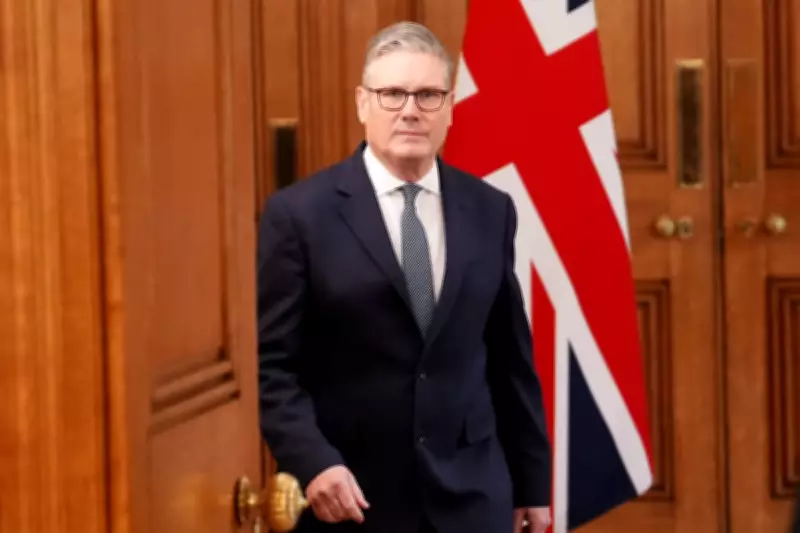
Talks between the US and Iran, focused on resolving the nuclear issue, concluded without agreement on Thursday but were expected to resume at a later date. In response to the escalating situation, Prime Minister Sir Keir Starmer convened the Government's emergency Cobra committee on Saturday morning. He subsequently engaged in consultations with European and Gulf allies to coordinate a response.
Later on Saturday, Sir Keir spoke directly with US President Donald Trump to discuss the crisis and outline the United Kingdom's role in defensive operations across the region. In a joint statement issued with the leaders of France and Germany, the Prime Minister condemned Iran's retaliatory strikes and urged Tehran to "refrain from indiscriminate military strikes" and "seek a negotiated solution."
UK's Defensive Measures and Diplomatic Actions
Addressing the nation from Downing Street, Sir Keir clarified that the UK had not participated in the initial strikes against Iran. However, he confirmed that British aircraft had been deployed "as part of co-ordinated regional defensive operations to protect our people, our interests and our allies." He further announced that protections had been enhanced for British military bases in the Middle East, and the Government was actively reaching out to UK nationals in the area to provide support.
The Foreign, Commonwealth and Development Office has issued advisories urging UK nationals in specific parts of the Middle East to "shelter in place." This guidance applies to Kuwait, Qatar, Bahrain, Saudi Arabia, and the UAE. In Dubai, a fire broke out at the luxury Fairmont Hotel on the Palm area, an incident that Foreign Secretary Yvette Cooper condemned during a call with her Emirati counterpart. It is estimated that hundreds of thousands of British nationals are currently present in the Gulf region.

To ensure their safety, the Foreign Office has encouraged British citizens in Bahrain, Israel, Palestine, Qatar, and the UAE to register their presence online with the UK Government. This registration will enable them to receive timely updates on the evolving security situation.
Domestic Political Reactions and Legal Concerns
The crisis has sparked varied responses from UK political leaders. Conservative leader Kemi Badenoch expressed support for the strikes on Iran, labeling the Tehran government a "vile regime" that "carries out attacks on the UK and on our citizens," pursues nuclear weapons, and has brutally suppressed pro-democracy protests.
In contrast, Liberal Democrat leader Sir Ed Davey called on the Prime Minister to rule out the use of British bases for "future unilateral US strikes." He argued that "Donald Trump's unilateral and illegal military action won't deliver freedom, peace and security. It will only unleash more bloodshed."
Reform UK leader Nigel Farage, however, urged Sir Keir to reconsider and permit the US to launch attacks from British bases, including Diego Garcia in the Chagos Islands. This suggestion comes amid reports that the Government had previously refused American requests to use Diego Garcia for strikes against Iran, citing concerns over potential breaches of international law.
Adding to the legal debate, senior Labour MP Dame Emily Thornberry, chairwoman of the Commons Foreign Affairs Committee, stated that there was "no legal basis for this attack." Her remarks underscore the complex legal and ethical questions surrounding the military actions and the UK's role in the unfolding crisis.





