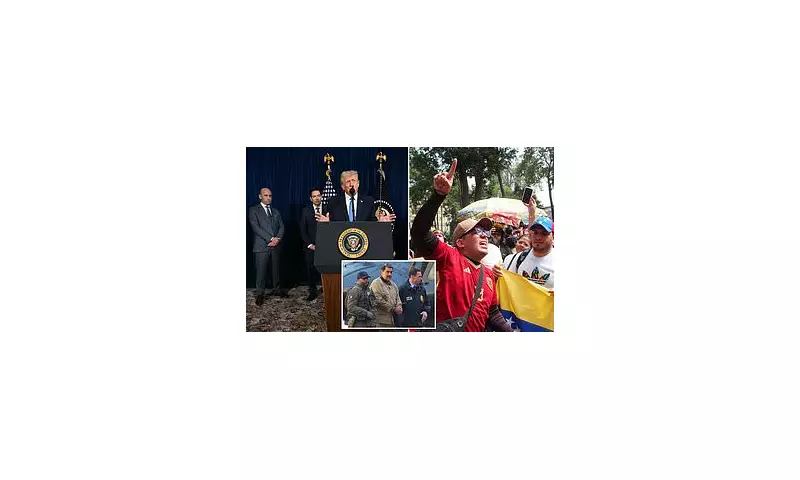
In a dramatic move that has sent shockwaves through international diplomacy, former US President Donald Trump has declared that the United States will assume interim control of Venezuela following the capture and extradition of its leader, Nicolás Maduro. The announcement, made at a press conference at Mar-a-Lago on Saturday, has ignited intense speculation over who will be tasked with overseeing the South American nation.
Key Figures in the Interim Framework
According to reports from the Washington Post, White House Deputy Chief of Staff Stephen Miller is being considered for a significantly elevated role in managing post-Maduro Venezuela. Miller, a chief architect of the administration's immigration and border policies, is said to view the situation as an opportunity to advance goals of mass deportations and crackdowns on criminal drug groups in Latin America.
Alongside him, Secretary of State Marco Rubio is poised to take a central position. A senior White House adviser told Axios that the running of Venezuela would be handled by a small committee "led by Rubio, with the president heavily engaged." For Rubio, the son of Cuban immigrants, involvement offers a chance to topple the Venezuelan regime and weaken its ally, Cuba.

Trump revealed that his team is already working with Maduro's deputy, the now-acting leader Delcy Rodríguez, who reportedly had a "friendly conversation" with Rubio following the weekend's events. An adviser suggested the two may establish daily calls as plans develop.
Internal Skepticism and Opposition Concerns
The proposed arrangement has not been met with universal approval. Senate Minority Leader Chuck Schumer reacted with fury to the prospect of Miller becoming a "Venezuela czar," warning it would "fan the flames of war." He lamented on social media, "Is there a single person outside of the White House who thinks this is a good idea?"
Within Venezuela, opposition figures are deeply wary. One leader, speaking anonymously to the Washington Post, feared the Trump administration might simply enable a continuation of Maduro's government under "gringo guardianship." Others are struggling to "swallow some bitter pills" regarding Maduro's removal, anxiously watching to see if Rodríguez will replace his hard-line officials and genuinely cooperate with the US.
Machado Overlooked Amid Nobel Prize Animosity
Notably absent from the interim leadership discussion is opposition figure and Nobel Peace Prize winner Maria Corina Machado. Trump expressed scepticism about her capacity to lead during his Saturday press conference, stating, "She doesn't have the support within, or the respect within the country."
Two sources close to the White House told the Post that Trump harbours animus towards Machado for leaving Venezuela to accept the Nobel Prize last month, an award he is said to covet for himself. This has dashed the hopes of many who wished to see her elevated after Maduro's ouster.
Trump remained deliberately vague on the ultimate transition plan, emphasising only that the US would run Venezuela "until such time as we can do a safe, proper and judicious transition" to prevent anyone without Venezuelans' interests at heart from taking power. The question of organising a fair election in a country where the US long refused to recognise Maduro's legitimacy remains a pivotal, unanswered challenge.