Behind the Bluster: Trump's Desperate Need for an Iran Peace Deal
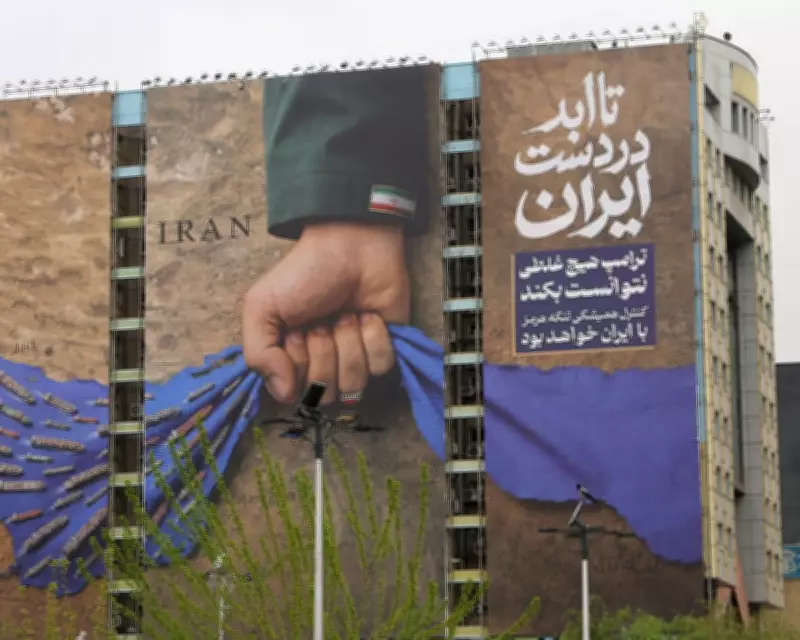
A stark billboard in Tehran's Vanak Square proclaims Iran's control over the Strait of Hormuz and declares Donald Trump's failures, symbolising the deep rift between Washington and Tehran. As the US imposes a naval blockade—an act of war—the urgency for a diplomatic solution intensifies to prevent catastrophic conflict.
The Stalled Islamabad Talks and Escalating Tensions
The recent Islamabad negotiations collapsed due to irreconcilable differences between Washington's 15-point proposal and Tehran's 10-point plan. US Vice-President JD Vance spent less than a day discussing nuclear and other issues, yet blamed Iran for the failure. This reflects a mistaken belief in Washington that Tehran has been defeated and need not compromise.
Following Vance's return, Trump escalated by blockading ships through the Strait of Hormuz, threatening global energy supplies. Iran has warned of retaliatory attacks on Gulf energy infrastructure, which could spike oil, diesel, and LNG prices. Such actions risk resuming full-scale war with Israel likely joining, making renewed talks imperative.

A Path Forward: A Feasible Diplomatic Framework
Neither side has ruled out further negotiations, with Pakistan and Egypt mediating. Both have reasons to avoid war: Trump faces rising inflation, falling polls, and midterm elections, while Iran seeks to rebuild after severe damage and economic unrest. A viable framework must address core disputes without claiming to be exhaustive.
First, the US must recognise Iran's right to enrich uranium for non-military purposes under IAEA safeguards, capped at 3.67% as per the 2015 JCPOA. Iran could cease enrichment beyond its five-year offer without accepting a 20-year moratorium. With 440kg of 60% enriched uranium currently, supervised down-blending could replace full removal, with a renewable 20-year agreement.
Second, Iran should provide a written pledge against nuclear weapons, aligning with the late Ayatollah Ali Khamenei's injunction. His successor, Mojtaba, could reaffirm this alongside an Israeli pledge—guaranteed by the US and UN Security Council—to never initiate a nuclear attack on Iran. This addresses Tehran's security concerns after recent assaults.
Third, Iran must drop war reparations demands in exchange for lifted sanctions and released frozen assets. Tehran could levy a $2 million fee per oil tanker in the Strait of Hormuz, committing to innocent passage overseen by a coalition including Russia and China. This fee, split with Oman, would fund reconstruction until costs—estimated neutrally—are met.
Finally, a US-Iran non-aggression pact, ratified by legislatures and embedded in a UN resolution, would offset Iran's concession on US military withdrawal. Similar pacts with Gulf states could further stabilise the region.
Critical Conditions for Success
Three conditions are essential for any plan to succeed. Washington must compromise, not just Tehran. Trump must extend his 22 April ceasefire deadline, acknowledging complex talks require time. Additionally, he must restrain Israeli Prime Minister Benjamin Netanyahu from attacks that could derail diplomacy.
With political will, a peaceful resolution is achievable, averting a war that would devastate global stability and economies.