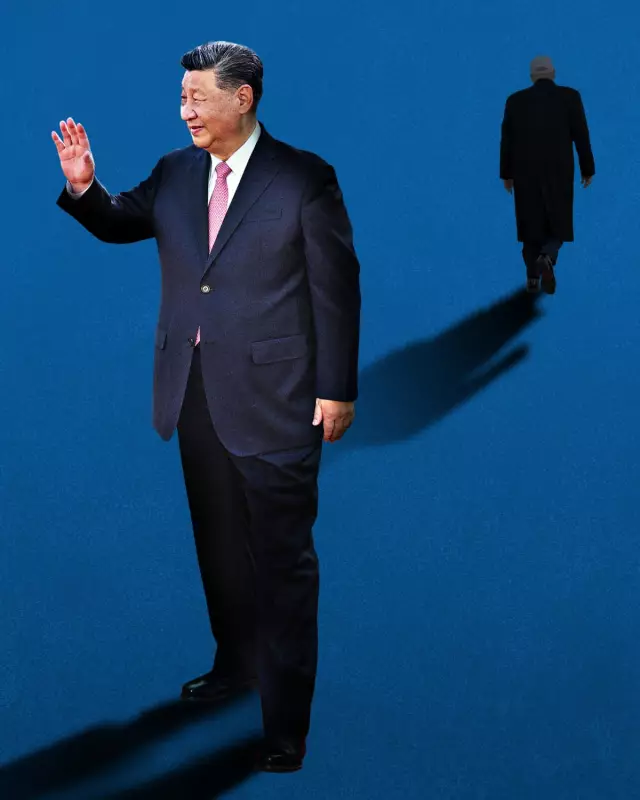
In a striking geopolitical shift, Beijing appears to be adhering to Napoleon's timeless maxim: 'Never interrupt your adversary when he's making a mistake.' This principle is gaining relevance as Western allies, unsettled by Donald Trump's unpredictable actions, increasingly pivot towards China in search of stability and economic opportunity.
Charm Offensive Amidst Global Uncertainty
China has embarked on a concerted charm offensive targeting Western leaders, a strategy facilitated by Trump's destabilising power grabs on the international stage. Recent examples include President Xi Jinping's warm meeting with Ireland's Taoiseach, Micheál Martin, in Beijing, where they bonded over a shared appreciation for the Irish novel The Gadfly. Such personal diplomacy underscores Beijing's efforts to forge stronger ties with European nations.
Despite Europe's relief over Trump's withdrawal of military threats in Greenland and tariff plans, the United States no longer seems a reliable partner. This perception is driving allies to explore alternatives, with China emerging as a focal point. An editorial in the state-run Global Times explicitly urged Europe to consider building a 'China-EU community with a shared future,' warning of a return to 'the law of the jungle' without such cooperation.

Western Recalibration and Economic Realignments
Canada's Prime Minister, Mark Carney, exemplifies this recalibration. Elected on promises to resist US bullying, Carney visited Beijing to announce a new strategic partnership, including a reduction in tariffs on Chinese electric vehicles from 100% to 6.1%. This move diverges from Washington's stance and could see Chinese EVs capture up to one-fifth of Canada's market, marking a significant political win for Beijing.
Similarly, UK Prime Minister Keir Starmer is set to arrive in China, accompanied by business leaders, aiming to revive trade deals and attract investment. Despite domestic pressures on security and human rights, Starmer seeks to bolster the UK's economic ties, though experts note he is unlikely to view China as a more reliable partner than the US.
Beijing's Cautious Stance and Underlying Tensions
Officially, China approaches this rebalancing with caution. Analysts like Song Bo from Tsinghua University highlight that Chinese policymakers are reluctant to publicly acknowledge a fundamental shift in the global order, given China's historical benefits from post-Cold War structures. However, President Xi's references to 'great changes unseen in a century' suggest an awareness of ongoing transformation.
Eva Seiwert of the Mercator Institute for China Studies notes that Beijing might rhetorically align with Western critiques of US instability, even without shared values. Yet, challenges persist, including the European Commission's hostility towards China and the ongoing war in Ukraine, which strains relations with Nordic states like Finland.
Broader Implications and Future Prospects
The pivot to Beijing is fraught with complexity. While middle powers seek multilateralism in response to Trump's wrecking-ball diplomacy, concerns about economic dependence on China linger. Past warnings, such as those from the UK's joint intelligence committee, highlight risks, but immediate stability needs are taking precedence.
In summary, Trump's erratic behaviour is inadvertently strengthening China's global position. As Western allies navigate this new landscape, the dynamics of international relations are being reshaped, with Beijing poised to capitalise on the unfolding opportunities.