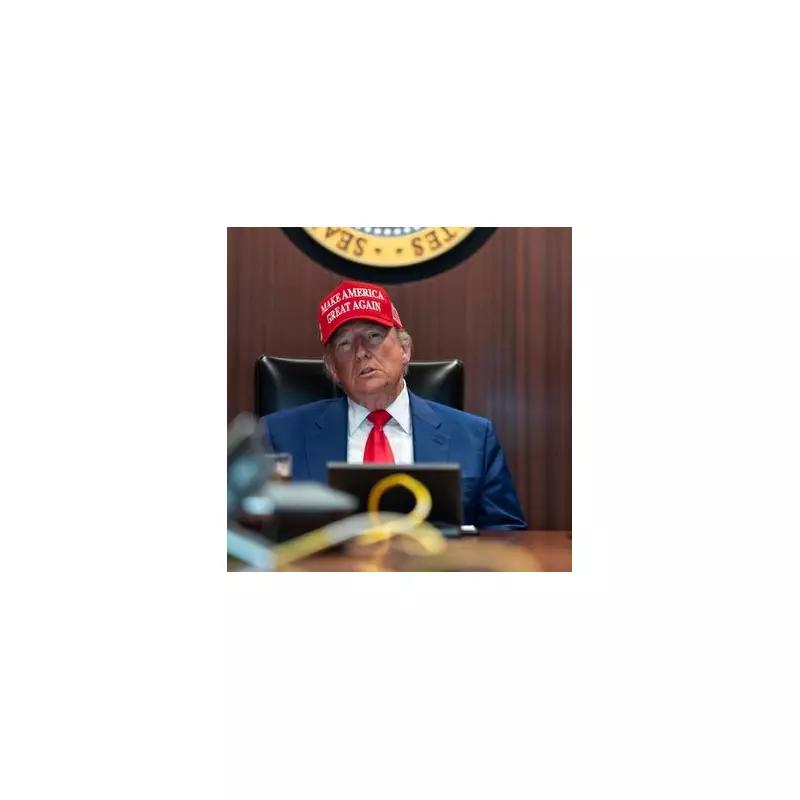
Five years to the day after his supporters stormed the US Capitol, Donald Trump's unconventional presidency is again sending shockwaves across the globe. His administration's recent military intervention in Venezuela and audacious claims over Greenland have underscored a disregard for diplomatic norms, leaving allies like the UK navigating uncharted and turbulent waters.
Global Flashpoints: Venezuela and a Defiant Greenland Stance
The past week has seen two major international incidents emanating from the Trump White House. On Saturday, US forces invaded Venezuela, a move that continues to dominate headlines. More bizarrely, senior advisor Stephen Miller refused to rule out forcibly annexing Greenland, questioning Denmark's centuries-old sovereignty over the territory.
"By what right does Denmark assert control over Greenland?" Miller challenged during a CNN interview, repeatedly stating the island should be "part of the United States." This prompted a swift, unified rebuke from European leaders, including Keir Starmer, who joined the Danish Prime Minister in a firm statement defending Greenland's sovereignty.

A Waiting Game in Westminster
Amid these crises, a significant diplomatic silence persists. A spokesman for Prime Minister Keir Starmer confirmed on Monday that he has yet to speak directly with President Trump since the Venezuelan invasion was launched, despite expressing a desire to do so over the weekend. This communication gap highlights the strained and uncertain nature of the current UK-US special relationship.
Further illustrating the administration's erratic foreign policy, reports from The Washington Post suggest Trump's decision to install Nicolás Maduro's deputy as Venezuela's acting leader, instead of legitimate election winner Maria Corina Machado, was motivated by pettiness. Insiders claim Trump lost interest in supporting Machado after she refused to turn down her Nobel Peace Prize and gift it to him.
Domestic Political Warfare and 'Fraud' Investigations
Trump's combative style is also reshaping the American political landscape. Following relentless attacks from Trump and his allies over an alleged fraud scandal in Minnesota, Governor Tim Walz announced he will not seek re-election. Walz, a likable Democrat and former running mate to Kamala Harris, stated he would focus on his current duties, though his statement leaves room for a potential 2028 return.
This tactic appears to be part of a playbook. Shortly after Walz's announcement, Trump turned his fire on California Governor Gavin Newsom, the current Democratic frontrunner, declaring on Truth Social that a "Fraud Investigation of California has begun." This pattern suggests Trump is using allegations of corruption to target perceived political threats.
Contradictions and Unanswered Questions
The administration's narrative continues to be plagued by inconsistencies. After Trump suggested major oil companies had been briefed on the Venezuela strike before Congress, sources told Reuters this was false. No such conversations had taken place with firms like Exxon Mobil or Chevron.
As the world marks the fifth anniversary of the January 6th insurrection, these events collectively paint a picture of a presidency operating with familiar disregard for established rules. For the UK government, which has sought closer ties, the challenge is becoming increasingly acute: how to manage a relationship with an ally whose actions consistently defy prediction and precedent.