Trump's Popularity Dives Amid Escalating Iran Conflict and Ground Troop Speculation
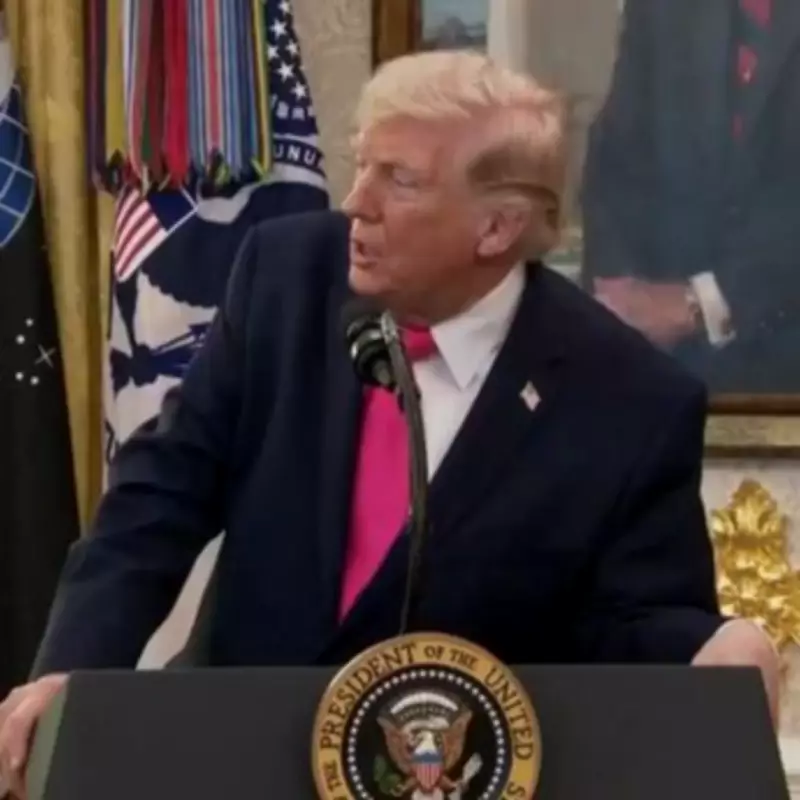
Donald Trump's approval ratings in the United States have experienced a significant decline in recent polls, largely attributed to the ongoing war with Iran. As the conflict shows no signs of abating, concerns are mounting over the potential for US "boots on the ground" in the region, adding to the political turmoil ahead of the midterm elections.
According to recent surveys, 59% of Americans believe that military action in Iran has been excessive, reflecting widespread public discontent. White House press secretary Karoline Leavitt has notably avoided addressing questions about the possibility of deploying US ground troops, though she indicated that formal congressional authorisation might not be necessary. This ambiguity has only fueled further anxiety among voters and political analysts alike.
Regional Escalation and Casualties
The conflict has seen a sharp escalation in regional hostilities. In the United Arab Emirates, air defence systems were activated to intercept incoming missiles and drones from Iran. Tragically, falling debris from a successfully intercepted ballistic missile on Sweihan Street in Abu Dhabi resulted in two fatalities and three injuries, with several vehicles damaged. The UAE Ministry of Defence confirmed ongoing responses to fresh waves of threats, though specific targets were not disclosed.

Similarly, Saudi Arabia reported intercepting 18 drones in its Eastern Province, bringing the total number of Iranian projectiles targeted at the kingdom to 824 since the war began. Kuwait also faced attacks, with a drone strike causing a fire at Kuwait Airport, highlighting the widespread nature of the conflict across Gulf states.
Diplomatic Efforts and Rejections
In an attempt to broker peace, President Trump put forward a 15-point proposal to end the war. However, Iranian state media, citing an unnamed senior official, reported that Tehran has rejected the plan. The official outlined five conditions for ending hostilities, including a complete halt to US and Israeli aggression, payment of war damages, and international recognition of Iran's sovereignty over the Strait of Hormuz.
White House Press Secretary Karoline Leavitt described the circulating 15-point plan as "speculative," noting that while it contains elements of truth, some reports have been inaccurate. She emphasised that Trump has been engaged in productive conversations with Iran over the past three days, but the rejection underscores the deep diplomatic divides.
Military Assessments and Nuclear Concerns
US Central Command (CENTCOM) claims that American forces have damaged or destroyed over two-thirds of Iran's missile, drone, and naval production facilities. Admiral Brad Cooper stated that the US is on a path to completely eliminate Iran's military manufacturing apparatus. Despite these assertions, Iran has not acknowledged any material losses.
Adding to the tension, President Trump warned that Iran is close to obtaining a nuclear weapon, calling for decisive action to halt its nuclear ambitions. He criticised previous administrations for enabling Iran's progress and highlighted his efforts to terminate agreements that could accelerate Tehran's capabilities.
International Reactions and Economic Impact
The conflict has drawn varied responses from the international community. German Defence Minister Boris Pistorius described the war as an economic "catastrophe" and stated that Germany does not want to be "sucked into" the conflict. He appealed for a ceasefire and expressed readiness to help secure peace once achieved.
Economically, the blockade of the Strait of Hormuz by Iran has raised concerns about global energy supplies. In the UK, the government granted up to £100 million to reopen a carbon dioxide plant on Teesside, aiming to mitigate potential shortages linked to the war. Energy Minister Michael Shanks assured MPs that the UK is "absolutely not" planning for energy blackouts or rationing, citing a strong and diverse range of supplies.

Humanitarian Toll and Regional Stability
The humanitarian impact of the conflict is severe. In Tehran, Mayor Alireza Zakani reported that 2,000 families have been left homeless due to US and Israeli strikes, with homes of women, children, and the elderly destroyed. In Lebanon, health officials confirmed at least 1,094 deaths and 3,119 injuries since Israeli strikes targeting Hezbollah began on March 2.
Iranian analyst Morteza Simiyari warned on state television that Iran is "fully prepared" to invade the UAE and Bahrain if provoked, citing extensive drills for coastal invasions. He also threatened to target UAE financial centres if Iranian assets are confiscated, escalating economic tensions.
As the war continues, with CENTCOM reporting 290 US service members wounded and Iran claiming to hunt down US soldiers in the region, the path to resolution remains fraught with challenges. The combination of military escalation, diplomatic stalemates, and growing public disapproval in the US underscores the complex and volatile nature of this conflict.