Trump's NATO Withdrawal Threat: Three Compelling Reasons It Remains Unlikely
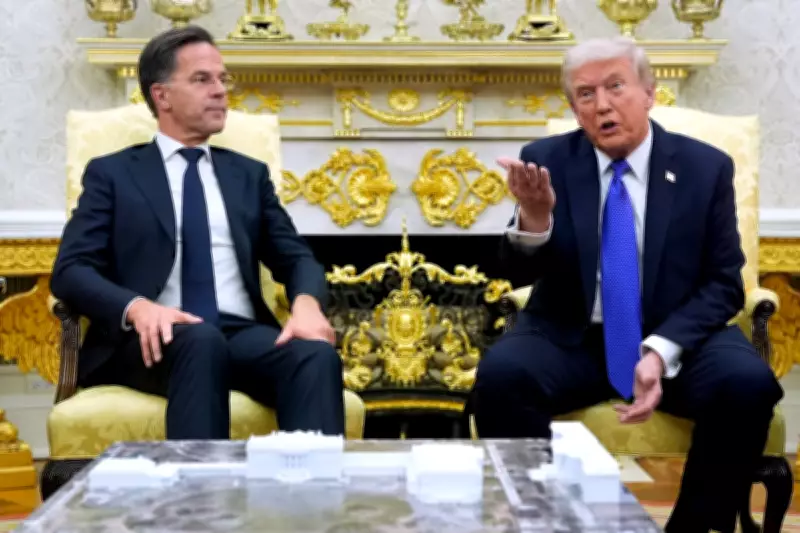
President Donald Trump has once again raised the spectre of withdrawing the United States from the North Atlantic Treaty Organization (NATO), following a contentious meeting with NATO Secretary General Mark Rutte on April 8. The discussion, described by Rutte as "very frank, very open," centred on the U.S.-Israeli military campaign against Iran, with Trump expressing clear disappointment that NATO allies refused to participate.
White House spokesperson Karoline Leavitt stated that Trump believes NATO was "tested and they failed" during the Iran conflict. The president later amplified his criticism on Truth Social, declaring: "NATO WASN'T THERE WHEN WE NEEDED THEM, AND THEY WON'T BE THERE IF WE NEED THEM AGAIN." This rhetoric follows Trump's recent comments to Reuters where he confirmed he was "absolutely" considering U.S. withdrawal from the alliance.
Legal Barriers: Congressional Constraints on Presidential Authority
The first and most immediate obstacle to any NATO withdrawal is legislative. In 2023, Congress enacted specific legislation that explicitly prohibits the president from "suspending, terminating, denouncing, or withdrawing the United States from the North Atlantic Treaty" without either Senate approval or an act of Congress. This legal barrier creates a substantial hurdle that cannot be easily overcome.

With midterm elections approaching in November, the political landscape makes legislative changes extremely unlikely. Should Democrats regain control of the House of Representatives, any attempt to modify this law would become virtually impossible, effectively blocking unilateral presidential action on NATO withdrawal.
Public Opinion: Broad American Support for NATO Membership
Beyond legal constraints, NATO membership enjoys considerable popularity among American citizens. A comprehensive Pew Research Center survey conducted in 2025 revealed that 66% of U.S. respondents believe America benefits from NATO participation, while only 32% hold the opposite view.
While partisan differences exist—with 77% of Democratic voters supporting NATO membership compared to 45% of Republicans—the overall trend demonstrates clear public approval for continued alliance participation. This popular support creates significant political pressure against any withdrawal attempt.
Strategic Imperatives: Military Strength Through Collective Security
The third and perhaps most compelling reason against withdrawal involves fundamental military strategy. Decades of research by historians and international relations experts consistently conclude that leaving NATO would substantially weaken American military capabilities and global influence.
Historical analysis, including Paul Kennedy's seminal work The Rise and Fall of the Great Powers, demonstrates that successful warfare depends heavily on resource mobilization. Kennedy's examination of both world wars shows how Allied victory stemmed from superior collective resources in manpower, arms production, and economic assets compared to Germany and its allies.
Quantifying Military Capacity: The NATO Advantage
The Correlates of War project, established in 1963 by political scientist J. David Singer, provides systematic data analysis of military capabilities through its Composite Index of National Capability. This index combines demographic, industrial, economic, and military metrics to assess national power.
Current data shows China leading with an index score of 23, while the United States follows with 13. However, when combining scores from just five additional NATO members—Germany, Turkey, the United Kingdom, France, and Italy—the collective NATO score reaches 20, approaching China's total. Including all 32 NATO members pushes the alliance's combined capability well beyond China's individual score.
Article 5 and Taiwan Scenario: Collective Defense Implications
The strategic importance of NATO's collective defense commitment under Article 5 becomes particularly evident in potential conflict scenarios. A recent U.S. Naval War College report suggests China's People's Liberation Army is developing credible capabilities to invade Taiwan, potentially using deception and rapid military action to create a fait accompli.

Should such an invasion occur, China would need to neutralize U.S. military advisers and assets in Taiwan during initial operations, potentially triggering Article 5 and bringing all 32 NATO members into conflict with China. This collective response would be further bolstered by concerned non-NATO nations in the Far East, including Japan, Indonesia, and Vietnam.
Without NATO support, the United States could face significant disadvantages in a confrontation with China over Taiwan. The alliance provides critical military, economic, and diplomatic resources that enhance American strength and deterrence capabilities.
While President Trump's ambivalence toward NATO generates headlines and diplomatic tension, the practical realities of legal constraints, public opinion, and strategic military considerations make U.S. withdrawal highly improbable. America remains significantly stronger as part of the NATO alliance, a reality that presidential advisers would be wise to emphasize consistently.