
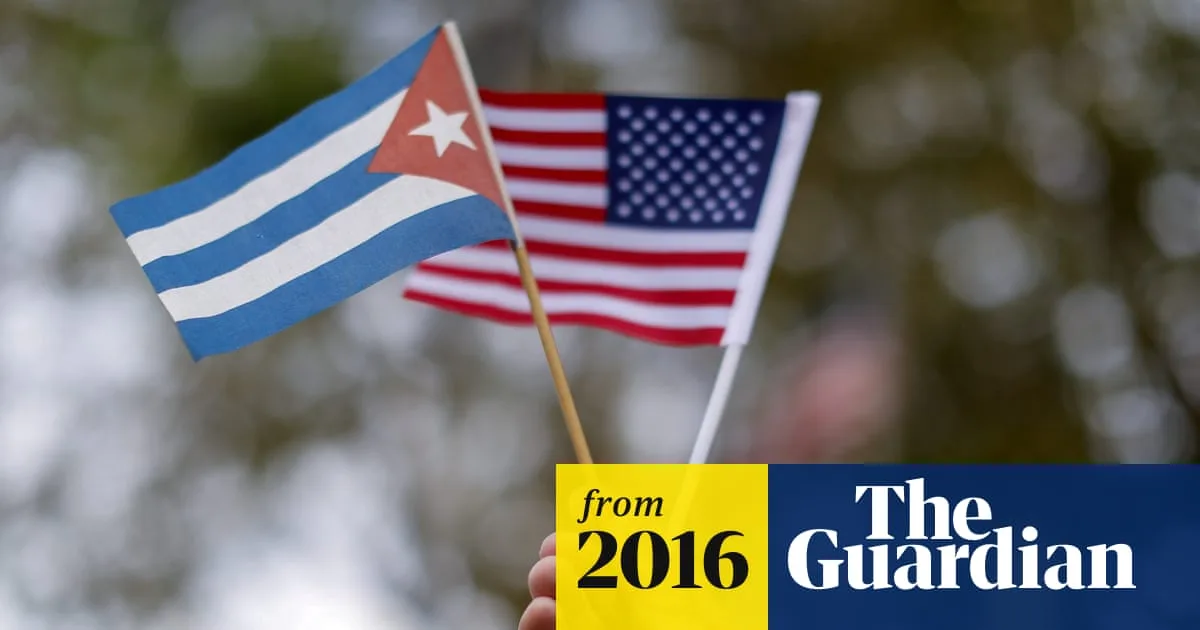
The Cuban government must grant greater freedoms to its people and give "something in return" to the United States if it wants to preserve the new era of warmer relations, senior aides to Donald Trump said on Sunday, as Fidel Castro's death casts uncertainty over the island's future.
Reince Priebus, Trump's incoming chief of staff, said the president-elect would "absolutely" reverse Barack Obama's stance on Cuba unless there was "some movement" from Havana. "Repression, open markets, freedom of religion, political prisoners: these things need to change in order to have open and free relationships, and that's what President-elect Trump believes," Priebus said. Kellyanne Conway, another senior adviser, told ABC television that any future deal would have to protect American interests and ensure "we are getting something in return".
The historic diplomatic rapprochement began in December 2014 when Obama and Raúl Castro announced the restoration of ties. It led to visits by US Secretary of State John Kerry and later Obama, the resumption of commercial flights and the lifting of restrictions on Cuban rum and cigars. However, many restrictions remain and can only be removed by Congress. During the Florida presidential campaign, Trump and his running mate, Mike Pence, promised to reverse the executive orders that relaxed the half-century US embargo.
Although both men marked Castro's death by denouncing his human rights record, they did not repeat their call to reinstate sanctions. Analysts suggested the opening to Cuba was unlikely to be discarded soon. Gregory Weeks, an expert on US-Cuban relations at the University of North Carolina at Charlotte, said Trump was "sending very strong signals that he's going to take a hard line on Cuba but without giving specifics". He added that Trump, as a businessman, had shown interest in doing business in Cuba and that the business side of the Republican party strongly favoured the existing policy.
Raúl Castro has left his mark on Cuban history by restoring relations with the US and easing travel restrictions, while maintaining the Communist party's hegemony and keeping the country stable. Volker Skierka, a Fidel Castro biographer, described Raúl as a "transitional president" who had performed well. But Fidel's death and Trump's impending presidency will test Raúl's nerve and judgment. Under Raúl, Cuba also hosted peace talks between the Colombian government and Farc insurgents.
US policymakers have abandoned their long-held theory that the Communist party's grip on power would slip without Fidel. "As much as we wish otherwise, I don't see it happening," said a US diplomat in the region. European diplomats said a huge shift in Cuban politics was unlikely, with one suggesting Raúl's death would be more significant than Fidel's. Dissidents, though internationally symbolic, are considered politically irrelevant by foreign diplomats in Havana.




