

Inside Trump's Decision to Attack Iran: A Window of Opportunity
Donald Trump initiated military strikes against Iran on Saturday as part of a coordinated effort with Israel, following intelligence that suggested a unique chance to target the country's highest-ranking clerics and commanders at once, according to sources familiar with the deliberations.
The operation was based on Israeli tracking of movements by Iran's supreme leader, Ayatollah Khamenei, which identified a brief period when key figures were gathered together. This provided what officials described as a window of opportunity to launch attacks aimed at decapitating the Iranian regime.
Strategic Rationale Behind the Strikes
The underlying strategy was rooted in a belief that while the Iranian Revolutionary Guard maintains deep loyalty to Khamenei, his death could weaken support for any successors, potentially destabilizing the regime. Two anonymous sources disclosed these sensitive details, noting the operation is ongoing.

Another individual briefed on Israeli military preparations added that several gatherings were targeted that morning, indicating a broad assault. By Saturday afternoon, a US official confirmed that Khamenei and five to ten top Iranian leaders were believed killed in an Israeli strike on a compound in Tehran, a claim later echoed by Trump in a Truth Social post.
Accelerated Timeline and Diplomatic Fallout
Trump did not specify a reason for the timing of the attacks in his video announcement, but sources revealed that the chance to target Khamenei expedited the strikes. The move drew sharp criticism from Oman's foreign minister, Badr Albusaidi, who expressed dismay on social media, stating that active negotiations had been undermined and that the action did not serve US interests or global peace.
The strikes followed a week of rapid developments, partly hinging on talks between Trump's special envoys, Steve Witkoff and Jared Kushner, and Iranian representatives in Geneva. These negotiations, first reported by the Guardian, focused on demands for Iran to dismantle its main nuclear enrichment sites at Fordow, Isfahan, and Natanz—targets of Trump's previous bombing campaign—and to surrender its remaining stockpile to the US.
Failed Negotiations and Military Briefings
Witkoff and Kushner insisted on a permanent deal without sunset provisions, unlike the 2015 Joint Comprehensive Plan of Action from which Trump withdrew. However, the talks ended in disappointment on Thursday. By Friday, Trump was briefed on military options by General Dan Caine, chairman of the joint chiefs of staff, and US Navy Admiral Brad Cooper, commander of US Central Command.
Senior US officials cited multiple factors for the strikes, with one emphasizing Iran's conventional missile arsenal as an intolerable threat that Iran refused to address in discussions. Another official expressed suspicion over Iran's claims of peaceful nuclear enrichment, noting that offers of free nuclear fuel were rejected, which was seen as a significant indicator of Iran's intentions.
Intelligence and Final Decisions
Intelligence indicated that Iran was rebuilding enrichment sites destroyed in last year's Operation Midnight Hammer and stockpiling partially enriched uranium, leading US officials to conclude that Iran did not genuinely seek a deal. One official stated, The President, frankly, had no choice. We cannot continue to live in a world where these people possess missiles and the ability to produce them indefinitely.
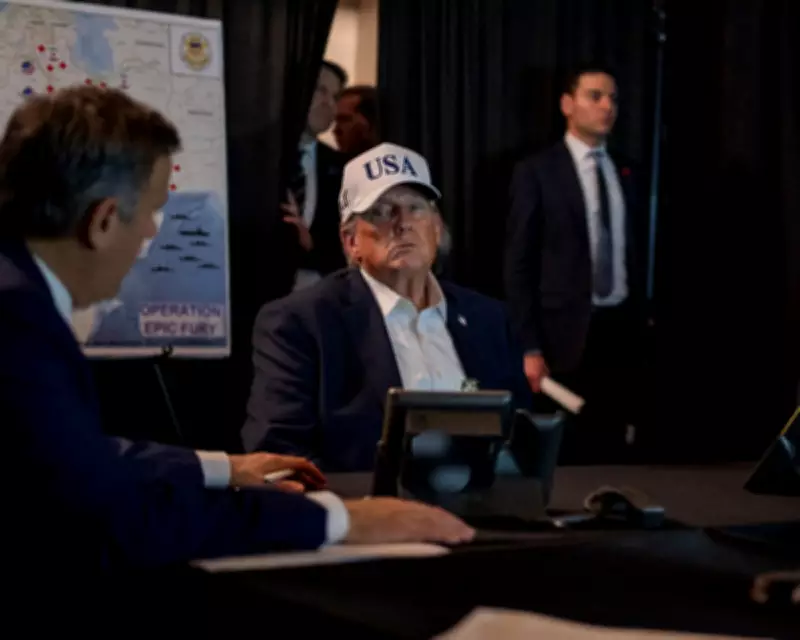
Trump traveled to his Mar-a-Lago club on Friday, seen wearing a white USA baseball cap similar to the one in his taped address announcing the Iran operation, symbolizing his readiness for the escalating conflict.






