
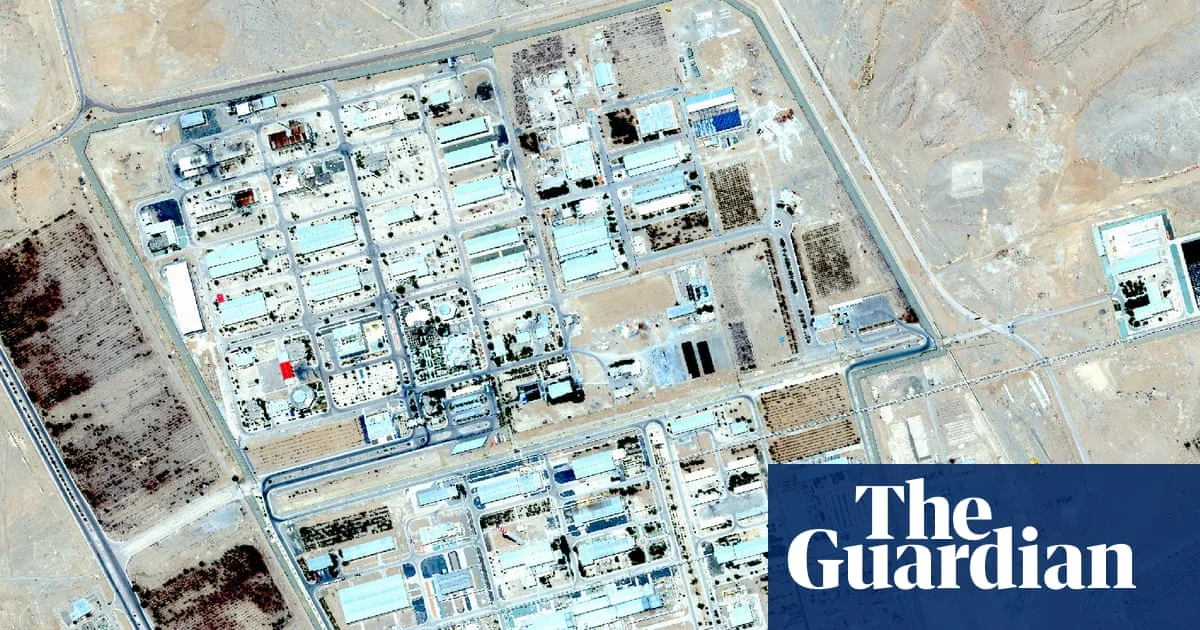
Donald Trump has said he does not care about Iran's stock of highly enriched uranium (HEU), arguing it was deep underground and could be monitored by satellite, raising questions about one of the key US justifications for the war.
Experts said that if the US-Israeli offensive against Iran concluded with the Tehran government still in control of its 440kg HEU stockpile, it would be significantly closer to the capability of making nuclear warheads than if the US had pursued a potential negotiated settlement that was on the table at the time the US and Israel launched the war on 28 February.
Asked about the stockpile by Reuters news agency on Wednesday, Trump said: “That’s so far underground, I don’t care about that.” In his address to the nation from the White House on Wednesday night, Trump elaborated: “If we see them make a move, even a move for it, we will hit them with missiles very hard again.”
The apparent decision to leave the HEU, which is roughly enough for about a dozen warheads, in Iran appeared to conflict with Trump’s assertions that one of the principal war aims was to ensure it could never make a nuclear bomb. He has repeatedly claimed, since starting the war, that Iran had been two to four weeks from making a nuclear weapon and firing it at the US and Israel, a claim rejected as absurd by most experts.
Nuclear proliferation experts say that if the HEU stock remains under Iranian control at the end of hostilities, it would leave Tehran significantly closer to the capability of making nuclear bombs than the proposed settlement being negotiated in Geneva on 26 February, two days before the war began. In those US-Iran talks, Iranian officials have said they had proposed diluting the HEU stockpile to low-enriched uranium, and reportedly agreed to keep only a much smaller stock of enriched uranium on its territory.
“We are actually less secure now from the nuclear threat than we were before he started the war, because they still have the material and we still have no greater insight into the material and what they might do with it,” said Emma Belcher, a nuclear expert and president of Ploughshares, a foundation promoting non-proliferation efforts. She added: “We’ve also likely increased [Tehran’s] calculus that they will seek nuclear weapons to prevent the very kind of attack we’ve just witnessed.”




