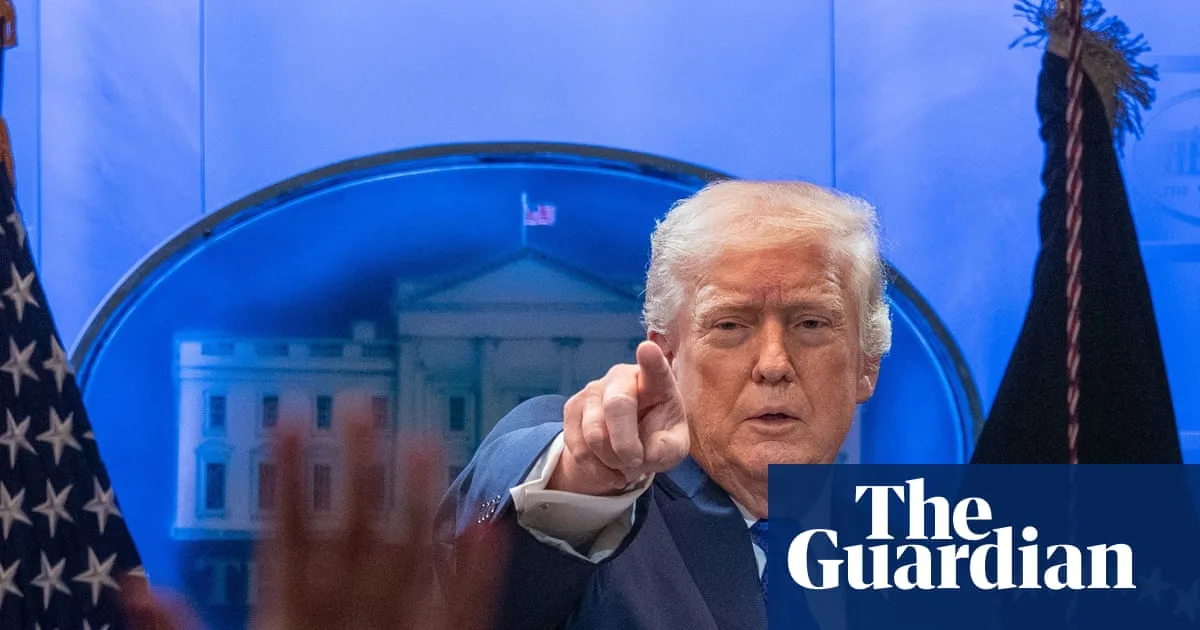
Trump's Unprovoked Iran Attack Lacks Mandate and Clear Objectives
In a dramatic escalation of tensions, former US President Donald Trump has launched a joint military operation with Israel against Iran, an action that starkly violates the United Nations Charter and lacks any clear congressional mandate or public support. This move represents a significant departure from Trump's previously stated platform of ending foreign military entanglements and comes just days after the inaugural meeting of his much-touted Board of Peace.
A Sudden Shift from Peace to War
Speaking to reporters on Thursday, Trump appeared to signal that diplomacy remained a possibility, but his subsequent actions told a different story. In a recorded eight-minute address delivered after the first bombs had fallen, Trump made it clear that this was no limited strike aimed at negotiating concessions from Tehran. Instead, he issued a stark ultimatum to Iran's Islamic Revolutionary Guard Corps, warning that they must surrender or face destruction.
"It's time for all the people of Iran – Persians, Kurds, Azeris, Balochis and Akhvakhs – to shed from themselves the burden of tyranny and bring forth a free and peace-seeking Iran," Trump declared, openly calling for regime change through internal uprising supported by external military pressure.
Coordinated Messaging with Israel
Israeli Prime Minister Benjamin Netanyahu echoed this maximalist approach, stating that his country had joined the war "to remove the existential threat posed by the terrorist regime in Iran." This coordinated messaging casts serious doubt on whether the recent US-Iranian negotiations about uranium enrichment limits ever had any genuine prospect of success. Those talks, which concluded their latest round on Thursday, were conducted under the shadow of what Trump called his "beautiful armada" – the largest US force assembled in the Middle East since the 2003 Iraq invasion.
Violation of International Law
The attack on Iran represents a clear violation of the UN Charter, occurring in the absence of any credible, imminent Iranian threat to the United States. In his justification, Trump spoke only in generalities, denouncing Tehran's leadership as "a vicious group of very hard, terrible people" and referencing 47 years of US-Iran enmity. Notably, Iran has arguably never posed less of a direct threat than at present, weakened by joint US-Israeli attacks last June, decades of sanctions, economic migration, and mass protests.
The Board of Peace as Political Vehicle
Barely ten days before launching this war, Trump hosted the inaugural meeting of his Board of Peace, which was supposedly established to resolve conflicts globally. That gathering brought leaders from 27 disparate states, mostly autocracies, to Washington to praise Trump as a peacemaker. Former British Prime Minister Tony Blair declared Trump's Middle East vision as "the best – indeed the only hope – for Gaza, the region and the wider world."
However, most of Washington's traditional European allies remained deeply sceptical and stayed away. The Board of Peace, sold to the UN Security Council in November as a path to ending the Gaza conflict, has increasingly appeared as a "bait-and-switch" operation – a rival body to the Security Council where Trump holds ultimate authority without accountability.
Domestic and International Pressures
The transformation from peace president to war president appears driven by multiple factors. Domestically, Trump faces declining popularity ahead of midterm elections and a recent Supreme Court rebuke limiting his use of tariffs as foreign policy tools. Wilbur Ross, commerce secretary in Trump's first term, suggested this court defeat made an attack on Iran more likely, stating: "I don't think he can take this loss and then be seen as backing down on Iran."
Internationally, Trump appears to have abandoned his pursuit of the Nobel Peace Prize, warning the Norwegian prime minister last month that he no longer felt "an obligation to think purely of peace." For a president who found more success as a reality television personality than a property developer, war has emerged as a potentially more effective distraction than peace, particularly following the successful January raid on Venezuela that extracted leader Nicolás Maduro without casualties.
Lack of Congressional Consultation
Congress has been almost completely sidelined in this decision-making process. Eight congressional leaders from both parties received a classified briefing hours before Trump's State of the Union address, but Democratic senators emerged stating they had not been given adequate justification for immediate military action. Unlike previous conflicts, there have been no regular Pentagon press briefings since December, and Trump devoted only three minutes of his record-length State of the Union speech to Iran.
This stands in stark contrast to the 2003 Iraq war, where the path to conflict was paved with specific (though false) claims about weapons of mass destruction. The current approach has been characterized by incoherence and silence, with Trump clearly expecting the Iranian people to become agents of regime change after US and Israeli bombing weakens existing power structures.
Potential Consequences and Risks
History suggests that entrenched regimes are rarely toppled by aerial bombing alone. Now facing an existential threat, Iran can be expected to retaliate with everything at its disposal. Ali Vaez, the International Crisis Group's Iran project director, notes: "The Iranians have come to the conclusion that restraint has been interpreted as weakness and invites more aggression."
Iran possesses significant untested military capabilities including short-range missiles, cruise missiles, naval assets, drones, and anti-ship ballistic missiles that could target US assets in the Strait of Hormuz and wider Gulf region. Iranian allies like the Houthis in Yemen and Hezbollah in Lebanon may also join the conflict, recognizing that Tehran's defeat would eliminate their primary sponsor.
"In all the years of war games in Washington, in the Pentagon and with all the thinktanks, without exception one or two US warships would sink," Vaez warned, adding that such an event would force Trump to retaliate devastatingly, potentially launching another major Middle Eastern war that would completely eclipse his presidency.
Faced with potential electoral defeat for his party in November, Trump has chosen the biggest gamble of his political career – a war of choice with unpredictable consequences, launched without proper mandate, clear objectives, or adequate public support.




