In what might be described as his political anecdotage, Donald Trump delivered his characteristic repertoire of stories to a somewhat bewildered audience at the World Economic Forum in Davos. The performance was followed hours later by a surprising reversal, as the president abandoned his latest tariff threat against Europe after reaching a preliminary agreement with NATO allies. This theatrical display raises questions about whether such dramatics serve any substantive purpose, particularly when contrasted with the grim reality of ongoing warfare in Eastern Europe.
The Stark Contrast Between Fantasy and Bloodshed
During his lengthy address in Switzerland, President Trump made passing reference to the conflict in Ukraine—a real and brutal war that stands in sharp opposition to his improbable musings about acquiring Greenland. As Vladimir Putin's so-called "special military operation" approaches the conclusion of its fourth year, tens of thousands of soldiers continue to perish weekly in the fighting. Meanwhile, Russian missile and drone attacks persistently target civilian infrastructure, with Kyiv and electricity generation facilities suffering particularly as temperatures plummet far below freezing.
The consequences of these attacks extend across all aspects of daily life, disrupting lighting systems, water supplies, industrial operations, transportation networks, and heating capabilities. This systematic targeting of civilian infrastructure represents nothing less than state-sponsored terrorism, orchestrated from the Kremlin precisely because battlefield progress by Russia's undertrained and poorly equipped forces remains disappointingly sluggish. Europe's most serious interstate conflict since the Second World War grinds forward with undiminished cruelty, creating a far-from-ideal backdrop for renewed American peace initiatives.

A Sceptical Ukrainian Response
President Trump expressed hopes of meeting with Volodymyr Zelensky for discussions, despite the Ukrainian leader having departed Davos earlier in the week to return to Kyiv. Mr Zelensky's early departure reflected growing disillusionment with recent developments in American foreign policy—a scepticism that appears thoroughly justified. Although Ukraine agreed to a US-proposed ceasefire back in March, President Putin has consistently found reasons to continue hostilities, rejecting any peace settlement that fails to reward Russia with substantial Ukrainian territories it has yet to conquer militarily.
Nevertheless, President Trump persists in believing that neither side demonstrates genuine seriousness about ending the conflict, suggesting they take turns rejecting ceasefire proposals—a characterization that fundamentally misrepresents the situation. For Putin, there has always been some fresh pretext for rejecting agreements, often involving lengthy discourses questioning Ukraine's very legitimacy as a sovereign nation with distinct cultural identity. The Russian leadership's conviction that Ukraine rightfully belongs to them mirrors, with disturbing similarity, President Trump's belief that Greenland should be American territory.
Peace Efforts Amidst Political Theatre
Despite the rhetorical flourishes at Davos, President Trump's peace envoys—Steve Witkoff and Jared Kushner—are preparing for further discussions in Moscow aimed at advancing the American peace proposal. Expectations for any sudden breakthrough remain modest, particularly following the lack of progress at last August's Alaska summit, where President Trump might reasonably have anticipated some diplomatic reward for his very public efforts to rehabilitate President Putin on the global stage.
In a move testing the boundaries of political satire, President Trump has even invited Putin—indicted as a war criminal—to participate in his Gaza peace board initiative, a project many view as primarily serving presidential vanity. To provide some balance, President Zelensky received a similar invitation to join this new body, though the Ukrainian leader understandably declined, likely viewing the proposal as a depressing indicator of how profoundly out of touch and gullible President Trump can be regarding Kremlin intentions.

The Consequences of Misplaced Priorities
President Trump maintains that Ukraine and Russia would be "foolish" not to endorse his peace proposal, yet he fails to acknowledge how much more accommodating and positive the Ukrainian side has been throughout negotiations. More troubling still, he overlooks how increased pressure on President Putin might actually compel the Russian leader to end the war he initiated. Instead, Putin consistently receives rewards for his obstinacy, with only occasional expressions of presidential exasperation offering mild counterpoint.
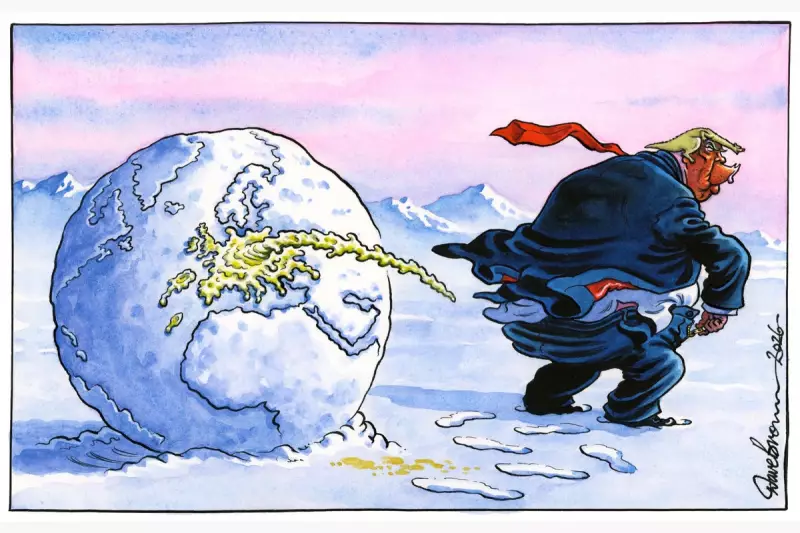
Under current circumstances, without exerting particular effort, Putin is achieving what no previous Russian or Soviet leader managed—watching NATO unravel at a pace and in a manner that seems scarcely credible. The US National Security Strategy, published last November, portrayed Europe as a greater threat to American interests than Russia, a theme of "civilisational erasure" that President Trump revisited during his Davos address. While NATO previously maintained cohesion through the strains of Vietnam, Iraq, and Afghanistan conflicts, and across decades of Cold War tension, President Trump has casually fractured this alliance.
If President Putin had opportunity to view President Trump's speech, he would undoubtedly have welcomed hearing an American president declare that NATO has provided no benefits to the United States, and that European and Canadian allies would not support America if requested—a statement contradicting the painful post-9/11 experience of allied solidarity.
The last-minute policy reversal, while abrupt, is certainly welcome. However, President Trump has demonstrated his willingness to shake the Western alliance to its very foundations, creating a troubling legacy for any American president and diverting attention from the urgent humanitarian crisis unfolding in Ukraine.