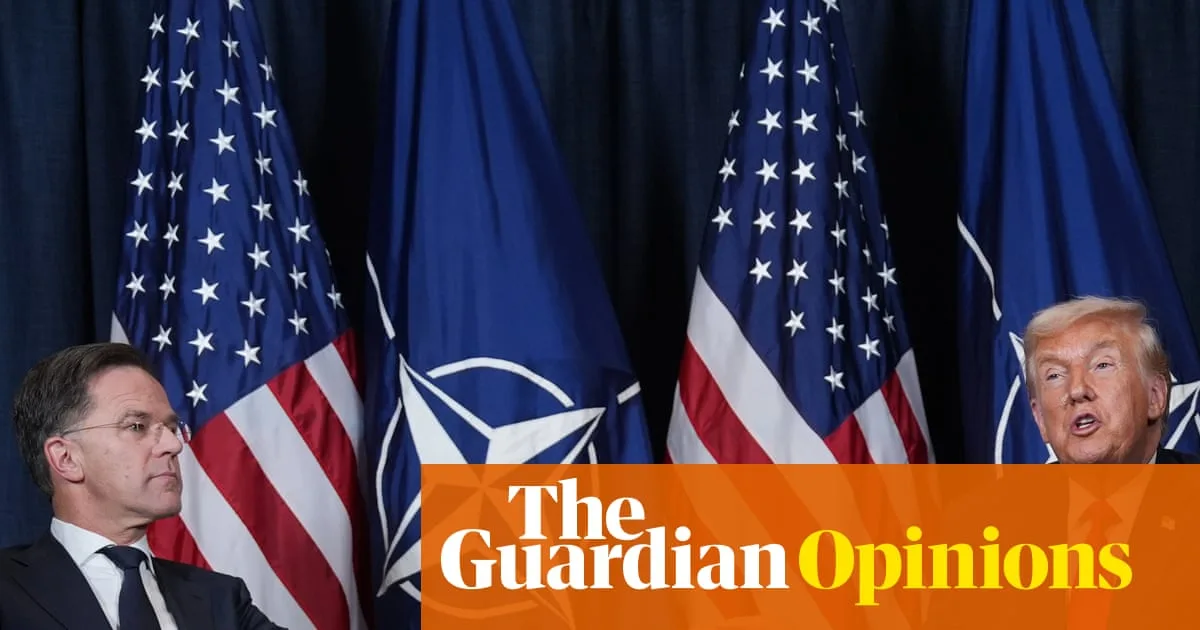
NATO Secretary General Mark Rutte was pictured alongside US President Donald Trump in Davos, Switzerland, on 21 January 2026, a visual reminder of the complex transatlantic dynamics at play. The photograph, taken by Evan Vucci for the Associated Press, captures a moment of diplomatic engagement amidst a backdrop of strategic tension.
The Spectacle of Geopolitics: Trump's Attention Economy
When Donald Trump publicly retreated from threats to use force to acquire Greenland, after days of provocative statements, he was executing a familiar playbook: transforming geopolitics into a spectacle. Whether the US President genuinely believed in annexing a vast Arctic territory belonging to a NATO ally is arguably less significant than the outcome he achieved. Once again, Europe and the global community found themselves fixated on his agenda, diverted from their own strategic priorities.
Trump is not a conventional politician who merely responds to events; he actively seeks to manufacture them. This approach stems not from a deep investment in policy minutiae, but from a keen understanding of a defining characteristic of contemporary politics: attention equates to power. In an era saturated with information and analysis, what is truly scarce is focused attention. The entity that controls this attention effectively dictates the terms of the debate.
The "Flood the Zone" Strategy Goes Global
Steve Bannon, a former strategist for Trump, once characterised the domestic approach as "flood the zone with shit." The tactic involves generating such a high volume of scandals and provocations that opponents become overwhelmed, unable to discern which issues merit priority. The media chases every development, the opposition remains in a perpetual state of outrage, and strategic, long-term thinking is crowded out. This logic and its accompanying methods are now being deployed systematically in US foreign policy under Trump's second term.
The threats directed at Denmark and Greenland were not isolated incidents but a form of geopolitical clickbait. Their primary purpose was to dominate the international news cycle, force other governments into a reactive posture, and stifle longer-term strategic contemplation. Greenland served as an ideal vehicle for this tactic. Its strategic importance in the Arctic, positioned between North America and Europe, is undeniable, yet it remains remote enough that few voters possess detailed knowledge about it. This combination made it perfect for attention capture: dramatic enough to generate headlines, yet vague enough to fuel endless speculation and anxiety.
The episode triggered genuine security concerns, touching on NATO solidarity, Arctic security, and the vulnerability of a semi-autonomous territory. In response, Denmark has already bolstered its military presence in Greenland, with quiet support from other European states. A Danish navy vessel was photographed patrolling near Nuuk, Greenland, on 15 January 2026, illustrating the tangible military repercussions of Trump's rhetoric.
Europe's Reactive Vulnerability and Strategic Fragmentation
The core issue throughout the Greenland episode was not necessarily whether Trump would follow through with action, but that Europe felt compelled to respond. As European governments issue statements and coordinate positions, Trump swiftly moves on to the next provocation—be it tariffs, Iran, Venezuela, NATO burden-sharing, or migration. This leaves behind a trail of diplomatic distraction, with European leaders often relegated to minor roles in a political theatre scripted in Washington.
Behind the spectacle, however, lies a coherent and concerning agenda. Trump's second-term national security strategy explicitly frames Europe not as a partner in a rules-based international order, but as a declining, elite-driven liberal bloc that constrains rising nationalist forces. Support from Washington is presented not as a mutual interest rooted in shared values, but as a transactional arrangement. Leaders who demonstrate ideological alignment with Trump are promised preferential treatment, while others face concerted pressure.
By this logic, Greenland is more than just a territory; it is a strategic lever. It serves as a means to signal to Denmark, and to the European Union more broadly, exactly who sets the terms of engagement. Europe is particularly susceptible to this form of pressure due to its inherent tendency for fragmented attention. Each Trump provocation resonates differently across the continent: Arctic threats alarm Scandinavia, trade disputes impact major exporters, and the war in Ukraine remains a paramount concern for Eastern European states. Consequently, each episode generates a different, shifting coalition of concerned nations, but it fails to produce sustained, strategic unity.
Charting a Path Forward: Discipline and Long-Term Planning
This is the critical vulnerability that Trump exploits. A Europe that is perpetually reacting is a Europe that is never planning. Every issue begins to feel urgently pressing, and the price of having attention captured is a debilitating strategic short-termism.
So, what should Europe do to counter this dynamic? A robust, two-track response is essential. Firstly, Europe must address Trump's provocations with calm, collective discipline. When a US president questions the territorial integrity of a NATO ally, Europe cannot afford to ignore it. However, European leaders must consciously avoid delivering the fragmented, emotional, and uncoordinated reaction that Trump seeks. The objective should be to communicate a message of resolve and unity with consistency and clear purpose.
Secondly, and more importantly, Europe must make substantial investments in developing its own long-term security and strategic framework, independent of the daily churn of Trump's political manoeuvres. This requires accepting a difficult new reality: US domestic politics is no longer a temporary disruption to transatlantic stability. Trump has demonstrated how swiftly US foreign policy can revert to a transactional, nationalist model. Europe must plan accordingly for key priorities such as collective defence, energy security, and geo-economic resilience.
Figures such as Poland's Donald Tusk exemplify this approach, striving to keep Warsaw focused on EU coordination regarding Ukraine and defence, rather than being derailed by every new provocation from Washington. Europe does not lack for proposed solutions; detailed reports by former Italian prime ministers Enrico Letta and Mario Draghi attest to the wealth of strategic thinking available. The challenge lies in cultivating the political will and institutional capacity to act decisively upon them.
The Central Lesson: Winning the Attention War
The fundamental lesson of Trump's second term is not that global politics has descended into mere chaos. It is that attention itself has become a primary strategic battleground in international relations. Attention wars are not won by reacting more quickly or loudly. They are won by deliberately deciding what issues deserve sustained focus and strategic investment.
Europe does not need to compete with Trump in generating social media outrage or sensational headlines. It needs to outplan him. By fostering disciplined responses to immediate provocations while concurrently building resilient, long-term strategic autonomy, Europe can shift from a position of reactive vulnerability to one of proactive strength. The path forward demands not just unity in reaction, but unity in vision and execution for the future.






