

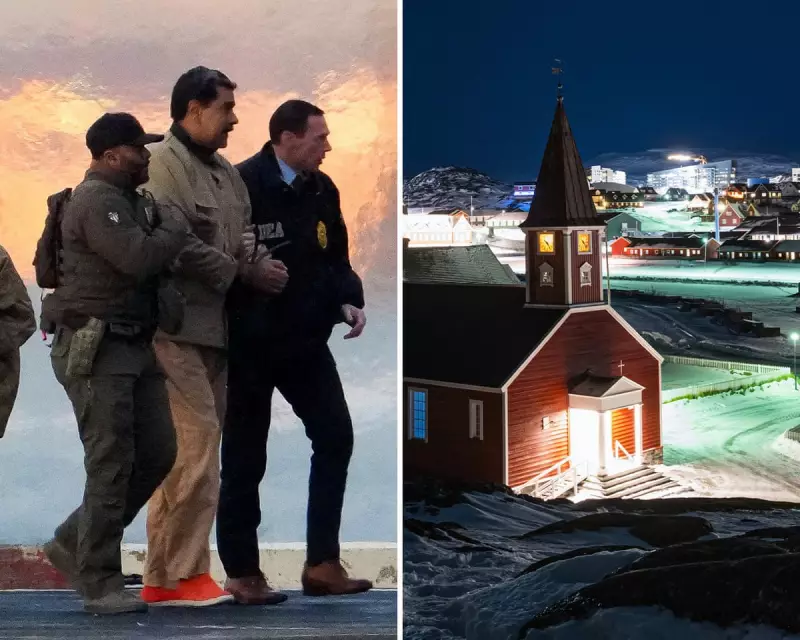
The "America First" doctrine championed by former President Donald Trump has faced significant scrutiny following recent international actions, including the capture of Venezuelan leader Nicolás Maduro and renewed ambitions regarding Greenland. These developments have sparked a wide-ranging debate among American citizens about the direction of US foreign policy and its impact on domestic concerns.
Mixed Reactions to Military Intervention and Expansionist Rhetoric
American voters from diverse backgrounds have expressed sharply contrasting opinions about President Trump's approach to international affairs. While some applaud demonstrations of military strength, others voice deep concerns about expansionist tendencies and the erosion of diplomatic relationships.
Regret and Concern Among Former Supporters
Simon, a 20-year-old student from Indiana who voted for Trump in 2024, now expresses regret about his decision. "I feel like I've been fooled into voting not for an American-first policy, but an expansionist policy," he states. Simon highlights the disconnect between campaign promises about lowering living costs and what he perceives as unnecessary foreign ventures that don't benefit ordinary citizens.

"With Venezuela, Donald Trump captured a dictator. I don't necessarily know how that's going to improve my life," Simon continues. "All these foreign ventures just don't really seem beneficial to the average American citizen." He worries that the Venezuela operation has established a dangerous precedent that could embolden further expansionist plans.
Diplomatic Damage and International Relationships
Carol, a 78-year-old social worker from New Mexico, describes having Trump as president as "embarrassing" and expresses particular concern about deteriorating relationships with European allies. "Why can't we just be a nation among nations?" she asks. "I feel so bad about Europe – all the goodwill and friendship that has been there for decades is being destroyed."
Regarding the Greenland situation, Carol believes it represents a genuine threat rather than mere political posturing. "The situation with Greenland is terrifying and I feel it is a real threat from Trump – it is not just him being boisterous." Despite feeling overwhelmed at times, she remains committed to political engagement through activism and voting initiatives.
Support for Demonstrations of Strength
Not all responses have been critical. Eric, a 22-year-old restaurant manager from California, expresses support for the Venezuela operation. "I thought it was great," he says. "It was good to see we can actually do a military operation if something were to come to head."
Eric views the operation as an important demonstration of American capability. "The way the operation was executed shows that the USA is a force to be reckoned with and that we won't just be a lame duck on the world stage when countries around the globe are acting aggressively against American interests."
Strategic Considerations Regarding Greenland
John, a Trump supporter in his early sixties working in IT in Florida, offers a nuanced perspective on the Greenland question. While acknowledging Greenlanders' potential objections, he suggests US oversight might be preferable to influence from geopolitical rivals.
"I wouldn't like it if I were from Greenland," John admits, "but I support control of Greenland if Trump can find a way to do it respectfully." He proposes negotiation rather than force, suggesting a framework where the US assumes some control to prevent Russian or Chinese influence, potentially with time-limited agreements.
Broader Concerns About Democratic Norms and Priorities
Shifting Political Perspectives
Seth, a 36-year-old e-commerce worker from Ohio who voted for Trump in 2016 but now identifies as a socialist, expresses concern about how foreign interventions might affect domestic democracy. "He's testing limits, poking and prodding the American people to see if we care about our democracy," Seth suggests, pointing to Trump's brief consideration of cancelling midterm elections.
He also questions the economic motivations behind these foreign ventures. "Venezuela has huge oil and mineral reserves. Greenland has rare earth minerals. If he can claim those resources by force, then he can profit from them."

International Trust and Economic Consequences
Marie, a 58-year-old librarian from Tennessee, worries about damage to America's international standing. "We've seen he does whatever he wants, and nobody holds him accountable," she observes. "There are no rules, and there are no repercussions for Trump, but there are for the rest of us. We'll be lucky if we have any allies by the time this is done."
She questions the prioritisation of foreign ambitions over domestic needs. "None of this helps the American people who are struggling to pay for housing, healthcare and groceries. Fix your own house before looking at others." Marie fears these policies could lead to economic consequences, including reduced foreign investment and trust in American institutions.
Generational Perspectives on Military Engagement
Ocean, an 18-year-old non-binary student from California, represents a younger generation's concerns about military intervention. "How do we have the money to take over Greenland when there are people living on the streets?" they ask. "People need housing, healthcare, food. That should be the priority."
Ocean expresses embarrassment about current foreign policy and worries about being part of a generation that might be sent to fight. "We're the ones who would actually be sent," they note, recalling classmates' horrified reactions to casual mentions of deployment. "We don't want to fight some pointless war."
Long-term Implications and International Law
Marie Thompson, a 76-year-old retired teacher from Utah, expresses concern about Trump's approach to international norms. "Nicolás Maduro needed to go, but not like this," she says regarding the capture operation. "US imperialism could be the beginning of a dangerous road that leads to world war three."
She notes Trump's longstanding interest in Greenland and his recent sharing of AI-generated maps showing it as part of the US. "Trump has no respect for any country or anybody but himself, and he doesn't care what people think, so whatever comes into his mind, he's going to try to do. It worries me."
These diverse perspectives highlight the complex and divided American response to Trump's foreign policy approach, revealing tensions between demonstrations of strength and concerns about expansionism, between international ambitions and domestic priorities, and between immediate political gains and long-term consequences for America's global standing.





