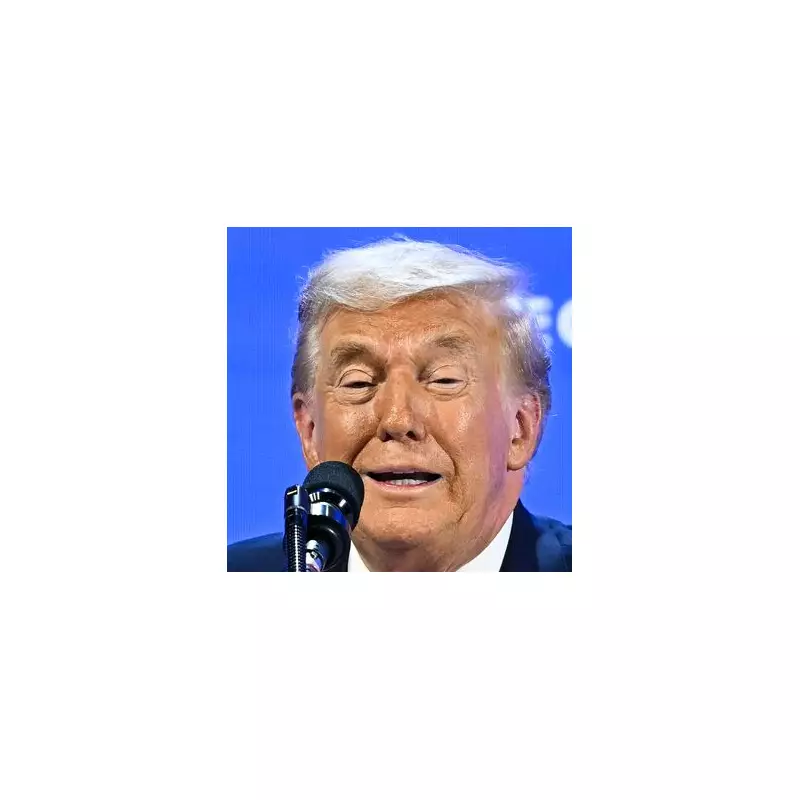
Donald Trump's recent appearance at the World Economic Forum in Davos has ignited widespread concern among international observers, with the former US president delivering a speech that many have characterised as erratic and detached from reality. The address, which was anticipated as a significant diplomatic moment, instead unfolded as a series of contentious statements that underscored Trump's unconventional approach to global affairs.
A Performance of Self-Admiration
From the outset, Trump's presentation seemed less focused on substantive policy and more on cultivating an image of personal adulation. He asserted to the audience that NATO leaders hold him in such high esteem that they affectionately refer to him as "Daddy," a claim that left diplomats and attendees bewildered. This opening set a tone of narcissism, with Trump appearing to prioritise ego-stroking over coherent leadership, performing for an imaginary audience rather than engaging with the global elite present.
The Greenland Obsession
A central theme of Trump's rambling discourse was his fixation on Greenland, which he repeatedly confused with Iceland during his remarks. He articulated what many interpreted as a colonial demand, insisting that the United States should have "right title and ownership" of the territory, which he dismissively labelled as "a piece of ice." While Trump stated he would not use force to seize Greenland, he immediately contradicted himself by boasting that America would be "unstoppable" if it did, framing the threat in a way that blurred lines between denial and aggression.

This rhetoric ignored the existing US military presence in Greenland and the sovereignty of Denmark, which governs the autonomous region. Trump's justification centred on defence needs, yet his language suggested a desire for possession rather than cooperation, alarming allies who view such statements as undermining international law and diplomatic norms.
NATO and Historical Revisionism
Turning to NATO, Trump questioned whether the alliance would defend the United States if attacked, a claim that flies in the face of historical fact. NATO's Article 5 was invoked only once in its history—in defence of the US following the 9/11 attacks—a detail Trump either overlooked or chose to ignore. His remarks served to sow doubt about alliance commitments, reinforcing a pattern of grievance-driven rhetoric that prioritises personal narratives over factual accuracy.
Further compounding the controversy, Trump recycled a crude historical analogy, asserting that Europe would be "speaking German or Japanese" without American intervention, a statement perceived as deliberately humiliating to allies. This approach reduces complex international relationships to simplistic tales of superiority, eroding trust and cooperation.
Delusional Claims on Ukraine and Elections
Trump's speech ventured into outright delusion when addressing the conflict in Ukraine. He claimed the war would never have occurred under his presidency, suggested Vladimir Putin holds back out of affection for him, and implied that global peace hinges on his personal charm. Such assertions reduce diplomacy to ego massage, ignoring the multifaceted realities of geopolitical strife.
In a move that has become trademark, Trump also reiterated baseless allegations that the 2020 US election was "rigged," offering no evidence to support this claim. By airing these grievances on a global stage, he not only embarrassed himself but also projected instability, casting doubt on American democratic processes in front of an international audience.
The Underlying Danger
Beyond the immediate embarrassment, Trump's Davos performance poses significant risks. His casual dismissal of international law, threats to annex foreign territory, and mocking of allies echo the rhetoric of strongmen rather than democratic leaders. The speech revealed a president—or former president—utterly unmoored from reality, contradicting himself within sentences, confusing countries, and lying about history.
What emerged most clearly was Trump's insatiable hunger for adulation, a thread that ran through every segment of his address. He seemed obsessed with applause and respect that he claims exists, even when met with silence, highlighting a profound disconnect from the reactions of those around him.

Conclusion: A Chilling Display
Trump's Davos address did little to reassure the world about American leadership; instead, it projected derangement and vanity. Far from an off day, this was Trump unfiltered—belligerent, fact-free, and intoxicated by his own reflection. The most chilling aspect is his belief that such performances are effective, suggesting a continued trajectory of destabilising rhetoric that could have lasting implications for global diplomacy and security.