Trump Unveils 'Board of Peace' at Davos Summit with Global Ambitions
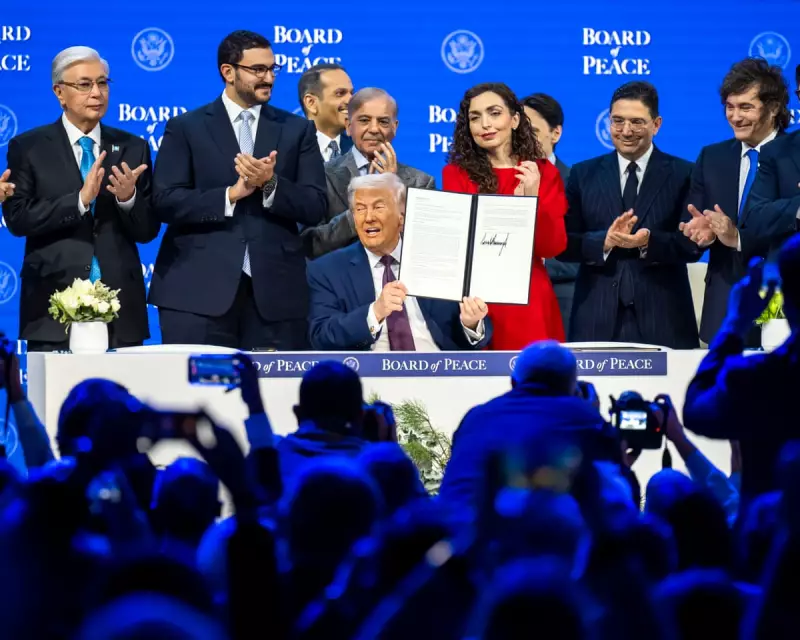
In a significant diplomatic move, former US President Donald Trump has officially launched his proposed 'board of peace' initiative during a high-profile ceremony at the World Economic Forum in Davos, Switzerland. The event, held on 22 January 2026, saw Trump presiding over a signing ceremony where he confidently declared the world has become "richer, safer and much more peaceful than it was just one year ago."
A New Geopolitical Body Emerges
The newly established organisation, which Trump will personally chair, was described by the former president as potentially "one of the most consequential bodies ever created in the history of the world." Originally conceived as part of Trump's proposed framework for achieving a ceasefire in Gaza, the board's mandate has since expanded considerably. Trump has recently indicated that the body could assume a much broader geopolitical role, leading to speculation about its ultimate purpose and influence.
When questioned by journalists about whether this fledgling institution might eventually supplant the United Nations, Trump responded with characteristic ambiguity, stating simply: "It might." This remark has intensified concerns among some international leaders and diplomats who fear the board could undermine existing global governance structures.

International Participation and Notable Absences
Leaders from nineteen nations participated in the signing ceremony, committing to Trump's vision. Among the initial signatories were Argentina, Kosovo, Morocco, Hungary, Indonesia, Jordan, and Kazakhstan, with expectations that additional countries will join the effort in coming weeks. Notably, Trump has extended an invitation to Russian President Vladimir Putin, whose military continues operations in Ukraine. Putin has indicated Moscow is consulting with "strategic partners" before deciding on participation.
However, several key Western nations have declined involvement. British Foreign Secretary Yvette Cooper confirmed the United Kingdom will not be joining Trump's 'board of peace' at present. Other notable abstentions include France, Germany, and Norway, reflecting diplomatic caution about the initiative's direction and implications.
Diplomatic Tensions and Surprising Reversals
The launch has generated considerable diplomatic friction. Some diplomats had previously warned that Trump might envision the organisation eventually replacing the United Nations, though the former president has claimed the two bodies could operate cooperatively. In a surprising development, Canada's potential participation was abruptly withdrawn following a Truth Social post from Trump addressed to Canadian Prime Minister Mark Carney.
The message stated: "Please let this Letter serve to represent that the Board of Peace is withdrawing its invitation to you regarding Canada's joining, what will be, the most prestigious Board of Leaders ever assembled, at any time. Thank you for your attention to this matter!" This public disinvitation represents an unusual diplomatic maneuver that has further complicated international reactions to the initiative.
Broader Geopolitical Context
The Davos announcement occurs against a backdrop of multiple international controversies involving the former president. Concurrently, Greenland has demanded respect for its sovereignty after Trump claimed an agreement would grant the US "total" access to the Arctic island. Meanwhile, the US House rejected a resolution that would have prevented Trump from deploying military forces to Venezuela, and Ukrainian President Volodymyr Zelenskyy delivered a fiery speech at Davos accusing European leaders of being in "Greenland mode" by awaiting Trump's leadership rather than taking independent action.
As the 'board of peace' begins its operations, questions remain about its practical functions, funding mechanisms, and relationship with established international institutions. The involvement of nations with varying geopolitical alignments suggests the body could become a significant, if controversial, new forum for international dialogue, potentially reshaping diplomatic engagements in the coming years.