Trump's Afghanistan Troop Remarks Spark Outrage Among UK Veterans and Families
US President Donald Trump has provoked significant anger among British politicians, veteran fighters, and military families by claiming that NATO soldiers deliberately avoided the front lines during the long-running conflict in Afghanistan. The controversial comments, made during a Fox News interview, have been widely condemned as both offensive and factually inaccurate by those with direct experience of the war.
Casualty Figures Contradict Presidential Claims
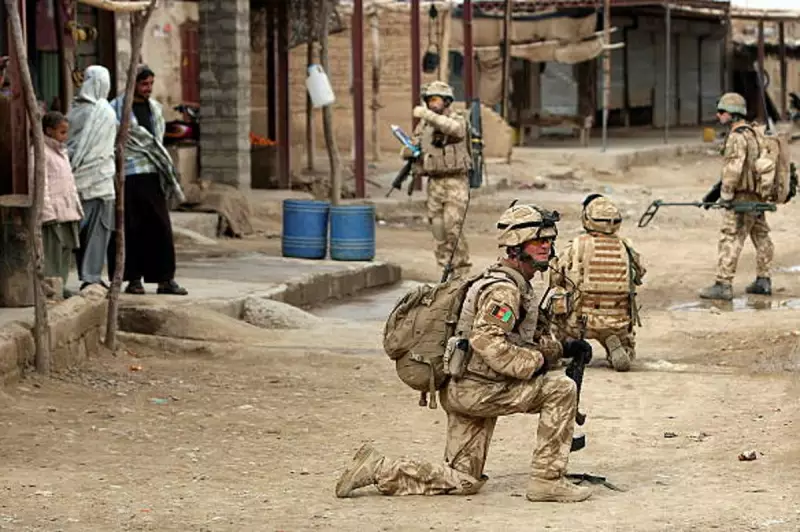
According to statistics from Help for Heroes, approximately 1,186 non-American NATO troops lost their lives during the Afghanistan conflict that began in 2001. This figure stands alongside more than 2,300 members of the United States armed forces who were killed during the same period. The suggestion that allied forces remained safely behind front lines has been met with particular dismay given these substantial casualty numbers.
Lord Sedwill, who served as British ambassador to Afghanistan, provided a forceful rebuttal to the presidential remarks during an appearance on Times Radio. He emphasised that Afghanistan veterans and the families of those who made the ultimate sacrifice would be entirely justified in feeling deeply offended by what he characterised as dismissive and incorrect statements.

First-Hand Accounts Challenge Trump's Narrative
"The Americans took the burden but the UK and Denmark, for example, had a higher rate of casualties than the Americans," Lord Sedwill stated authoritatively. "I was in Afghanistan, that was certainly the case there, and [they] were engaged in some of the most vicious fighting in some of the most dangerous areas. And so he is completely wrong to be dismissive."
British families who lost loved ones in Afghanistan have similarly challenged the notion of defined front lines during the conflict. Multiple relatives told The Times that in provinces like Helmand, the Taliban's tactics made traditional battlefield distinctions largely irrelevant.
The Reality of Asymmetric Warfare in Helmand
Ian Wright, whose 22-year-old son Gary—a Royal Marine from Scotland—was killed by a suicide bomber in Lashkar Gah in 2006, explained the operational reality faced by British forces. "There was no such thing as a front line in Afghanistan," he stated plainly. "The Taliban were not in any form of unit and not identifiable. They relied on IEDs and mixing with the public."
Mr Wright added that under normal circumstances, people would express shock at "the lack of diplomacy and factual accuracy shown by a president of the USA." He noted, however, that such expectations no longer applied to the current administration.
Political and Military Figures Unite in Condemnation
The political response has been swift and bipartisan. Liberal Democrat leader Sir Ed Davey pointedly remarked: "Trump avoided military service five times. How dare he question their sacrifice."
Conservative MP Ben Obese-Jecty, who served as a captain in the Royal Yorkshire Regiment in Afghanistan, expressed profound disappointment at how the sacrifices of British and NATO forces were being characterised. "It is sad to see our nation's sacrifice, and that of our NATO partners, held so cheaply by the president of the United States," he stated.
Drawing from personal experience in Sangin—where British forces suffered horrific casualties—Mr Obese-Jecty added: "I don't believe US military personnel share the view of President Trump; his words do them a disservice as our closest military allies."
Broader Implications for NATO Relations
The controversy emerges alongside Mr Trump's broader questioning of NATO's reliability, with the president stating on Thursday that he was uncertain whether the alliance "would be there if we ever needed them." These dual comments about both commitment and combat performance have created diplomatic tensions at a sensitive time for transatlantic relations.

The strong reactions from British military families, veterans, and political figures underscore the deep emotional resonance of the Afghanistan conflict and the importance of accurate historical acknowledgment for those who served and sacrificed during the twenty-year engagement.