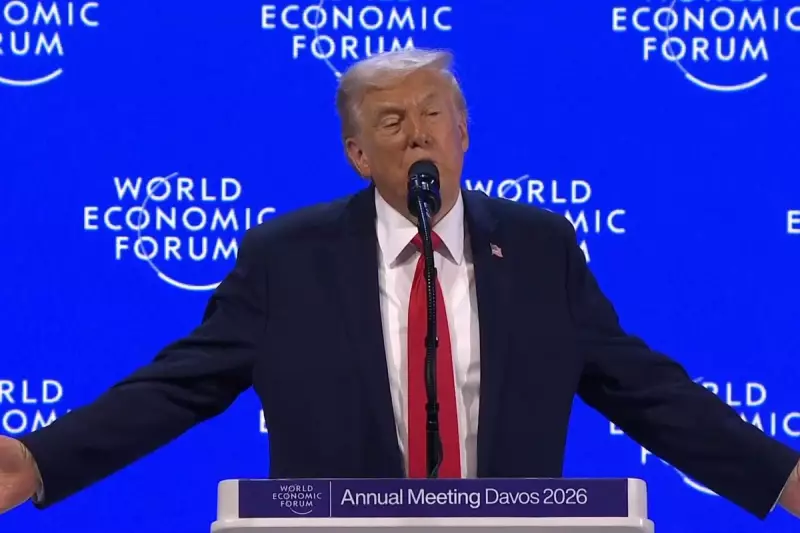
In a significant diplomatic shift, former US President Donald Trump has withdrawn his threats to impose punitive tariffs on eight Nato member states, including the United Kingdom. This reversal follows what he described as a "very productive meeting" with Nato Secretary General Mark Rutte on the sidelines of the World Economic Forum in Davos, Switzerland.
From Confrontation to Compromise
The controversy centred on Trump's longstanding ambition to secure control over Greenland, a vast, self-governing territory of Denmark that is rich in mineral resources and holds strategic importance in the Arctic region. Earlier on Wednesday, the former president had reiterated his determination to acquire the island, though he explicitly ruled out using military force to achieve this goal.
Tariff Threats Against Allies
In response to opposition from several Nato allies, Trump had threatened to levy new tariffs on nations including Britain. These economic measures were scheduled to come into effect on February 1st, potentially straining transatlantic trade relations and alliance unity. The threats highlighted the unusual nature of using trade policy as leverage in a territorial dispute between allies.

The Davos Dialogue and a New Framework
The dynamic changed following discussions with Nato's Mark Rutte. Taking to his Truth Social platform, Trump announced a diplomatic breakthrough. "We have formed the framework of a future deal with respect to Greenland and, in fact, the entire Arctic Region," he stated. He expressed optimism that this proposed solution, if finalised, would benefit both the United States and all Nato nations.
Based on this developing understanding, Trump declared the scheduled tariffs would not be implemented. "Based upon this understanding, I will not be imposing the tariffs that were scheduled to go into effect on February 1st," he confirmed, effectively rowing back from his earlier aggressive trade posture.
Implications for Arctic Policy and Alliance Cohesion
This episode underscores the complex geopolitical interests in the rapidly changing Arctic, where melting ice is opening new shipping routes and access to resources. The initial threat of tariffs against close allies like the UK had raised concerns about the weaponisation of trade within the defensive alliance. The subsequent pullback suggests a move towards negotiated, multilateral approaches concerning the region's future, though the specifics of the proposed "framework" remain undisclosed. The situation continues to be watched closely by policymakers in London and other European capitals.