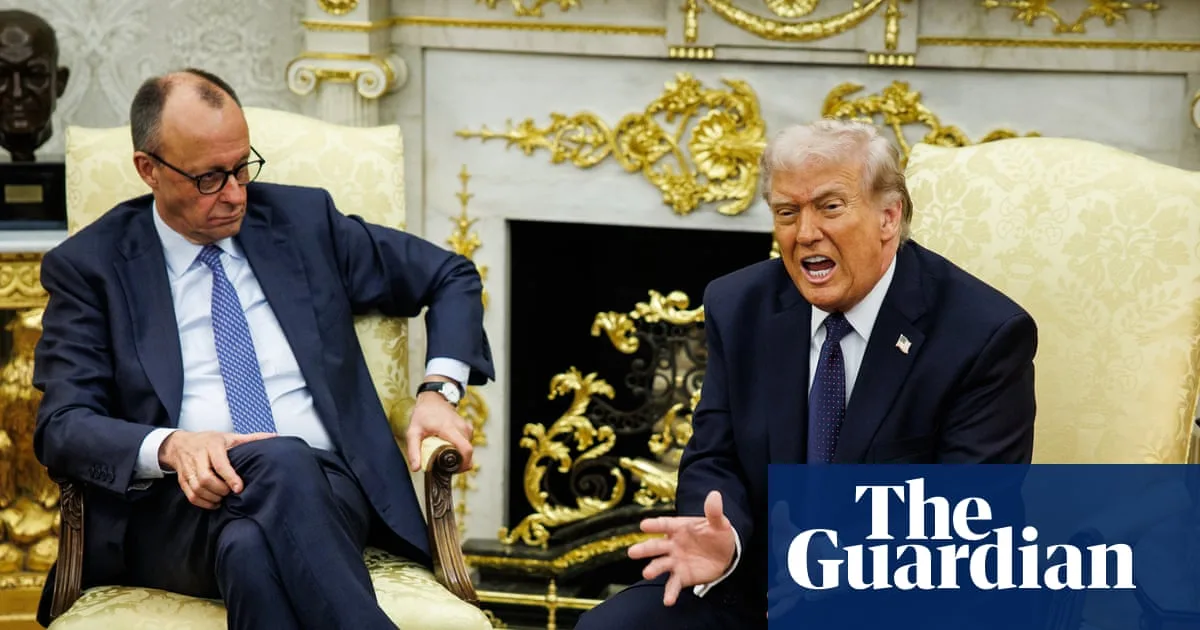
Donald Trump has expressed concern that the US-Israeli military campaign against Iran could result in a new leader who is 'as bad as the previous person'. Speaking at an Oval Office news conference with German Chancellor Friedrich Merz, the US president was asked about the worst-case scenario following the assassination of Iran's Supreme Leader Ayatollah Ali Khamenei.
Trump acknowledged that while the US and Israel have a superior military force, the hope for a less repressive government in Iran might not materialise. 'I guess the worst case would be we do this and then somebody takes over who's as bad as the previous person, right? That could happen,' he said. 'We'd like to see somebody in there that's going to bring it back for the people.'
The president also cautioned Iranians against protesting prematurely, stating that the state security apparatus remains dangerous. He asserted that Iran was planning to attack first, contradicting earlier remarks by Secretary of State Marco Rubio that Israel initiated the conflict.
Turning to Europe, Trump threatened to cut off all trade with Spain after the Nato ally refused to allow US use of two jointly operated bases for strikes on Iran. 'Spain has been terrible,' Trump said, adding that he had instructed the Treasury secretary to cease all dealings with the country. Spanish officials downplayed the threat, stating that the bases operate within the framework of a bilateral treaty.
Trump also criticised UK Prime Minister Keir Starmer for delays in granting access to UK bases, saying, 'This is not Winston Churchill that we're dealing with.' Merz, meanwhile, maintained a positive rapport with Trump despite disagreements over defence spending.