In a stark admission during a White House press briefing, President Donald Trump acknowledged that the recent joint US-Israeli military strikes in Iran could potentially backfire, resulting in the installation of a new Iranian leader who might be "as bad or worse than the ayatollah." This candid assessment came as Trump fielded questions about the aftermath of the operation that confirmed the death of Iran's Supreme Leader, Ayatollah Khamenei.
Trump's Pessimistic Outlook on Iran's Future
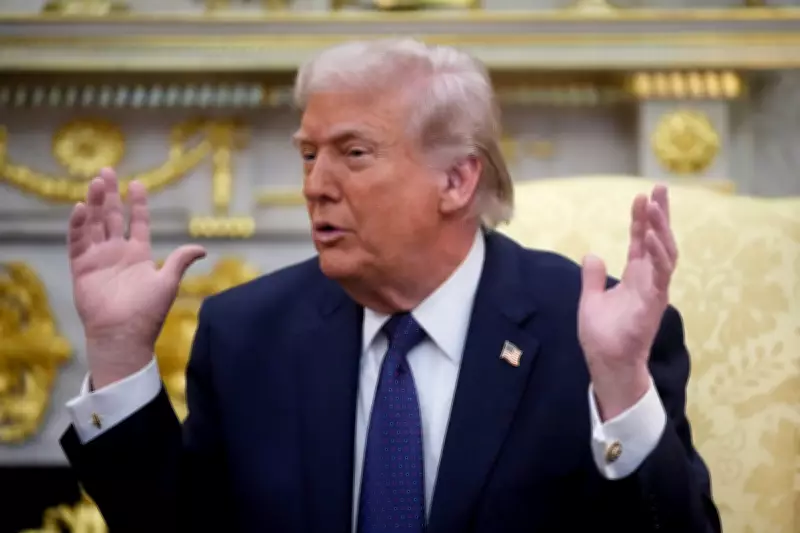
Speaking from the Oval Office on Monday, President Trump offered little optimism regarding Iran's political trajectory following the devastating strikes launched on Saturday morning. The bilateral meeting with German Chancellor Friedrich Merz provided the backdrop for Trump's first extended question-and-answer session since the military campaign began.
The president explained that the strikes, intended to decapitate the Iranian regime and its military leadership, had eliminated many of the senior officials the United States had hoped could assume control of the country. "Most of the people we had in mind [to lead Iran] are dead," Trump stated bluntly. "Pretty soon we're not going to know anybody."

Concerns Over Escalation and Leadership Vacuum
In the days following the operation, the White House and Republican Party have faced intense scrutiny over the implications for both nations. Key questions have emerged about whether the United States is now embroiled in a prolonged Middle Eastern conflict and who the Trump administration envisions leading Iran in the wake of the targeted strikes.
Trump provided no clear answer to the latter concern, instead highlighting the risks of the power vacuum created by the military action. He admitted that the campaign might inadvertently pave the way for a successor with even more fervent anti-American sentiments than the previous leadership.
"I guess the worst case is we do this and then somebody takes over who is as bad as the previous person. That could happen," the president conceded during the Monday briefing.Broader Implications for US Foreign Policy
The president's remarks underscore the complex and unpredictable nature of regime-change strategies in volatile regions. By openly discussing the possibility of a more hostile Iranian leader emerging, Trump has brought to light the inherent uncertainties in military interventions aimed at reshaping foreign governments.
This development follows Trump's denial that Israel forced the United States into war with Iran, a claim that has circulated amid the escalating tensions. The joint operation with Israeli armed forces marks a significant escalation in the longstanding conflict between the West and Iran, raising alarms about broader regional instability.
As the situation continues to unfold, analysts and policymakers are closely monitoring Iran's internal dynamics to gauge the potential for a successor who could adopt an even more aggressive stance against American interests. The president's candid warning serves as a reminder of the high stakes involved in such military endeavors.
This remains a breaking news story, with further updates expected as more details emerge about the aftermath of the strikes and the political landscape in Iran.