Trump Declares US Strikes Decimated Iran's Leadership Candidates
President Donald Trump has asserted that coordinated military strikes by the United States and Israel have created a profound leadership vacuum in Iran by eliminating most individuals identified as potential successors to the late Supreme Leader Ayatollah Ali Khamenei. In a striking revelation during an interview with ABC's Jonathan Karl, Trump characterized the operation as overwhelmingly successful, stating it had effectively removed the primary candidates from contention.
"They Are All Dead": Trump's Assessment of Iranian Succession
"The attack was so successful it knocked out most of the candidates," President Trump told ABC News correspondent Jonathan Karl. "It's not going to be anybody that we were thinking of because they are all dead. Second or third place is dead."
Karl, who documented the exchange on social media platform X and discussed it during broadcast segments, noted the president's unequivocal confidence in the military operation's outcomes. "It was striking how stunningly successful the president believes this military operation has been," Karl observed.

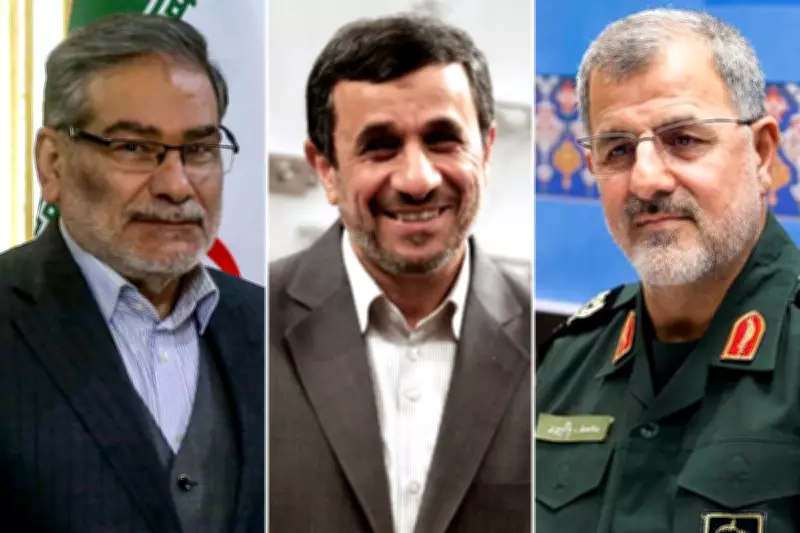
Earlier statements from Trump to Fox News on Sunday indicated that 48 Iranian leaders perished in the strikes, which significantly decapitated the nation's governing structure. Among the confirmed casualties are several prominent figures: Ali Shamkhani, a top adviser to Khamenei; General Mohammad Pakpour, commander of the Islamic Revolutionary Guard Corps; and Mahmoud Ahmadinejad, the hardline former president known for his anti-Western rhetoric.
Interim Leadership and Defiant Iranian Response
During the transitional period following Khamenei's death, Iran is currently being governed by a temporary council comprising President Masoud Pezeshkian, judiciary head Gholam-Hossein Mohseni Ejei, and senior cleric Alireza Arafi. This arrangement represents a stopgap measure as the nation grapples with unprecedented leadership challenges.
Despite the devastating blows to their leadership structure, Iranian officials have maintained a defiant posture. Top security official Ali Larijani publicly vowed on X that "we will not negotiate with the United States," signaling continued resistance despite the circumstances.
However, President Trump contradicted this narrative during his ABC interview, revealing that he has received peace overtures from within the Iranian government. "He told me that somebody within the Iranian government has reached out to him," Karl recounted. "I asked him who it was, and he said 'I probably shouldn't tell you, but it was somebody who had survived,' and somebody who he added was no longer reporting to the supreme leader."
Conflict Timeline and American Casualties
Trump has suggested that the ongoing conflict with Iran may extend for approximately four weeks, according to reports from The Daily Mail. "It's always been a four-week process. We figured it will be four weeks or so. It's always been about a four-week process so - as strong as it is, it's a big country, it'll take four weeks - or less," the president stated.
While expressing openness to further negotiations with Iranian representatives, Trump remained noncommittal about timing. "I don't know," he responded when questioned about potential talks. "They want to talk, but I said you should have talked last week, not this week."
In a separate communication via Truth Social, Trump acknowledged that three United States service members have been killed in the conflict, with expectations of additional American casualties. "He was quite candid," Karl noted regarding Trump's discussion of military losses. "He said it's war, and there are casualties in war. He also marveled at the fact that he's now been through three significant military operations. The first one in Iran, the operation to take out Maduro, and now this one in Iran. And he said we have three casualties, three casualties. The Iranians, he said, can't count how many they've had."

Potential Successors in a Transformed Landscape
The elimination of numerous senior figures has dramatically altered the succession landscape in Iran. Possible contenders for the supreme leadership position now include Mojtaba Khamenei, the second son of the late Ayatollah; Alireza Arafi, the cleric currently serving on the interim council; Mohammad Mehdi Mirbagheri, a hardline cleric known for his criticism of Western nations; and judiciary head Gholam-Hossein Mohseni Ejei, who also participates in the temporary governing body.
Another potential candidate is Hassan Khomeini, grandson of the Islamic Republic's founding figure Ayatollah Ruhollah Khomeini. Widely perceived as a reformist with moderate perspectives, Khomeini represents a different ideological direction for the nation's future leadership.
The extensive damage to Iran's leadership structure, as described by President Trump, suggests that the succession process will unfold in uncharted territory, with candidates who were previously considered secondary or tertiary now potentially ascending to positions of power in a nation grappling with both internal turmoil and external military pressure.