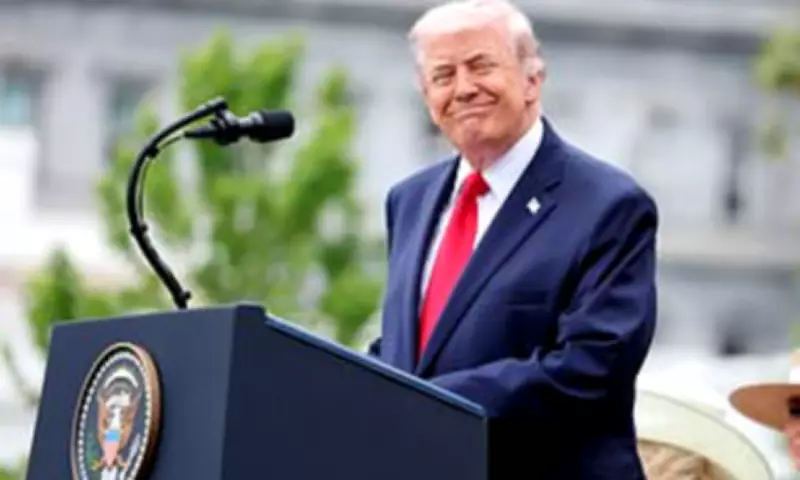
Donald Trump has instructed his team to prepare for an extended blockade of Iran with the aim of draining the regime's financial resources, according to a report by The Wall Street Journal. The US president believes that reducing Tehran's revenue will weaken its leverage in negotiations, compelling it to comply with American demands.
Economic Impact of the Blockade
US officials informed the newspaper that the ongoing blockade is severely impacting Iran's economy, as the regime struggles to store the surplus of unsold oil. Analysts estimate that the blockade of Iranian ports and vessels is costing the regime up to $435 million per day. However, the resulting increase in oil prices is raising costs for consumers and businesses globally, creating political challenges for Trump both domestically and internationally.
Trump's Statement on Iran
Yesterday, Trump claimed that Iran is in a 'state of collapse' and is pleading for the reopening of the Strait of Hormuz. This statement underscores the ongoing tensions between the two nations.

Related Developments
Kazakhstan's Stance on OPEC+
Kazakhstan's energy ministry announced on Wednesday that the Central Asian country is not considering leaving OPEC+. This clarification comes a day after the United Arab Emirates declared its withdrawal from the oil producers' group amid the energy crisis triggered by the Iran conflict.
EU Calls for Priority Energy Access
European farming, food, and retail associations have called for the EU agri-food chain to be formally recognized as critical infrastructure. They urge policymakers to grant operators priority access to energy and key inputs at affordable rates. The groups, including CEJA, Copa-Cogeca, CELCAA, FoodDrinkEurope, and EuroCommerce, highlighted that instability in the Middle East is increasing volatility in energy, logistics, and input markets vital to Europe's food production and distribution.
They warned that costs for energy, fertilisers, freight, packaging, and agricultural raw materials are rising across the value chain, risking higher grocery prices and weaker food affordability without urgent EU action. The associations urged EU and national authorities to ensure secure and predictable access to energy and key inputs for farmers, processors, traders, retailers, and wholesalers, and suggested that targeted, temporary, and EU-coordinated measures may be necessary for the most exposed actors.