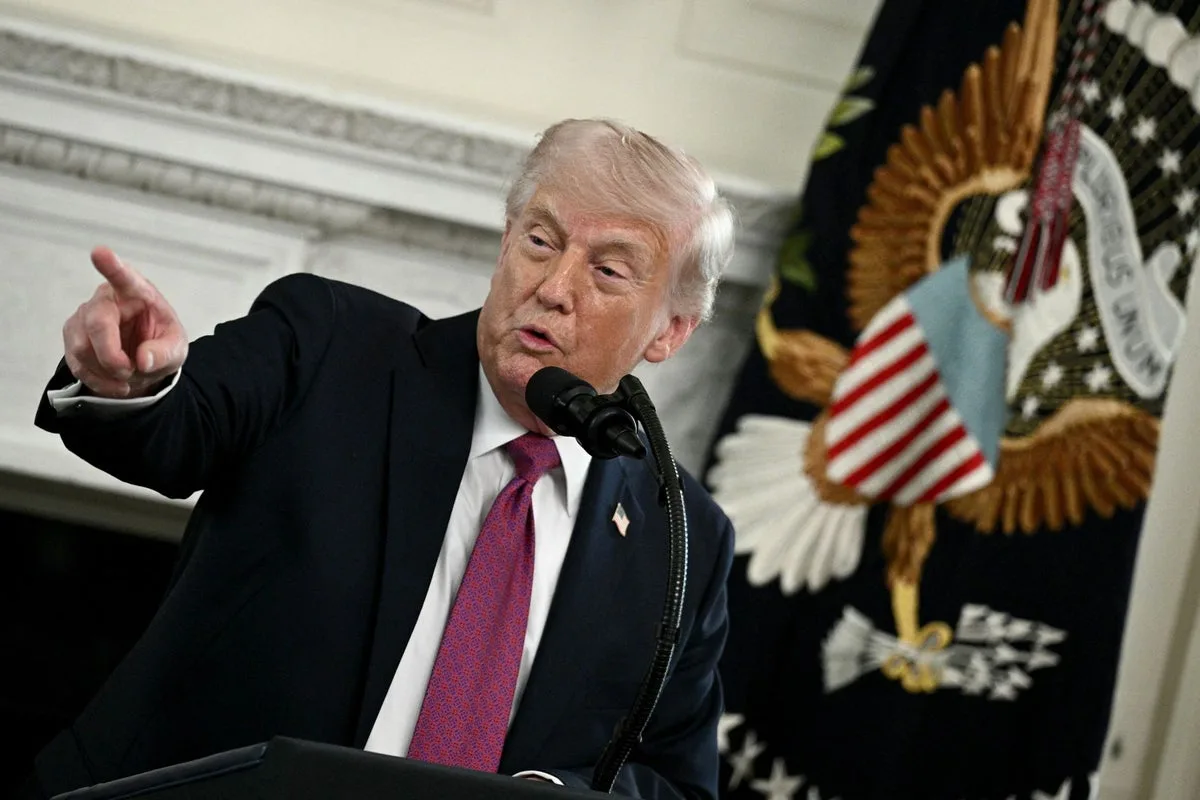
Trump Threatens to Annihilate Iranian Civilization in Final War Deadline Ultimatum
Trump Threatens to Annihilate Iranian Civilization in War Ultimatum

Trump Faces Global Condemnation Over Threat to Annihilate Iranian Civilization

US President Donald Trump has been widely condemned after issuing a shocking threat to Iran, vowing to wipe out "a whole civilisation" if Tehran fails to agree to a deal to end the ongoing Middle East war. The extraordinary statement came just hours before a US-imposed deadline was set to expire at 1am BST on Wednesday, which Trump has described as his "final" ultimatum in the conflict.

"A Whole Civilization Will Die Tonight"

In a post on Truth Social on Tuesday, Trump wrote: "A whole civilization will die tonight, never to be brought back again. I don't want that to happen, but it probably will. However, now that we have Complete and Total Regime Change, where different, smarter, and less radicalized minds prevail, maybe something revolutionarily wonderful can happen, WHO KNOWS?"

The post has triggered widespread backlash from both opponents and supporters of the president, with many accusing Trump of effectively threatening genocide against a nation of 93 million people. The rhetoric represents a significant escalation in Trump's attempts to pressure Iran into accepting US terms for ending the six-week conflict.

Wide Pickt banner — collaborative shopping lists app for Telegram, phone mockup with grocery list

International Reactions and Diplomatic Maneuvers

British Prime Minister Sir Keir Starmer's spokesperson emphasized that "this isn't our war" and stressed the UK government's focus on de-escalation. However, when questioned about whether potential US attacks on Iran's bridges and power stations would violate international law, the spokesperson declined to comment on allies' operations.

Amid heated discussions on Tuesday, Trump was reportedly considering a proposal from Pakistan's prime minister for a two-week ceasefire with Iran. Meanwhile, top House Democrats issued a joint statement calling for Congress to be reconvened to address the war.

Military Escalation and Economic Consequences

The conflict has entered its sixth week with no signs of abating. Oil prices continue to surge amid Iran's blockade of the Strait of Hormuz, a vital shipping route through which one-fifth of the world's oil and gas passes. Trump has insisted the strait must be reopened after Iran effectively closed it following joint US-Israeli attacks in late February.

According to the Wall Street Journal, more than 50 military targets were struck on Iran's key oil export hub Kharg Island on Tuesday. The island handles over 90 percent of Iran's oil exports. These attacks followed Trump's threats to "decimate" the country's civilian infrastructure, including all energy facilities.

Iran's Response and Regional Tensions

The Islamic Revolutionary Guard Corps warned that if the US crosses "red lines," Tehran's response would extend "beyond the region" and disrupt global oil and gas supplies for years. "Restraint is over," they declared in a statement shortly after Tuesday's attacks, raising fears of further escalation.

Despite the threats, the Tehran Times reported that Iran's communication channels with the US remain open through diplomatic and indirect means. In another development, Israel warned Iranians to stay away from trains and railways as it launched attacks on the country's transportation infrastructure.

Domestic and International Political Backlash

Liberal Democrat leader Ed Davey called on Sir Keir to withdraw US access to UK air bases to prevent Britain from becoming "an accomplice to war crimes." Green Party Leader Zack Polanski urged stronger action against what he termed "a threat of genocide from our supposed ally."

Even Reform leader Nigel Farage, a long-time Trump ally, criticized the president's warning as "way too far" and "over the top in every single way."

Expert Analysis and Historical Context

Neil Quilliam, a Chatham House expert in energy and geopolitics, told The Independent that Trump "clearly has a limited sense of world history, civilisations and humanity." He noted that the president's sentiment "is conceptually larger than genocide" since Iran represents a multi-ethnic, multi-faith society emerging from ancient civilizations.

Quilliam added that the current Iranian regime has sought to suppress one of these ancient civilizations since seizing power in 1979, adding historical complexity to the current conflict.

Pickt after-article banner — collaborative shopping lists app with family illustration

US Domestic Political Fallout

Trump's escalating threats have sparked backlash across the political spectrum in the United States, with calls for his removal from office. Senate Minority Leader Chuck Schumer described Trump as "an extremely sick person" and criticized Republicans who refuse to oppose "this wanton war of choice."

Former Trump ally Marjorie Taylor Greene called for the president's removal, stating: "We cannot kill an entire civilization. This is evil and madness." Joe Kent, Trump's former counterterrorism chief who resigned last month in opposition to the war, warned that the threats endanger ordinary Americans and could end US status as the world's leading superpower.

White House Defense

Defending the president's comments, White House spokesperson Anna Kelly emphasized Iran's human rights record, including the regime's treatment of its citizens and alleged targeting of civilians across the region. She stated that Trump "will always stand with innocent civilians while annihilating the terrorists responsible for threatening our country and the entire world with a nuclear weapon."

Kelly added that "greater destruction can be avoided if the regime understands the seriousness of this moment and makes a deal with the United States," reinforcing the ultimatum nature of Trump's threat as the deadline approaches.




