High-Stakes Peace Talks Begin in Florida
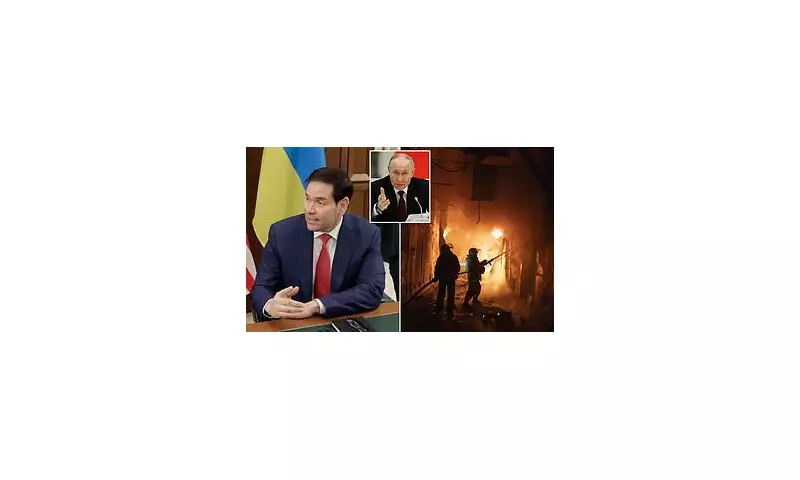
Top foreign policy negotiators from President Donald Trump's administration are making significant progress toward a potential agreement to end the ongoing conflict between Russia and Ukraine. The diplomatic push saw Secretary of State Marco Rubio, accompanied by Special Envoy Steve Witkoff and President Trump's son-in-law Jared Kushner, meet with representatives from Volodymyr Zelenskyy's Ukrainian government in Florida on Sunday.
The meeting in Hallandale Beach focused on refining a comprehensive 28-point peace plan designed to bring the devastating war to a conclusion. Speaking to journalists before the day's negotiations commenced, Secretary Rubio outlined his ambitious vision for an agreement that would ensure Ukraine's long-term security and sovereignty.
Diplomatic Optimism and Substantial Concerns
'This is not just about ending a war, this is about ending a war in a way that creates a mechanism and a way forward that will allow them to be independent and sovereign and never have another war again,' Rubio declared as he opened Sunday's crucial discussions.
Initial reactions from the Ukrainian delegation appeared positive. Ukraine's First Deputy Foreign Minister, Sergiy Kyslytsya, posted on social media platform X that discussions had begun well, describing the process as 'very engaging and so far constructive.' He notably mentioned a 'warm atmosphere, conducive to potential progressive outcome,' suggesting promising early signs from the talks.
However, the proposed peace framework has faced substantial criticism from multiple quarters, including members of Trump's own Republican party. Congressman Mike Turner, an Ohio Republican serving on the House armed services committee, voiced serious concerns about the administration's approach in comments to CBS News.
'You can't be America first and pro-Russia, because Russia is a self-declared adversary of the United States,' Turner stated bluntly. He emphasised Russia's development of 'new, advanced nuclear weapons that are specifically targeting the United States' alongside persistent cyber attacks against American interests.
Controversial Background and Leaked Communications
The peace process has been complicated by revelations about behind-the-scenes communications between Trump administration officials and Russian leadership. A leaked telephone call transcript, first reported by Bloomberg, exposed how Special Envoy Steve Witkoff worked to expedite Vladimir Putin's access to President Trump ahead of critical White House meetings with Ukrainian President Zelenskyy.
The documents reveal Witkoff racing to connect Putin with Trump before Oval Office talks on October 19. In a particularly controversial development, Witkoff reportedly coached Russian foreign policy adviser Yuri Ushakov on how Putin should approach Trump – specifically suggesting the Russian leader praise him for the Gaza peace deal, which Putin subsequently did.
Two days before meeting Zelenskyy, President Trump spoke directly with Putin. During that conversation, the Russian president warned that sending Tomahawk missiles to Ukraine would damage US-Russia relations. Following this discussion, President Trump reversed course on the missile deployment.
According to Bloomberg's reporting, these preliminary talks helped shape an initial 28-point peace proposal that heavily favoured Russian interests, which was later condensed to 19 points. Congressman Turner expressed serious reservations about Witkoff's continued role in negotiations, stating the White House 'should be very concerned about any efforts to orchestrate Putin's voice at the White House before Zelenskyy's.'
President Trump addressed the ongoing peace efforts on his Truth Social platform last week, writing that he looked 'forward to hopefully meeting with President Zelenskyy and President Putin soon, but ONLY when the deal to end this War is FINAL or, in its final stages.'
The diplomatic manoeuvring continues as both Ukrainian and American officials navigate complex geopolitical tensions while seeking a lasting resolution to the conflict that has caused immense suffering and regional instability.