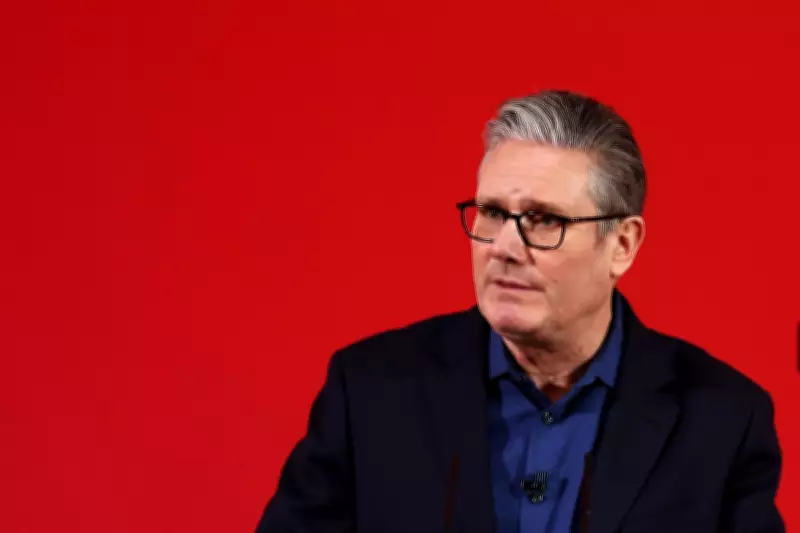
US President Donald Trump has publicly suggested that Prime Minister Sir Keir Starmer's controversial Chagos Islands agreement represents "the best he could make," marking a significant shift in tone after his previous harsh criticism of the diplomatic arrangement. The American leader revealed he held "very productive discussions" with the British Prime Minister concerning the future of Diego Garcia, where a crucial joint UK-US military installation is strategically positioned.
From Criticism to Conditional Support
In a notable reversal from his January characterization of the deal as an "act of total weakness" and "great stupidity," President Trump used his Truth Social platform to acknowledge the political realities facing the British government. "I understand that the deal Prime Minister Starmer has made, according to many, (is) the best he could make," the Republican president stated in his social media declaration.
However, the American leader attached significant conditions to his apparent endorsement, explicitly reserving the right to take military action should the agreement's provisions regarding the Diego Garcia base ever become compromised. "If the lease deal, sometime in the future, ever falls apart, or anyone threatens or endangers US operations and forces at our base, I retain the right to militarily secure and reinforce the American presence in Diego Garcia," Trump warned unequivocally.

Strategic Base Security Paramount
The President emphasized the absolute priority of maintaining uninterrupted American military access to the strategically vital installation, declaring: "Let it be known that I will never allow our presence on a base as important as this to ever be undermined or threatened by fake claims or environmental nonsense." This statement reflects ongoing American concerns about the long-term security arrangements underpinning the complex sovereignty transfer.
According to Downing Street officials, the two leaders specifically "agreed on the importance of the deal to secure the joint UK-US base of Diego Garcia" during their Thursday conversation. A Number Ten spokeswoman confirmed that both governments remain committed to "continue working closely on the implementation of the deal," which they view as "vital to shared security interests."
Diplomatic Context and Parliamentary Progress
The diplomatic agreement, which will see the United Kingdom cede sovereignty of the British Indian Ocean Territory to Mauritius while simultaneously leasing back the Diego Garcia facility, carries an estimated cost of thirty-five billion pounds spread over the coming century. Parliamentary legislation to ratify this arrangement has reached its final stages, though progress experienced delays following President Trump's initial hostile remarks in January.
Prime Minister Starmer has consistently maintained that President Trump originally supported the agreement "in very clear terms" following approval by American intelligence agencies. The British leader has pointed to previous public endorsements from the US administration, including praise describing the arrangement as a "monumental achievement" that guarantees the long-term future of the shared military base.
Addressing International Legal Pressures
Downing Street has vigorously defended the diplomatic necessity of the agreement, with the Prime Minister's official spokesman stating: "Claims that we negotiated this deal solely because of the 2019 International Court of Justice advisory opinion are simply wrong. That wasn't the only challenge we faced." The spokesman elaborated on the practical consequences of failing to reach an agreement, noting that Mauritius would inevitably pursue a legally-binding judgment that would then be applied internationally.
"Without a deal, we'd face serious, real-world operational impacts on the base," the spokesman emphasized, addressing concerns about the agreement's rationale. When questioned about reported governmental "wobbles" over the arrangement, the spokesman attributed any hesitation to the political transitions in both the United States and Mauritius during November 2024, noting that new administrations naturally required time to examine the agreement's details.

Broader Diplomatic Discussions
The conversation between the two leaders extended beyond the Chagos agreement to address pressing international security matters. According to Downing Street, Prime Minister Starmer expressed "deep concern about Putin's continued barbaric attacks on innocent civilians, particularly in freezing temperatures" during discussions about ongoing Ukrainian peace negotiations. This exchange represents the first confirmed dialogue between the leaders since President Trump's extraordinary criticism of the Chagos arrangement last month.
The diplomatic understanding comes against a backdrop of previous transatlantic tensions, including disagreements over President Trump's ambitions regarding Greenland. Prime Minister Starmer had previously suggested the American leader's criticism of the Chagos deal was intended to pressure Britain into lifting objections to other American foreign policy objectives. With both leaders now expressing commitment to the agreement's implementation, the path appears clearer for finalizing this complex sovereignty transfer while preserving crucial military capabilities.