
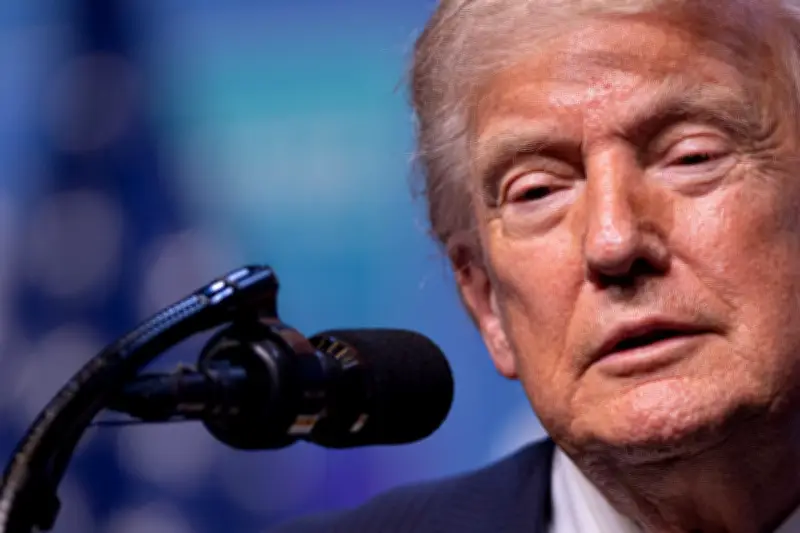
Donald Trump has entered the second day of a new phase of bombing Iran, with the US military claiming to have struck 170 Iranian targets in the past 48 hours. This escalation follows his declaration at the Nato summit in Ankara that the US-Iran memorandum of understanding was "over," describing Iran's leaders as "evil, sick people" and threatening renewed military action and a blockade of Iranian ports.
Memorandum Collapse and Mutual Distrust
The memorandum's collapse did not begin this week but started unravelling almost from the moment it was signed due to a central problem haunting US-Iran diplomacy for decades: no credible basis for trust. Tehran had little reason to believe Washington would deliver durable sanctions relief, abandon its longstanding strategy of coercion and regime change, or refrain from returning to those same policies once Iran surrendered its principal sources of leverage.
On paper, the memorandum offered a pathway to de-escalation with sequential logic: shipping through Hormuz would resume under Iranian "arrangements," the US blockade on Iran would be lifted, Tehran would receive an oil waiver and access to portions of its frozen assets, threats would cease, and the war in Lebanon would end. However, that logic depended on a fragile assumption that both sides would treat partial implementation as a bridge toward a larger settlement rather than an opportunity to preserve leverage.
Violations and Escalation
From Tehran's perspective, Washington began violating key provisions immediately. The memorandum's first clause calling for an end to the war in Lebanon was never fulfilled, with Israeli forces continuing operations. The US reportedly resisted releasing Iran's frozen assets on the scale Tehran expected. Trump continued issuing military threats, including publicly threatening to kidnap Iranian negotiators during the first round of talks in Switzerland. On 7 July, the US revoked Iran's oil export waiver as Tehran was trying to consolidate control over shipping through Hormuz by forcing vessels to transit through its designated northern route rather than the US-backed southern route.
Each side concluded that the other was pocketing concessions while withholding its own. This mutual distrust reflects decades of failed diplomacy, where Iranian policymakers have seen sanctions repeatedly imposed, partially lifted, and then reimposed across successive US administrations.
Iran's Strategic Leverage
Iran today possesses three principal forms of leverage against the US and Israel. The first is its military capabilities and regional alliance network, including missile and drone forces, asymmetric naval assets, and partners such as Hezbollah, the Houthis, and armed groups in Iraq. The second is its nuclear programme, which, despite extensive damage to its declared facilities, still leaves Iran with important options. Increasingly, it is the third source of leverage—control over the region's strategic energy chokepoints, above all the strait of Hormuz—that has become indispensable.
By routing commercial traffic through its designated corridor and potentially establishing a joint administration capable of collecting transit fees with Oman, Iran would tie its own prosperity and the costs of coercing it directly to the functioning of the global economy. Future US presidents could still abandon diplomacy, and Congress could still tighten sanctions, but doing so would no longer be economically cost-free.
Global Energy Risks
US strategic petroleum reserves remain substantially depleted, while global oil inventories remain tight as shipping through Hormuz has remained far below prewar levels. The result is far less of a cushion to absorb a prolonged disruption of the strait, increasing the risk of a much larger global energy shock.
According to Sina Toossi, a senior non-resident fellow at the Center for International Policy, "The question is not simply whether Iran is prepared to negotiate. It is whether the US can offer an arrangement Tehran believes will endure after it has surrendered its leverage. The memorandum never answered that question. It rested on assurances Iranian leaders regarded as reversible while asking them to dilute one of the few forms of leverage they considered durable."
If Washington fails to grasp how profoundly the war has reshaped Tehran's strategic calculus, it will keep negotiating against assumptions that no longer exist and keep producing agreements neither side truly believes the other will honour.




