
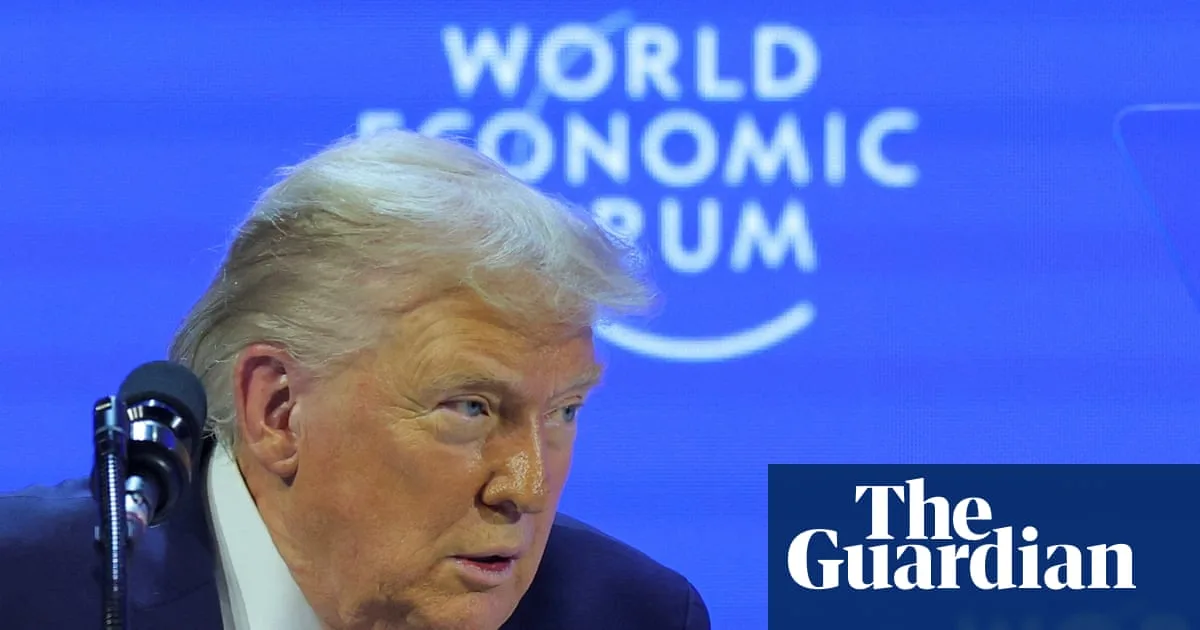
US President Donald Trump has escalated his demand to annex Greenland but ruled out using military force to seize the territory, during a speech at the World Economic Forum in Davos. Addressing business and political leaders, Trump said he was seeking immediate negotiations to acquire Greenland, warning: 'You can say yes, and we will be very appreciative. Or you can say no and we will remember.'
Trump's remarks drew a cautious response from Denmark's foreign minister, Lars Løkke Rasmussen, who welcomed the renunciation of force but noted the underlying challenge remained. 'It is, in isolation, positive that it is being said that military force will not be used, but that does not make the problem go away,' Rasmussen said. Norway's finance minister and former Nato secretary general, Jens Stoltenberg, described Trump's statement as an 'important message' after fears of a military threat.
Later on Wednesday, Trump announced a reversal of planned tariffs on eight European countries, including Denmark, Norway, Sweden, France, Germany, the UK, the Netherlands and Finland, which were due to take effect on 1 February. He attributed the U-turn to progress in talks with Nato Secretary General Mark Rutte, claiming they had developed a 'framework of a future deal' on Greenland and the Arctic region. Trump said the deal would include a US missile defence shield partly based in Greenland, but provided no further details.
Rutte declined to comment on the preliminary deal, and it remains unclear whether Greenlandic or Danish leaders were involved. Rasmussen said he hoped the development would allow for talks with Trump's team, stressing the need to 'end this in a way that respects the Greenlandic people.'




