Trump Calls for Iranian Regime Change as US Deploys World's Largest Aircraft Carrier
Former President Donald Trump has publicly stated that a change in power within Iran would represent "the best thing that could happen," as his administration contemplates potential military action against Tehran. This declaration coincides with the significant deployment of the USS Gerald R. Ford, the world's largest aircraft carrier, from the Caribbean Sea to the Middle East, reinforcing the substantial US naval presence already stationed in the region.
Military Deployment and Diplomatic Stalemate
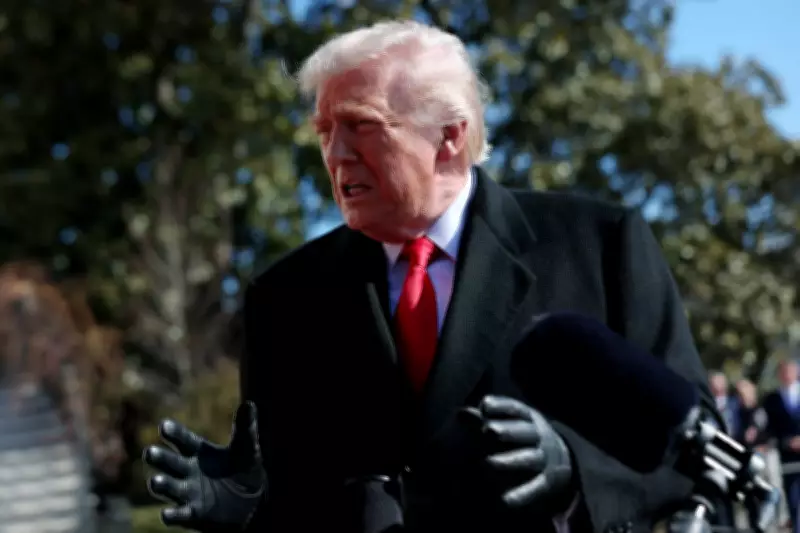
The decision to dispatch the USS Gerald R. Ford follows a period of heightened tensions and unsuccessful diplomatic efforts. Trump confirmed the carrier's deployment shortly after visiting troops at Fort Bragg, North Carolina, remarking, "In case we don’t make a deal, we’ll need it. It’ll be leaving very soon." This military movement occurs despite recent indirect talks between US intermediaries and Iranian security officials in Oman and Qatar, which ultimately failed to produce a breakthrough.
Trump emphasized that while scaling back Iran's nuclear program remains a priority, it constitutes only one component of the concessions demanded by the United States. He asserted, "If we do it, that would be the least of the mission," referencing potential actions against Tehran's nuclear facilities. The president warned that failure to reach an agreement would prove "very traumatic" for Iran, adding, "if they’re not [successful], it’s going to be a bad day for Iran, very bad."

Regional Concerns and Strategic Implications
The arrival of the Ford strike group will effectively double the available aircraft and munitions for US military planners in the Middle East, adding over 5,000 personnel to the region. This bolstered presence has raised alarms among Gulf Arab nations, who caution that any military attack could ignite another widespread regional conflict, particularly as the area continues to grapple with the ongoing Israel-Hamas war.
Internally, Iran faces mounting pressure as its citizens observe 40-day mourning ceremonies for those killed during a violent crackdown on nationwide protests last month. The Islamic Republic, already battered by international sanctions, now confronts both domestic unrest and escalating external military threats.
Operational Challenges and Naval Strategy
The deployment of the USS Gerald R. Ford presents considerable operational challenges for the US Navy. Having first set sail in late June 2025, the carrier's crew will soon have been deployed for eight months—exceeding the typical six or seven-month deployment cycle. Navy officials, including Admiral Daryl Caudle, have expressed concerns about extended deployments, noting they "disrupt lives, it disrupts things ... funerals that were planned, marriages that were planned, babies that were planned."
Admiral Caudle has previously stated that extending the Ford's time at sea would be "highly disruptive" and complicate maintenance schedules, increasing wear and tear on the vessel. This deployment marks a swift strategic shift, as the Ford was only recently repositioned from the Mediterranean to the Caribbean last October as part of operations leading to the capture of former Venezuelan President Nicolás Maduro.
International Diplomacy and Nuclear Standoff
Israeli Prime Minister Benjamin Netanyahu, who recently met with Trump in Washington, has advocated for any potential agreement with Iran to include measures neutralizing Tehran's ballistic missile program and ending its financial support for proxy groups such as Hamas and Hezbollah. Iran maintains that its nuclear program serves peaceful purposes, despite having enriched uranium to 60% purity before a conflict in June.
The military buildup occurs alongside recent confrontations, including US forces shooting down an Iranian drone that approached the USS Abraham Lincoln—which has been stationed in the region for over two weeks—on the same day Iran attempted to intercept a US-flagged ship in the strategically vital Strait of Hormuz.

Despite the escalating rhetoric and military posturing, Trump offered measured optimism for a diplomatic resolution, stating, "Give us the deal that they should have given us the first time. If they give us the right deal, we won’t do that." However, with the Ford likely requiring weeks to reach the coast of Iran and previous negotiations having broken down—leading to a 12-day war and US bombing of Iranian nuclear sites last year—the path to peaceful resolution remains uncertain and fraught with potential for further escalation.